What's on this page
- What is a wide-angle lens?
- What counts as ultra-wide, and where wide ends
- Angle of view: what the numbers actually mean
- What a wide-angle lens actually buys you
- Wide-angle distortion and the stretch at the edges
- Perspective distortion versus barrel distortion
- How to avoid the stretched-edge look
- Keeping vertical lines straight
- How a crop sensor changes a wide lens
- Wide-angle aperture, and why fast wides cost so much
- Depth of field on a wide lens
- Focusing a wide-angle lens
- Wide-angle lenses for landscape and wide scenes
- Wide-angle lenses for interiors and real estate
- Wide-angle lenses for astrophotography and the night sky
- Wide-angle lenses for vlogging and video
- Wide-angle lenses for street and documentary work
- Prime versus zoom in the wide range
- Filters on a wide-angle lens
- Fisheye lenses and how they differ
- Wide-angle lens weight, size and travel
- Common wide-angle mistakes
- A worked example: choosing your first wide-angle lens
- What to check before you buy a wide-angle lens
- The bottom line
Short answer: A wide angle lens has a short focal length and therefore a large angle of view, conventionally under about 35mm on full frame, with ultra wide below roughly 20mm. Choose by full frame equivalent, multiplying by your crop factor first, since 16mm on a 1.5x body frames like 24mm. What people call wide angle distortion is usually perspective stretching from standing close, and a wide lens pays off when something worth showing sits near you.
A wide-angle lens is the piece of glass most people buy second, usually after a first attempt at photographing something big taught them that the kit zoom does not go wide enough. It is also the lens type that behaves least like people expect. Fitting more of a scene into the frame sounds like a simple convenience, but a short focal length changes the relationship between near and far, stretches whatever sits at the corners, deepens the apparent depth of field, and shrinks distant subjects considerably. Understanding those effects is the difference between a wide lens that transforms your pictures and one that sits in the bag because the results always look slightly wrong.
This field note covers what counts as wide-angle and ultra-wide, what the angle of view actually buys you, the two very different things people mean by wide-angle distortion, how a crop sensor changes the answer, why fast wide lenses cost what they do, and what to check before you buy. It is a lens-type explainer, so where a scene-by-scene buying decision is the real question our best lens for landscape field note handles it, and for the opposite end of the range see our telephoto lens field note. Set your own budget for the purchase with the upgrade budget planner.
Key takeaways
- Wide-angle means a short focal length and therefore a large angle of view: conventionally under about 35mm on full frame, with ultra-wide below roughly 20mm.
- Judge by the full-frame equivalent, not the number on the barrel. Multiply by your crop factor first, because 16mm on a 1.5x body frames like 24mm.
- What people call wide-angle distortion is usually perspective stretching from standing close, not an optical fault, and the fix is distance rather than software.
- A wide lens shrinks distant subjects. It pays off when there is something worth putting near the camera, and disappoints when the subject is far away.
- Fast wide primes are expensive because a wide angle of view and a large aperture are individually difficult and jointly much harder to correct.
What is a wide-angle lens?
A wide-angle lens is one whose focal length is short enough that it captures a noticeably wider view than a person reads as normal. That definition sounds circular until you fix the reference. On a full-frame camera, a focal length around 43mm produces a diagonal angle of view close to what the human eye perceives as unremarkable, and 50mm has become the conventional stand-in for normal. Anything meaningfully shorter than that takes in more, and by common convention lenses below about 35mm are called wide-angle. Our explainer on focal length covers what the millimetre figure is measuring in the first place.
The mechanism is straightforward. Focal length and angle of view are inversely related: halve the focal length and you roughly double the angular width of what lands on the sensor. A 24mm lens covers about twice the angular field of a 50mm, so from the same spot it fits about twice as much scene into the frame horizontally and vertically. Nothing else changes. The camera has not moved, the subject has not moved, and the light is the same. Only the slice of the world being recorded has grown.
That single property produces every characteristic people associate with wide lenses. More scene in the frame means each individual element is rendered smaller, so distant things shrink. It also means you can stand much closer to a subject and still include its surroundings, and standing close is what creates the dramatic difference in size between near and far objects that reads as the wide-angle look. The deep apparent depth of field, the stretched corners, and the sense of exaggerated space all follow from the same short focal length and the shooting distance it invites.
It is worth separating the lens from the effect early. The lens does one thing: it sets the angle of view. Everything else people call a wide-angle characteristic is a consequence of how you use that angle, mostly of how close you choose to stand.
What counts as ultra-wide, and where wide ends
There is no standards body issuing definitions here, so the boundaries are conventions rather than rules, and different photographers draw them a few millimetres apart. The working convention most people use on full frame runs roughly like this. From about 35mm down to 24mm is wide-angle: a wider view than normal, still natural looking, and the range most documentary and street work lives in. From about 24mm down to 20mm is a border zone that gets called either wide or ultra-wide depending on who is talking. Below about 20mm is ultra-wide, where the effects become obvious rather than subtle and the lens starts to demand that you compose around it.
Below roughly 14mm you are into the extreme end, where the corners are doing dramatic work and only certain subjects survive it. This range is also where fisheye lenses live, which are a separate category rather than simply wider lenses, covered further down.
Two practical notes matter more than the exact boundaries. The first is that these numbers are full-frame numbers, and every one of them has to be adjusted for your sensor before it means anything. The second is that the difference between adjacent focal lengths in the wide range is far more consequential than at the long end. Going from 200mm to 300mm is a modest change in framing. Going from 24mm to 16mm is a completely different photograph: a foreground that filled a third of the frame now fills two thirds, and a building that fitted comfortably now bends at the corners. Wide focal lengths are close together in millimetres and far apart in effect, which is why so many people find the wide end harder to shop for than the long end.
Angle of view: what the numbers actually mean
Focal length is the number printed on the lens, but angle of view is the number that describes what you will actually see, and it is worth learning to think in it. Angle of view is measured in degrees and is usually quoted diagonally, corner to corner across the frame. It follows directly from the focal length and the size of the sensor: a shorter focal length or a bigger sensor both produce a wider angle.
The relationship is not linear, and that is the part that surprises people. Going from 50mm to 35mm gains a useful amount of view. Going from 35mm to 24mm gains more. Going from 24mm to 16mm gains a great deal more, and going from 16mm to 14mm gains a surprising amount for two millimetres. The shorter the lens, the more each millimetre is worth, which is why wide lenses are sold in such fine increments and why the price climbs steeply at the very short end.
The chart below shows the diagonal angle of view across the wide range on a full-frame camera, with 35mm and 50mm at the bottom for reference.
Diagonal angle of view by focal length, full frame
Approximate diagonal coverage in degrees for a 35mm-format frame, from the standard geometric relationship between focal length and frame diagonal. On a crop sensor, apply the crop factor to the focal length first and read the equivalent row.
Notice how the gain accelerates at the short end: the step from 24mm to 16mm adds far more coverage than the step from 35mm to 24mm. The companion computes the angle for your own lens and sensor combination.
What a wide-angle lens actually buys you
Three things, and it is worth being precise about them because two are commonly misunderstood.
The first is inclusion. You can fit more into the frame from where you are standing, which matters most when you cannot back up: inside a room, on a narrow street, on a ledge, in a car. This is the plain, practical benefit and it needs no explanation.
The second is a sense of depth and scale, and this one is subtler. Because a wide lens lets you stand very close to a foreground object while still including the background, it produces frames where something near the camera is rendered large and something far away is rendered small, with a strong visual gap between them. That size difference is what reads to a viewer as depth. It is not a property of the lens as such, it is a property of the short distance the lens permits, but in practice the two travel together. This is the effect that makes a wide lens feel dramatic, and it is entirely dependent on there being something worth putting close to the camera.
The third is the deep apparent depth of field, covered in its own section below, which lets a wide lens hold a near foreground and a distant background acceptably sharp in the same frame at moderate apertures.
What a wide lens does not buy you is any magnification of distant subjects. This is the single most common disappointment. Photograph a mountain range with an ultra-wide and the mountains become a thin strip along the horizon, smaller and less impressive than they looked to your eye, because the frame is now full of the sky and the ground in front of them. If the subject is far away and there is nothing in the near field to build on, a longer lens is the right answer, which is one of the things our telephoto lens field note works through.
What decides whether a wide frame works
Illustrative weighting of the three decisions behind a successful wide-angle photograph. The lens itself is the smallest slice, which is why buying a wider one rarely fixes a frame that was not working.
Foreground and standing position between them do most of the work. The lens sets how much fits in the frame, not whether the frame is any good. Try your own focal length and sensor in the companion above.
Wide-angle distortion and the stretch at the edges
Almost every complaint about wide-angle lenses arrives under the heading of distortion, and untangling what people actually mean is the most useful thing this section can do, because the two main effects have different causes and different fixes.
The visible symptom people describe is that things near the edges and corners of a wide frame look stretched, smeared outward, or elongated. A face at the corner of a group photo looks wide and pulled. A round plate near the edge of a table shot looks like an oval. A person standing at the side of a wide frame looks broader than they are. The effect gets stronger the wider the lens and the closer to the corner the subject sits.
That specific stretching is not an optical defect and it is not correctable, because it is a consequence of projecting a very wide, curved field of view onto a flat rectangle. Something has to give, and what gives is the shape of objects away from the centre. A rectilinear wide lens, which is what most wide lenses are, is designed to keep straight lines straight, and the price it pays for that is stretching shapes at the edges. A fisheye makes the opposite trade, keeping shapes rounder and letting straight lines bend. There is no third option that avoids both, because the geometry does not allow one.
The separate effect that is genuinely an optical fault is barrel distortion, where straight lines near the edge of the frame bow outward, most visible on a horizon or a building edge. That is a design compromise rather than a law of geometry, it varies a lot between lenses, and modern editing software corrects it well, often automatically from a stored profile. Most wide zooms show some at their widest setting. It is worth knowing about but rarely worth worrying about.
Perspective distortion versus barrel distortion
It is worth stating the difference once more in plain terms, because getting it wrong sends people looking for solutions that cannot work.
Perspective effects come from where you stand. A wide lens does not create them; it enables them, by letting you stand close enough for them to appear. Objects near the camera are rendered large relative to objects further away, and this scales with distance ratio: if the foreground is one metre away and the background is ten, the foreground is dramatically larger. Move back and the effect weakens, whatever lens is fitted. Photograph a face from two metres on a 24mm lens and crop in, and the proportions look normal, because proportions come from distance rather than from focal length.
Projection stretching at the corners comes from the geometry of mapping a wide angular field onto a flat plane, described above. It is inherent to rectilinear wide lenses, gets worse toward the corners, and cannot be edited away without bending the straight lines the projection was protecting.
Barrel and pincushion distortion are optical faults in the lens design, where lines bow outward or inward. They are correctable in software and vary by lens and, on a zoom, by focal length setting.
The practical consequence of all this is a single habit: think about your distance to the subject before you think about your focal length. Distance sets the proportions, focal length sets how much you include. Once you separate those two decisions, most wide-angle frustration disappears.
How to avoid the stretched-edge look
Assuming you want a clean, natural wide frame rather than a deliberately dramatic one, a handful of habits do almost all the work.
Keep people away from the corners. This is the highest-value rule in group photography with a wide lens. Whoever stands at the edge of the frame gets stretched, and they will notice. Put people toward the middle, and if you must fill a wide frame, let the scenery take the corners.
Do not use a wide lens close to a face. Portraits want distance, and distance is what a longer lens gives you at a usable framing. Our comparison of 50mm and 85mm for portraits covers why the classic portrait focal lengths sit where they do.
Get the camera level. Tilting a wide lens up or down makes vertical lines converge dramatically, which is discussed in its own section below. A level camera removes most of the perceived distortion in architectural frames at a stroke.
Watch the frame edges before you shoot. A wide lens includes far more than you think it does, and the edges are where the mistakes live: a stray branch, a bin, half a person, your own foot. Our composition field note makes edge-checking a habit worth building.
Use the width for something. If you are shooting wide but the frame has no strong near element, you are usually collecting empty space. Either find a foreground or use a longer lens.
Apply the lens profile in editing. Barrel distortion and corner darkening correct cleanly from a stored profile, and the correction is close to free.
Keeping vertical lines straight
This deserves its own section because it is the wide-angle problem that shows up most obviously in architecture, interiors and any photograph containing a building.
When you point a camera up at a tall structure, the top of the structure is further from the sensor than the bottom, so it is rendered smaller, and the vertical edges converge toward the top. The building appears to lean backwards. This happens with any lens, but a wide lens makes it dramatic, because you are usually standing close and tilting sharply to fit the whole thing in.
The direct fix is to keep the sensor plane parallel to the subject, which means keeping the camera level rather than tilted. If the top of the building will not fit from a level position, you have three options. Back up, which reduces the tilt needed. Get higher, so that a level camera is aimed at the middle of the structure rather than its base. Or shoot level with the building occupying the upper part of the frame and a lot of ground in the lower part, then crop the ground away afterwards, which trades resolution for straight lines.
The software fix is perspective correction, available in most editing applications, which stretches the frame to pull the converging lines back to vertical. It works well within limits, and the limits are real: the correction crops in, which costs you the wide view you came for, and pushed too far it produces unnatural proportions and smeared corners. Correcting a modest tilt is routine. Rescuing a photograph shot at forty five degrees is not.
Shooting a room follows the same logic. Level camera, at roughly chest height or a little below, is the standard approach in interior work, and it is one of the reasons real estate photography leans so heavily on wide lenses used carefully rather than aggressively. Our real estate photography field note covers the room-by-room method.
How a crop sensor changes a wide lens
A smaller sensor records only the central portion of the image circle the lens projects, so it sees a narrower slice of the scene than a full-frame sensor would from the same lens and position. The lens has not changed, the framing has. Multiply the focal length by the sensor’s crop factor to get the full-frame equivalent framing: roughly 1.5x on most APS-C bodies, about 1.6x on some, and 2x on Micro Four Thirds. Our full-frame versus crop sensor field note works through what the crop factor does and does not change.
For a wide lens, this cuts in exactly the wrong direction. At the long end a crop sensor feels like a bonus, because a 300mm frames like a 450mm and you get reach for free. At the wide end it is a penalty: a 24mm lens on a 1.5x body frames like a 36mm, which is barely wide at all, and getting a genuinely ultra-wide view means finding a lens with a very short focal length printed on it. That is why crop-format wide zooms exist with numbers like 10mm or 12mm on the barrel, figures that would be extreme on full frame but land in ordinary ultra-wide territory once the crop is applied.
Micro Four Thirds bodies double the number, so the arithmetic is easy and the effect is stronger still: a 12mm lens frames like a 24mm, and reaching a 16mm equivalent view means an 8mm lens. Our Micro Four Thirds field note covers the format’s trade-offs more broadly.
The practical rule that comes out of this is short: shop by equivalent, never by the printed number. Work out what equivalent focal length you actually want, divide by your crop factor, and that is the lens you are looking for. Getting this backwards is the most common way people buy a wide lens that turns out not to be wide.
Wide-angle aperture, and why fast wides cost so much
Wide lenses come in two broad commercial tiers, and the gap between them is mostly about maximum aperture. A wide zoom at a constant f/4, or a variable aperture kit-style wide zoom, is comparatively easy to design well, moderate in size and price, and entirely adequate for daylight work. A wide lens at f/2.8, and more so a wide prime at f/1.8 or f/1.4, sits in a different price and weight class altogether. Our aperture explainer covers what the f-number describes.
The reason is optical. A wide-angle design already has a hard job: it must take light arriving from very oblique angles and land it evenly and sharply on a flat sensor, keeping straight lines straight across a huge field. Opening the aperture wider means using more of the outer area of the glass, and the outer area is where the difficult angles and the aberrations live. Corners go soft, points of light near the edges smear into wedge shapes, and colour fringing appears. Correcting all of that requires more elements, more exotic glass, tighter tolerances and larger diameters, and each of those adds cost and weight.
So when is the extra aperture worth paying for? Chiefly at night. Astro and aurora work depends on gathering light in a short exposure, and there the difference between f/4 and f/1.8 is decisive rather than convenient. Handheld interior work in dim rooms benefits too. What a fast wide is not usually bought for is background blur, because a wide lens at close-to-normal shooting distances holds a great deal in focus anyway. If you shoot wide scenes in daylight from a tripod, an f/4 zoom stopped down to f/8 or f/11 is doing the same job as a lens costing several times as much. Price your own version of this decision in the upgrade budget planner.
Depth of field on a wide lens
Wide lenses hold a lot in focus, and understanding why keeps you from over-correcting for a problem you do not have.
Depth of field depends on the focal length, the aperture and the distance to the subject. Short focal lengths and greater subject distances both increase it, and a wide lens usually involves both: you are shooting at 20mm and focusing several metres away or further. At f/8 on a 20mm lens focused a few metres out, a very large band in front of and behind that point falls within acceptable sharpness, often stretching to the horizon. That is why wide-scene photographs can hold a rock a couple of metres away and a ridge several miles away in the same acceptably sharp frame. Our depth of field explainer covers the mechanism in full.
The practical technique is to focus somewhere into the scene rather than on the nearest object or on infinity. Focusing on the closest rock throws the distance away; focusing at infinity wastes the depth that extends behind the focus point. A common working approach is to focus roughly a third of the way into the depth you need and then check the near and far extremes at full magnification, adjusting if either is soft. Older lenses with distance scales let you read this off the barrel directly, using the marks either side of the focus index.
The limit is close focus. Put the lens very near a foreground object, a flower at thirty centimetres say, and the deep depth of field evaporates: at that distance even a wide lens at a moderate aperture cannot hold both the flower and the background sharp, and you will need to stop down considerably or focus stack. This surprises people who have been told wide lenses keep everything sharp. Distance, not focal length, is doing most of that work.
Focusing a wide-angle lens
Autofocus on a wide lens is generally easy in daylight and quietly awkward in two situations worth knowing about.
The first is that a wide frame contains a great deal of scene, so a camera left on a wide-area automatic focus mode has many candidates to choose from and often picks the nearest high-contrast thing rather than what you meant. Single-point focus, placed deliberately, is the reliable answer for considered wide-scene work.
The second is darkness. Autofocus needs contrast and light, and a wide lens pointed at a night sky offers neither, so it hunts and fails. Manual focus, set in magnified live view on a bright star and then left alone, is the standard method, and it is covered step by step in our night sky field note and our northern lights field note.
One further quirk: because depth of field is generous, small focus errors on a wide lens often go unnoticed at web sizes and become obvious in a large print. It is worth checking sharpness at full magnification on the frames you care about rather than trusting the deep depth of field to have covered you. Our field note on sharp photos covers the wider set of causes when a frame is not as crisp as expected.
Wide-angle lenses for landscape and wide scenes
This is the use most people buy a wide lens for, and the results are excellent when the frame is built for it and disappointing when it is not.
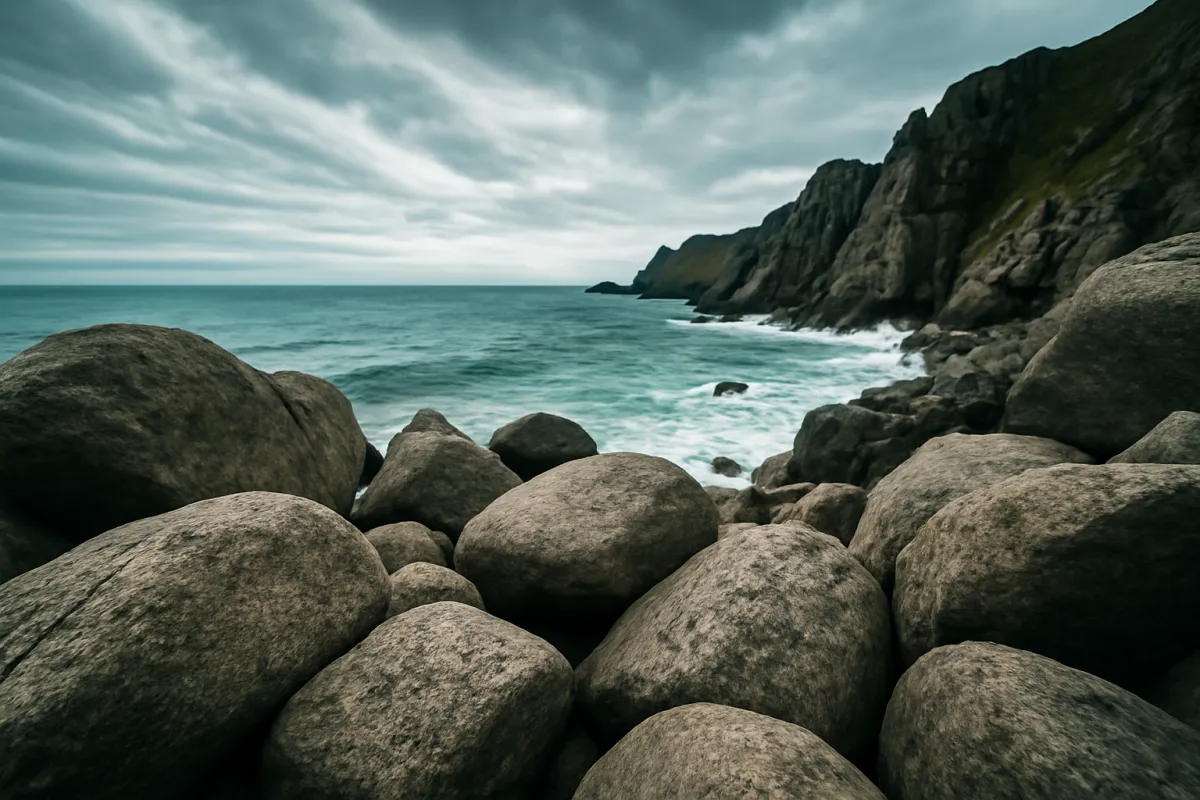
The productive way to use a wide lens outdoors is to work close to something. Find a foreground worth the space it will occupy, a boulder, a stream, a patch of flowers, a fence line, a stretch of pattern in sand or ice, and get the camera close and low to it. The wide angle then renders that near element large and the distance small, and the frame gains the depth that makes wide photographs work. Composition in this style is largely about what you put in the bottom third of the picture.
The unproductive way is to stand at a viewpoint, aim at the view, and press the shutter. Without a near element the wide frame is mostly sky and mid-ground, the distant subject is small, and the result looks emptier than the scene felt. This is not a failure of technique so much as a mismatch of tool to subject: that photograph usually wanted a longer lens.
Filters come up constantly in this kind of work, and they behave differently at the wide end. A polariser’s effect varies with the angle to the sun, and a very wide frame spans enough sky to show that variation as a visible band of darker blue. Graduated filters are harder to align cleanly when the horizon is small in a big frame. Our camera filters explainer covers what each type does. For the separate question of which focal length to buy for outdoor scenes specifically, our best lens for landscape field note is the page that answers it.
Wide-angle lenses for interiors and real estate
Interiors are where a wide lens stops being a stylistic choice and becomes a requirement, because you cannot back up through a wall. A room that a 35mm lens shows as one corner, a 16mm shows whole.
The discipline that separates good interior work from bad is restraint in two directions. First, do not go wider than the room needs. An ultra-wide used because it is in the bag makes a small room look cavernous and distorted, and furniture near the edges stretches into odd shapes. Use the narrowest lens that fits the room, which usually means a wide zoom rather than a fixed ultra-wide. Second, keep the camera level and at a sensible height, so that vertical lines stay vertical and the room reads as a real space rather than a funhouse.
Shooting from a corner is the standard approach because it shows two walls and gives the eye a sense of the room’s shape. Watch what lands at the frame edges, because that is where the stretching shows, and avoid putting a person or a distinctive round object right at the corner. Our real estate photography field note covers the workflow in detail, including lighting, which is usually the harder half of the job.
Wide-angle lenses for astrophotography and the night sky
Night sky work is the use case that most justifies an expensive fast wide lens, and it is worth understanding why the requirement is so specific.
Two things happen at once. The sky is enormous, so you want a wide field to fit a meaningful stretch of it with the ground beneath. And the light is extremely scarce, so you need a large aperture to gather enough of it in a short exposure. Wide and fast together, which is exactly the combination that is optically hard and commercially expensive. A wide focal length also allows a longer exposure before the earth’s rotation turns stars into streaks, which is a second, independent reason astro work favours short focal lengths.
Corner performance matters far more here than in almost any other kind of photography. A lens that renders stars as clean points in the centre but as small wedges or wings in the corners will produce night frames that look wrong across the whole outer third of the picture, and no amount of stopping down fully fixes it on a poor design. This is why star photographers care about a lens’s corner rendering at full aperture more than about almost any other specification.
Our night sky field note covers the exposure method for stars, and our northern lights field note covers the different exposure problem posed by a subject that moves. Both use the same wide, fast glass and both are strong arguments for buying an f/1.8 or f/2.8 wide prime rather than an f/4 zoom.
Wide-angle lenses for vlogging and video
Video use has its own set of requirements and they differ from stills in ways worth naming.
The core reason wide lenses dominate handheld video is that a wide angle of view makes camera shake far less visible. Shake is an angular movement, and a wide frame covers many degrees, so a given wobble moves the image a smaller fraction of the frame. The same physical shake on a long lens is a violent jolt. That relationship is why gimbal and handheld footage is almost always shot wide.
Self-recorded video adds a second requirement: at arm’s length you need a lens wide enough to include your face and some background, which usually means something in the region of a 24mm equivalent or wider. Wider than about a 16mm equivalent and the face starts to stretch noticeably at any off-centre position, which is the look most people are trying to avoid.
Two practical cautions. Focus breathing, where the framing shifts slightly as focus changes, is more visible in video than stills and varies by lens. And a wide lens shows everything in the room, so the background needs managing in a way a longer lens would have hidden. Our field note on shooting video covers the settings side, and for phone shooters our phone camera lens field note covers what clip-on wide attachments actually do.
Wide-angle lenses for street and documentary work
The moderate wide range, roughly 28mm to 35mm equivalent, has a long history in documentary and street photography, and the reasons are practical rather than aesthetic.
A 35mm equivalent takes in enough context to show where a subject is without pulling so wide that the subject becomes small. It is close enough to normal that the frame does not announce itself as a wide-angle photograph. And it works at conversational distance, which for candid work is often the distance you are actually at.
Working this way requires being closer than most beginners find comfortable, which is the real skill involved rather than any equipment question. A 35mm frame filled with a subject means standing a few steps away, and a 28mm means closer still. That proximity is the point: it puts the viewer in the scene rather than observing it from across the road.
The other advantage is physical. Wide primes in this range tend to be small and light, and a small camera with a small lens is less conspicuous and easier to carry all day than a large one. Our comparison of 35mm and 50mm works through the choice between the moderate wide and the normal focal length for exactly this kind of shooting.
Prime versus zoom in the wide range
The general prime-versus-zoom trade is covered in our prime versus zoom field note; what follows is what changes specifically at the wide end.
The argument for a zoom is stronger here than anywhere else, because wide framing is unusually sensitive. The step from 16mm to 24mm is a different photograph, not a slightly tighter one, and choosing between them by walking is often impossible: you cannot step back from a cliff edge or through a wall. A wide zoom lets you set the exact angle the composition needs from where you are standing, which at the wide end is a substantive creative control rather than a convenience.
The argument for a prime is aperture, size and corner quality. Wide primes reach maximum apertures that wide zooms do not, which matters enormously for night work. They are usually smaller and lighter, sometimes dramatically so. And a prime only has to be optimised for one focal length, so a good wide prime often out-resolves a zoom in the corners at comparable apertures, which is exactly where wide lenses are hardest to correct.
The sensible default for a first wide lens is a zoom, unless you already know that you shoot at night or that you shoot one focal length almost exclusively. Buy the zoom, note where the focal length ring actually ends up over a few months, and let that tell you which prime, if any, to add later. Our kit lens versus prime field note makes the same argument for the standard range.
Filters on a wide-angle lens
Filters are more awkward at the wide end than anywhere else, and the awkwardness comes in two forms.
The mechanical problem is that some ultra-wide lenses have a strongly curved front element and a permanently attached petal-shaped hood, which leaves nowhere to screw a filter on. Those lenses take specialist bracket systems that hold large square filters in front of the glass, which are bulky and expensive. Before buying an ultra-wide, check whether it has front filter threads, because for anyone who uses filters routinely this is a significant practical difference rather than a detail.
The optical problem is the polariser. A polariser’s strength depends on the angle between the lens and the sun, and it peaks at ninety degrees to it. A very wide frame covers so much angular width that different parts of the sky sit at very different angles, so the effect varies visibly across the picture and can leave an obvious dark patch in one part of the sky. On a moderate wide this is usually manageable. On an ultra-wide it is often unusable for skies, though still useful for cutting reflections off water and foliage in the lower part of the frame.
Neutral density filters and plain protective filters do not have this problem, though very thick filter rings can cut into the corners of an ultra-wide frame and produce mechanical vignetting, so slim mounts are worth the extra. Our camera filters explainer covers what each filter type is actually doing.
Fisheye lenses and how they differ
A fisheye is not simply a wider wide-angle lens. It is a different projection, which means it maps the scene onto the sensor by different rules.
Ordinary wide lenses are rectilinear: they are designed so that straight lines in the world stay straight in the picture, and the cost of that is the stretching of shapes toward the corners described earlier. A fisheye abandons that requirement. It lets straight lines bow, sometimes dramatically, and in exchange it fits a much wider angular field into the frame and keeps shapes near the edges more compact. Full-frame fisheyes fill the rectangle with a curved view; circular fisheyes project a round image inside the frame with black around it.
The practical consequence is that a fisheye is a special-effect lens for most people rather than a general wide-angle option. Any straight line that does not pass through the centre of the frame will curve, so horizons bend, buildings bulge and floors dome. Software can partially convert a fisheye frame to a rectilinear one, but the conversion stretches the edges heavily and throws away angle of view, so it is a rescue rather than a plan.
Where fisheyes genuinely earn their place is in action sports and skate video, where the curvature is part of the established look, in some interior and ceiling work, and in whole-sky astronomical frames. If what you want is a wide view of a real scene, a rectilinear ultra-wide is the lens; a fisheye is a stylistic decision made on purpose.
Wide-angle lens weight, size and travel
Wide lenses cover a wide range of sizes, and the pattern is not the one people expect from the long end.
Moderate wide primes, in the 24mm to 35mm equivalent region at modest apertures, are among the smallest lenses made, often small enough to make a camera pocketable in a jacket. That is a genuine reason to own one: the best lens is the one that came with you.
Ultra-wide zooms and fast wide primes go the other way. Correcting a very wide field at a large aperture takes big front elements and a lot of glass, so a fast ultra-wide zoom can be as heavy as a mid-range telephoto and considerably more awkward to pack, especially if the bulbous front makes it impossible to lay flat or fit a normal cap. Add a filter bracket system and it becomes one of the largest items in the bag.
For travel, the honest question is how much of your shooting is genuinely wide. If the answer is a handful of frames a day, a small wide prime, or simply the wide end of a standard zoom, covers it at a fraction of the weight. If the answer is that wide is your main way of seeing, the big zoom is worth carrying. Our camera bag field note covers packing around a large front element, which is a real constraint rather than a detail.
Common wide-angle mistakes
- Shooting wide with no foreground. The most common one. A wide frame with nothing near the camera is mostly empty space and the distant subject looks small.
- Buying by the printed millimetres on a crop body. A 24mm on a 1.5x sensor is not a wide-angle experience. Do the multiplication before you buy.
- Using a wide lens for portraits at close range. Faces stretch, noses grow, and no amount of editing puts it back. Distance fixes it; software does not.
- Putting people at the corners of a group shot. That is precisely where the projection stretches shapes.
- Tilting the camera up at buildings. Verticals converge and the structure appears to fall backwards. Level the camera and crop instead.
- Expecting a polariser to work evenly. On an ultra-wide it will not, and the banded sky it produces is hard to fix.
- Assuming everything will be sharp. Deep depth of field comes largely from distance. Very close foregrounds still need stopping down or focus stacking.
- Ignoring corner quality when buying for night work. Stars in the corners are the hardest test a wide lens faces, and centre sharpness figures tell you nothing about it.
- Going wider than the room or scene needs. Wider is not better; it is a different composition, and often a worse one.
- Forgetting to check the frame edges. A wide lens includes far more than you notice through the viewfinder, and the mistakes collect at the edges.
A worked example: choosing your first wide-angle lens
Here is one illustrative decision worked from start to finish, with every figure stated as a typical example rather than a measured fact.
You shoot an APS-C camera with a 1.5x crop factor and a kit zoom that starts at 18mm, which frames like a 27mm equivalent. You mostly photograph coastlines and hill scenery on weekends, and you have started trying night sky frames. Your complaint is that the kit zoom at its widest still cannot fit the foreground rocks and the sky together, and that night frames are noisy.
Work out the target first. You want something meaningfully wider than the 27mm equivalent you already have, and the obvious step is a 24mm equivalent or wider. On a 1.5x body a 16mm lens frames like a 24mm equivalent, giving roughly 84 degrees of diagonal coverage, which is a clear step up from what the kit zoom provides and still short of the extreme range where composition becomes demanding. That is the number to shop for.
Then decide zoom or prime by the night requirement. Your kit zoom’s widest aperture at the short end is around f/3.5, and night frames are noisy because the exposure has to be pushed. A wide zoom at a constant f/4 would not fix that, so if night work matters, the fast prime is the lens that changes something. If night work is occasional and coastal scenes are the real subject, a crop-format ultra-wide zoom covering roughly a 15mm to 35mm equivalent range is the more flexible purchase, and you accept that night frames stay noisy.
Say you choose the prime for the night gain. The checks that follow are corner rendering at full aperture, because that is where a wide lens fails and where stars sit; whether it has front filter threads, because you use a polariser; the physical size against your existing bag; and the close focusing distance, because your coastal frames put rocks near the camera. Set the total against what you can spend using the upgrade budget planner, and remember to include a filter for it if the thread size differs from the rest of your kit.
What to check before you buy a wide-angle lens
- The equivalent focal length on your body. Multiply by your crop factor and compare against what you already own. If the equivalent is close to a focal length you have, the lens will not feel new.
- Corner sharpness at the widest aperture. The centre of a wide lens is usually fine. The corners are where designs differ, and where night frames live.
- Distortion and how correctable it is. Some barrel distortion is normal; check whether a correction profile exists for your editing software.
- Front filter threads, or the absence of them. A bulbous front element means a bracket system, which is a real cost and bulk decision.
- Physical size and whether it fits your bag. Ultra-wides are often fatter than they are long, and fat is the harder dimension to pack.
- Close focusing distance. Foreground-led wide compositions need the lens to focus close, and this varies more than people expect.
- Whether it is designed for your sensor size. A crop-format lens on a full-frame body will vignette heavily or force a crop mode.
- Stabilisation, and whether you need it. Useful for handheld video, largely irrelevant for tripod work. Our image stabilisation explainer covers when it helps.
- Weight against how often you will carry it. A lens left at home has no optical qualities at all.
- The used market. Wide lenses are often bought optimistically and sold barely used, which makes them one of the better second-hand categories. Our first camera budget field note covers setting the spend sensibly.
The bottom line
A wide-angle lens is a short focal length and therefore a large angle of view, and every characteristic people attribute to it follows from that one fact plus the close shooting distance it invites. Under about 35mm equivalent is wide, under about 20mm equivalent is ultra-wide, and the word equivalent is doing essential work in both of those sentences: multiply by your crop factor before you shop, because judging by the number on the barrel is the most common way people end up with a lens that is not as wide as they wanted.
Use the width for something. A wide frame with a strong near element gains depth and scale; a wide frame of a distant subject with nothing in the foreground just makes the subject small. Keep faces away from the corners, keep the camera level when buildings are involved, and remember that the stretching people call distortion is mostly the geometry of a flat picture and your own shooting distance rather than a fault you can buy your way out of. For most people the first wide lens should be a zoom, with a fast prime added later only if night work or a settled favourite focal length justifies it. Work out the equivalent you want, set the budget in the upgrade budget planner, and buy for the corners rather than the centre.
This field note explains how wide-angle lenses behave and sells nothing: no manufacturer paid for a placement, no lens model is named, and the focal lengths, angles and apertures above are chosen to carry across every camera system rather than to describe a particular product. The angle of view figures are approximate values derived from the standard geometric relationship between focal length and the diagonal of a 35mm-format frame, and real lenses vary slightly from them because of design and distortion correction. Crop factors are quoted as the common approximations rather than exact ratios, so confirm the figure for your own camera before doing the arithmetic. Prices, availability and the specifications of any individual lens change constantly, so check current details with the manufacturer or retailer before you buy.
Frequently asked questions
What is a wide-angle lens?
A wide-angle lens is one with a short enough focal length that it takes in a noticeably wider view than the human eye reads as normal. On a full-frame camera that is conventionally anything shorter than about 35mm, with the wide range running roughly from 24mm to 35mm and the ultra-wide range sitting below about 20mm. The short focal length produces a large angle of view, so more of the scene fits in the frame from the same standing position. That single property drives everything else about how the lens behaves: the exaggerated sense of near and far, the deep apparent depth of field, and the stretching that appears at the edges of the frame.
What focal length counts as ultra-wide?
There is no standards body drawing the line, but the common working convention on full frame puts ultra-wide below roughly 20mm, with 20mm to 24mm treated as a border zone that different people file differently. Between about 24mm and 35mm is ordinary wide. On a crop sensor, apply the crop factor before you judge: a 16mm lens on a 1.5x body frames like a 24mm on full frame, so it is wide rather than ultra-wide even though the number printed on the barrel looks extreme. Judge by the equivalent, not by the millimetres on the ring.
Why do wide-angle lenses distort faces?
Two different effects get blamed for this, and only one is really the lens. Barrel distortion is an optical fault that bows straight lines outward, and it is largely correctable in software. What people usually mean, though, is perspective stretching: because a wide lens invites you to stand close, whatever is nearest the camera is rendered much larger than what is behind it, and objects near the edges of the frame get pulled outward by the projection. A face photographed close on a wide lens therefore gets a large nose and stretched cheeks. The fix is distance, not a different lens: step back, put people in the middle of the frame, and use a longer focal length for portraits.
Is a wide-angle lens good for landscape photography?
It is the traditional choice for wide scenes, though not for the reason most people assume. A wide lens does not make distant mountains look bigger; it makes them smaller, and a photograph of a distant range on an ultra-wide can be disappointing for exactly that reason. What a wide lens does is let you build a frame with a strong near foreground and a deep sense of space behind it. When there is something worth putting close to the camera, a wide lens is superb. When the subject is far away and there is nothing in the near field, a longer lens usually serves better.
How does a crop sensor change a wide-angle lens?
It narrows the view. A smaller sensor records only the middle portion of the image the lens projects, so the effective framing is tighter than the focal length suggests. Multiply the focal length by the crop factor to get the full-frame equivalent: roughly 1.5x on most APS-C bodies, about 1.6x on some, and 2x on Micro Four Thirds. A 14mm ultra-wide on a 2x body frames like a 28mm, which is ordinary wide rather than dramatic. This is why genuinely wide views are harder and usually more expensive to get on a smaller sensor, and why crop-specific wide lenses exist with very short focal lengths printed on them.
Why are fast wide-angle lenses so expensive?
Because a wide angle of view and a large aperture are both hard, and combining them is harder still. A wide lens has to bend light coming in from extreme angles and land it evenly on a flat sensor, which takes complex optical designs with large, precisely shaped elements. Opening that design up to f/1.8 or f/1.4 means the outer parts of those elements are doing the most difficult work, which is where aberrations and soft, smeared corners appear. Correcting all of that pushes up the element count, the glass quality and the size. A slower wide zoom at f/4 is far easier to build well, which is why it usually costs and weighs less.
Should I buy a wide-angle prime or a wide-angle zoom?
A wide zoom is the more practical first purchase for most people, because framing decisions at the wide end are sensitive: the difference between 16mm and 24mm changes a composition completely, and a zoom lets you settle that in the moment rather than by walking. A wide prime earns its place when you need a wider maximum aperture than the zoom offers, most obviously for night and astro work, or when you want the smallest possible lens. If you already know one focal length is where you shoot, the prime is the better tool. If you do not, start with the zoom and let it tell you.
Can you use filters on a wide-angle lens?
Usually yes, but with two caveats that get sharper as the lens gets wider. The first is mechanical: some ultra-wide lenses have a bulbous front element and a built-in petal hood, which means no front threads at all and a specialist bracket-mounted filter system instead. The second is optical: a polariser works by angle relative to the sun, and a very wide frame covers such a spread of sky that the effect can go from strong to nothing across the picture, leaving an obvious dark band. Neutral density filters and simple protective filters behave normally, but check for mechanical vignetting from thick filter rings at the widest settings.