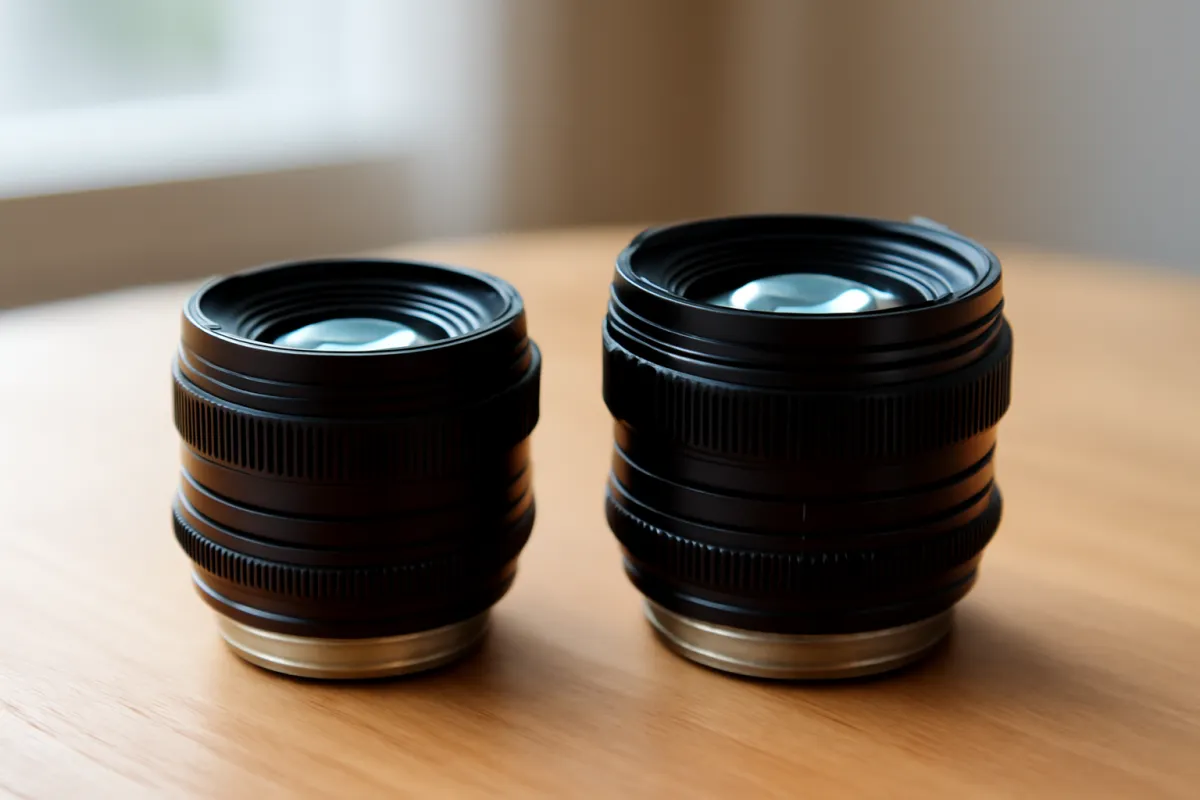
What's on this page
- The short answer: which to buy first
- What 35mm and 50mm actually see
- The nifty fifty and the everyday 35
- The crop-sensor twist that changes everything
- Perspective and compression: the real difference
- Which lens for portraits
- Which lens for street, travel, and everyday
- Which lens for indoors and tight spaces
- The working-distance difference
- Background blur at 35mm and 50mm
- The do-everything lens versus the specialist
- Price and the cheap-fifty phenomenon
- Why most people end up owning both
- If you can only own one
- What about video
- Full frame versus crop: the decision table
- Cost per shoot: the frame that decides it
- Three shooters, three answers
- Mistakes that buy the wrong prime
- The bottom line
Short answer: Buy the 35mm first if your photography is mostly people in places: streets, travel, family life indoors, groups, and portraits that include the setting. Buy the 50mm first if you mostly shoot tighter portraits of one or two people where the background should melt away. On a 1.5x crop body a 35mm frames like a full frame 50mm, so undecided crop shooters chasing the nifty fifty feel should buy the 35mm.
Ask a room of photographers whether your first prime should be a 35mm or a 50mm and you will start a friendly argument that outlasts the coffee. One camp swears by the wider, do-everything 35mm that lives on the camera and never comes off. The other camp defends the classic nifty fifty, the cheap little 50mm that made half of them fall in love with the hobby. Both camps are right about their own photography, which is exactly why the debate never resolves and never quite helps you at the checkout page.
This field note resolves it for your specific case. It walks what these two focal lengths actually see, why fifteen millimeters changes so much, the crop-sensor twist that quietly flips the recommendation, and then turns the whole thing into money you can plan against with our upgrade budget planner. It sits right next to our field note on prime versus zoom, which decided that a fast prime should be your first real lens, and our field note on full frame versus crop, which explains the sensor math underneath. Those two settled the category; this one picks the exact lens.
Key takeaways
- The 35mm is the generalist and the 50mm is the specialist: 35mm handles rooms, streets, groups, and travel, while 50mm excels at tighter portraits and low-light single subjects.
- The crop-sensor twist flips the classic advice: a 35mm on a 1.5x crop body frames like a full-frame 50mm, so crop shooters chasing the nifty-fifty feel should buy the 35mm.
- For portraits, the 50mm flatters faces from a step back on full frame, and becomes an even better 75mm-equivalent portrait lens on crop.
- For street, travel, and tight interiors, the 35mm wins on breathing room and context, which is why it is the default one-lens choice.
- Most photographers own both eventually, but almost none need both on day one: buy the one that matches your dominant subject and let real use earn the second.
The short answer: which to buy first
If you want the recommendation before the reasoning, here it is. Buy the 35mm first if your photography is mostly people in places: streets, travel, family life indoors, group scenes, and portraits that include the setting. Buy the 50mm first if your photography is mostly tighter portraits of one or two people where the background should melt away and the face should flatter. That single fork covers the large majority of first-prime buyers, and everything below is the evidence for why it lands where it does.
Two amendments sharpen it. First, the sensor in your camera changes the math: on a crop body the 35mm shifts toward the classic normal-lens feel and the 50mm shifts toward portrait reach, which nudges undecided crop buyers toward the 35. Second, if you already own a kit zoom, as our prime-versus-zoom field note assumes most first-prime buyers do, you can check the metadata on your favorite frames and simply buy the prime nearest the focal length you already gravitate toward. The companion beside this article will take your sensor, your main use, and your budget and name a starting focal length in one line. Read on to understand why it says what it says.
What 35mm and 50mm actually see
Strip the folklore and these are just two angles of view. A 50mm lens on a full-frame camera frames roughly the way your focused attention feels: not wide, not tight, a natural slice of the world that includes a person and a little of their surroundings. A 35mm opens that slice wider, taking in more of the room, more of the street, more of the context on either side of whatever you pointed at. The difference in printed numbers is only fifteen millimeters, but angle of view does not scale with the number, so the wider lens shows meaningfully more scene.
The practical consequence is distance. To fill the same frame with the same subject, the 50mm asks you to stand a step or two farther back than the 35mm. That gap sounds trivial until you are in a small kitchen, at a crowded market, or trying to fit three friends on a couch, at which point the 35mm’s extra width is the difference between the shot and a frustrated shuffle backward into a wall. It also runs the other way: the 50mm’s tighter frame naturally excludes clutter, which is a gift when the background is busy and a nuisance when the story is the background. Neither is wider or tighter in a good or bad sense. They are two different amounts of world.
The nifty fifty and the everyday 35
Each focal length has earned a nickname, and the nicknames carry real meaning. The 50mm is the nifty fifty, the lens generations of photographers bought cheap and cut their teeth on, prized because it renders faces and scenes with an unfussy naturalness and because the budget f/1.8 version costs almost nothing for what it does. It is the lens that taught most enthusiasts what a blurred background and a wide aperture could do, and it still holds that job today.
The 35mm has quietly earned its own title: the everyday lens, the one that stays mounted because it handles almost any situation you walk into. Documentary shooters, travel photographers, and street shooters treat it as a default because it includes context without being distractingly wide. Where the 50mm frames a portrait, the 35mm frames a scene with a person in it, and for a lot of photography that is the more useful instinct. The two nicknames map neatly onto the framing this field note keeps returning to: the 50mm is the classic first love, and the 35mm is the workhorse that never comes off the body. Knowing which nickname describes the photos you already save is most of the decision.
The crop-sensor twist that changes everything
Here is the fact that quietly rewrites the classic advice, and the reason our full-frame-versus-crop field note is required reading before you buy. A crop sensor sees a tighter slice of every lens, commonly around 1.5x, so the focal length printed on the barrel is not the framing you get. On a 1.5x crop body, a 35mm frames like a 53mm on full frame, and a 50mm frames like a 75mm. The numbers on the lens stay the same; the pictures they take do not.
That coincidence is enormous for first-prime buyers. Crop shooters who want the everyday normal view, the classic nifty-fifty feel, should buy the 35mm, because the 35mm gives them that view on their sensor. If they buy the actual 50mm expecting the famous nifty-fifty experience, they instead get a 75mm-equivalent short telephoto that feels tight indoors and forces them across the room for a simple portrait. It is the single most common crop-sensor lens mistake, and it comes from copying full-frame advice without doing the 1.5x arithmetic.
Effective focal length by lens and sensor
The same two primes on full frame and on a 1.5x crop body. A longer bar means tighter framing and more reach, not better glass. Illustrative of a typical 1.5x crop factor.
Notice the overlap: a 35mm on crop (~53mm) frames almost exactly like a 50mm on full frame. That single coincidence is why crop shooters chasing the nifty-fifty feel should buy the 35mm, not the 50mm.
Perspective and compression: the real difference
The framing gap gets most of the attention, but a subtler difference matters just as much: perspective. Perspective is not set by the lens; it is set by how far you stand from your subject. Because the 50mm makes you stand farther back to fill the frame, it renders features and backgrounds with slightly more compression, meaning near and far objects look closer in size and the background stacks up gently behind the subject. Because the 35mm lets you work closer, it renders with more depth, so noses, hands, and anything nearest the lens loom a little larger and the background falls away smaller.
This is why a tight face shot on a 35mm can look subtly stretched, the nose pushed forward, while the same face on a 50mm sits more naturally: you took the 50mm shot from farther away. It is also why the 35mm makes small rooms feel more spacious and dynamic, and why the 50mm makes portraits feel calmer and more flattering. Neither rendering is correct. They are tools for different intentions: reach for the 35mm when you want energy, immersion, and the feeling of being inside the scene, and reach for the 50mm when you want distance, calm, and a subject lifted cleanly out of its surroundings. Understanding this one idea will improve your photographs more than any spec on the box.
Which lens for portraits
Portraits are where the two lenses diverge most, so treat this section as decisive if faces are your subject. On a full-frame body, the 50mm is the safer portrait lens by a comfortable margin. The extra working distance flatters facial features, the tighter frame naturally excludes clutter, and the slightly longer focal length blurs the background more easily at the same aperture. It is the reason the classic portrait recommendations climb from 50mm toward 85mm rather than down toward 35mm.
The 35mm is not banished from portraiture; it just does a different job. It excels at environmental portraits, the kind that place a person in their workshop, their kitchen, their city, telling you who they are by what surrounds them. Fill the frame with a face on a 35mm and the close working distance can stretch features in a way most subjects will not thank you for, so it wants a little room and a little context. The crop-sensor twist re-enters here in the 50mm’s favor: on a 1.5x body the 50mm becomes a 75mm-equivalent, which is a genuinely lovely portrait focal length with even more flattering compression. If your library is mostly single faces you want to isolate, the 50mm is your first prime; if your favorite portraits show the person in their world, the 35mm is.

Which lens for street, travel, and everyday
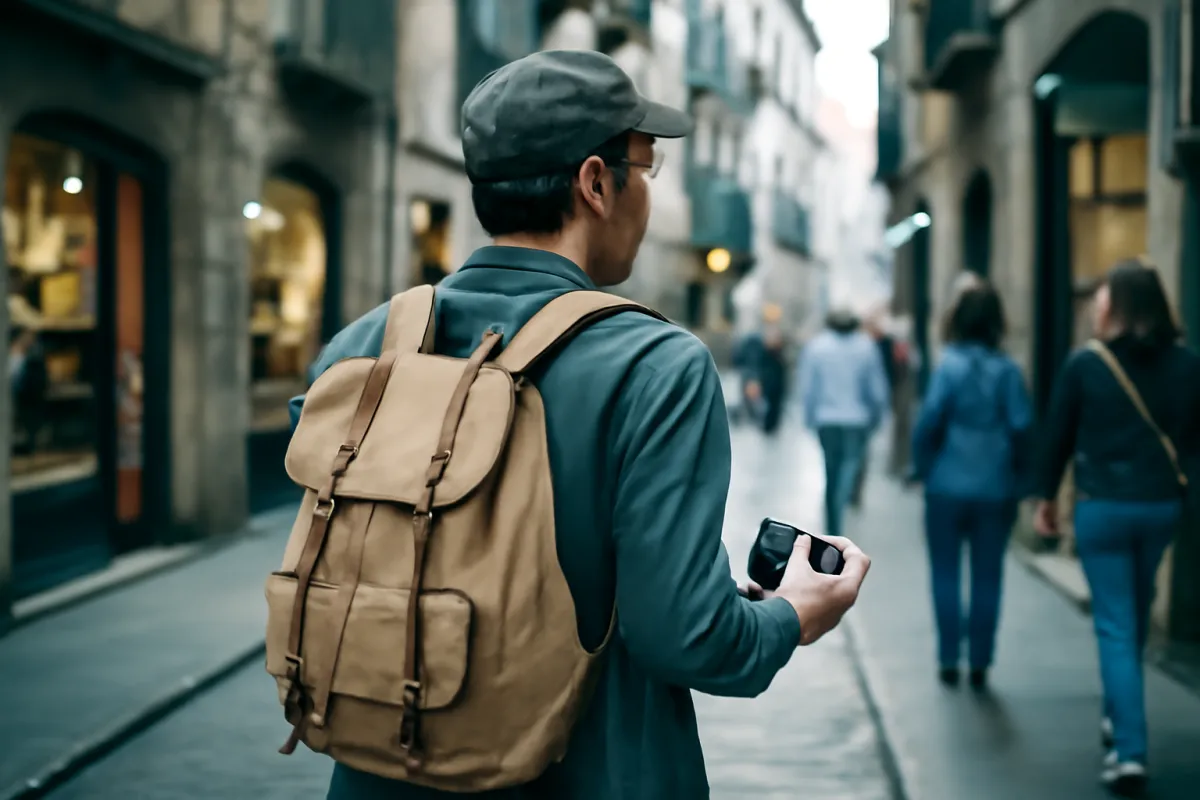
Point the same question at street, travel, and everyday shooting and the answer swings hard to the 35mm. This is the classic reportage focal length for a reason: its wider view captures a subject and the place they are in within a single frame, which is the entire grammar of documentary and travel photography. You can work close to a person and still show the market, the alley, the weather, the context that makes the photograph a story rather than a headshot. The 50mm can shoot street, and some superb photographers marry it, but it constantly asks you to back up on sidewalks that will not give you the room.
Travel sharpens the case further, because a trip serves scenes at unpredictable distances while you carry everything on your back. The 35mm’s breadth covers the cathedral interior, the cafe table, the group of friends, and the street portrait without a swap, which is exactly the flexibility our prime-versus-zoom field note prizes when you commit to a single lens. For one prime on a trip, the 35mm is the near-universal pick, and it is why so many photographers describe it as the lens that never leaves the body. If your dominant subject is life happening in places, buy the 35mm and do not overthink it.
Which lens for indoors and tight spaces
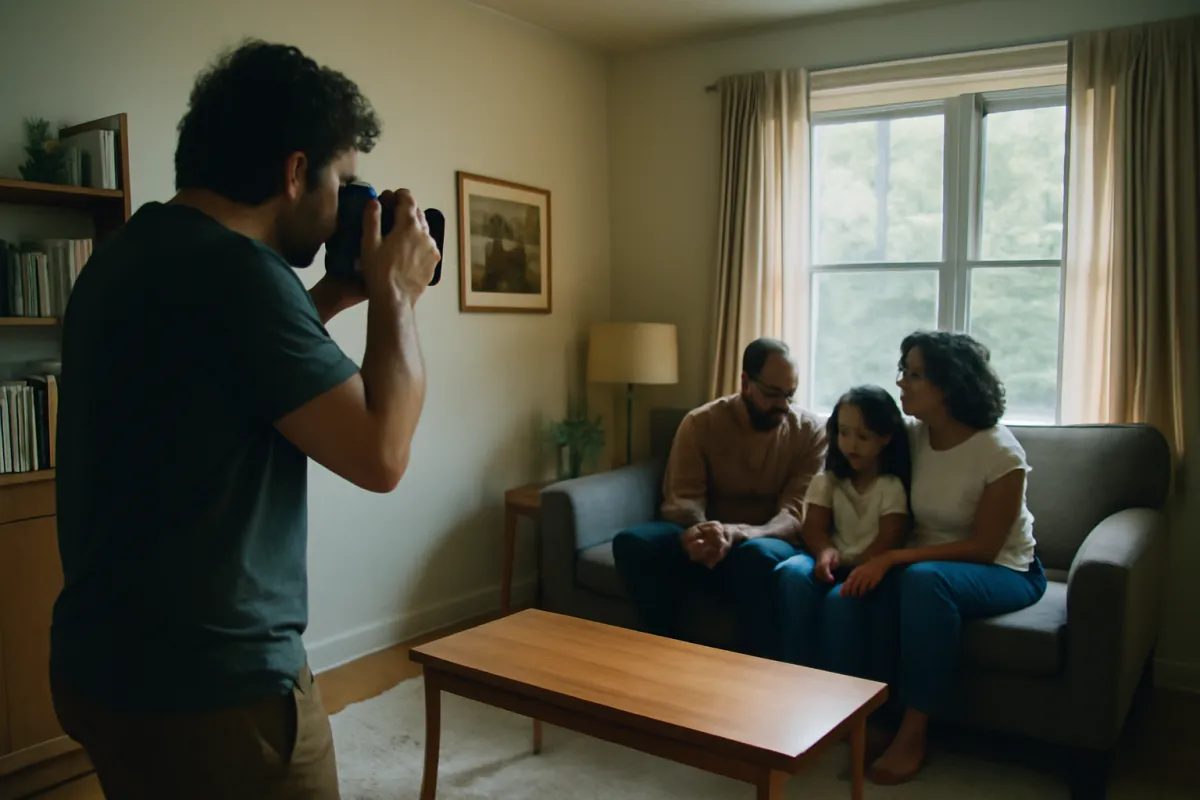
Anyone who shoots mostly indoors should weight this section heavily, because walls do not move and the 35mm’s extra width becomes the whole ballgame. In a living room, a kitchen, a small apartment, or a busy dinner table, the 50mm constantly runs out of backward room, cropping heads and forcing you into corners to fit a scene. The 35mm breathes in exactly those spaces: it fits the group on the couch, the kid across the rug, the whole cramped room, all from a natural standing distance rather than a shuffle into the doorway.
This is the quiet reason parents photographing children at home almost always end up preferring the 35mm. Home life happens in tight, unpredictable spaces at unpredictable distances, and the lens that can include the scene without a step back is the lens that catches the moment before it ends. The crop-sensor twist compounds the point: a 50mm on a crop body frames like a 75mm indoors, which is nearly unusable in a small room, while the 35mm lands at a comfortable normal. If your camera lives inside your house more than outside it, the 35mm is not a preference but close to a requirement, and the 50mm is the lens you add later for deliberate portraits when you have room to back up.
The working-distance difference
It is worth naming working distance on its own, because it decides which lens is even usable in a given space regardless of taste. Working distance is simply how far you stand from your subject to frame it a certain way, and the 50mm always asks for more of it than the 35mm. For a headshot, the 35mm might have you a couple of feet from a face while the 50mm places you several feet back, and for a full-length shot the gap widens further.
That distance cuts both ways in real photography. More working distance, the 50mm’s habit, is a social gift in portraiture: standing a little farther back is less intrusive, more comfortable for the subject, and easier for candid expressions, which is another reason it flatters. Less working distance, the 35mm’s habit, is a practical gift in crowds and small rooms where there is simply nowhere to retreat to, and it is a creative gift when you want the immersive, close-in feeling of being part of the scene. The lens you can physically use in the spaces you actually shoot is the lens you should buy, and no amount of image-quality theory outweighs standing with your back against a wall unable to fit the shot.
Background blur at 35mm and 50mm
Both lenses in their cheap f/1.8 form can blur a background beautifully, so the honest comparison is about degree and ease, not about whether one can and one cannot. At the same aperture and the same subject size in the frame, the 50mm blurs the background a little more strongly and a little more easily, because its longer focal length and greater working distance both push the background further out of focus. This is part of why it reads as the more classically flattering portrait lens: subject separation comes with less effort.
The 35mm still produces lovely blur, but it works hardest when the subject is close and the background is far, and its wider view naturally keeps more of the scene recognizable behind the subject. Two footnotes keep this from tilting into 50mm propaganda. First, distance does much of the heavy lifting for either lens: a subject well separated from a distant background blurs strongly even at moderate apertures, as our prime-versus-zoom field note details. Second, background blur is a taste, not a virtue, and the 35mm’s more contextual rendering is the point of environmental work, not a shortfall. If the melted-background look is what you save from other photographers, lean 50mm; if you like your backgrounds present but soft, the 35mm delivers happily.
The do-everything lens versus the specialist
Zoom out from the individual comparisons and a clean framing emerges: the 35mm is a do-everything lens and the 50mm is a specialist. The 35mm wins more of the ordinary situations you point a camera at, rooms and streets and groups and travel and context, because its breadth suits the widest range of subjects. The 50mm wins fewer situations, but it wins them decisively: tight portraits, single subjects, low light where its easier blur and reach shine. That is precisely what generalist versus specialist means, and it explains why the two lenses feel so different to live with even though only fifteen millimeters separates them.
Where each prime is the better pick
An illustrative split of common everyday shooting situations by which focal length serves them better. Illustrative, and it shifts with your own genre.
The 35mm wins more boxes because it is the generalist: rooms, streets, groups, and context. The 50mm wins fewer but wins them decisively, tight portraits and low light, which is exactly what do-everything versus specialist means.
The practical takeaway from this framing is about order, not exclusivity. If you can only reason about one lens, the generalist is the safer default because it disappoints in fewer situations, which is why undecided buyers should usually start with the 35mm. The specialist earns its place once you know you have a specialty, and buying it first only makes sense when that specialty is already the bulk of your photography. Match the lens to the shape of your library, not to the shape of the argument.
Price and the cheap-fifty phenomenon
No comparison of these two lenses is complete without money, and here the 50mm has a genuine edge worth understanding. The budget 50mm f/1.8 is the cheapest fast prime almost every camera system makes, at a typical illustrative price of $125 to $250, because its optical formula is old, simple, and cheap to manufacture. The equivalent budget 35mm usually costs somewhat more, often an illustrative $150 to $400 depending on system and format, because a wider fast lens is a little harder to build. So the classic cheap-fifty recommendation is partly a price story: it became the default first prime because it was the least expensive way into wide apertures.
That price gap is real but rarely decision-changing on its own, and our first-camera budget field note makes the case for weighting the lens fund toward the glass that matches your subject rather than simply the cheapest option. A slightly pricier 35mm that stays on your camera and shoots everything is better value than a cheaper 50mm that lives in a drawer because it is too tight for your rooms. Price should break a tie between two lenses that both fit your photography, not overrule the framing analysis above. Buy the focal length your pictures need, then let cost decide between comparable options and between new and used.
Why most people end up owning both
Spend enough time in this hobby and the honest observation is that a lot of enthusiasts end up owning both a 35mm and a 50mm. The two focal lengths are close enough that either can cover most photography, and far enough apart that a dedicated shooter eventually wants the other for its specialty: the environmental shooter adds a 50mm for the occasional tight portrait, the portraitist adds a 35mm for context and travel. This is not a failure of planning. It is the natural result of a growing photographer discovering the edges of one lens and reaching for the complement.
The mistake is buying both on day one. Doing so doubles the outlay before you know your dominant subject, and it defers the more valuable lesson, which is learning to see through a single focal length until it becomes second nature. The disciplined path is to buy the one that matches your current photography, shoot it hard for a season, and let genuine, repeated frustration, not a wishlist, tell you whether the second lens has earned its slot. Price that second purchase against your real budget and pace in the upgrade budget planner when the time comes. Most photographers do eventually own both; almost none of them needed both at the start.
If you can only own one
Constrain the decision to a single lens for the foreseeable future and the recommendation sharpens toward the 35mm for most people. As the generalist, it disappoints in the fewest situations, and a one-lens photographer values that above peak performance in any single genre. It handles the trip, the dinner, the street, the group, and the environmental portrait, which is a wider band of real life than the 50mm’s specialty covers. The classic advice to “buy a nifty fifty and learn to see” is sound as a discipline, but on a crop body that same discipline points at the 35mm, which delivers the normal-lens feel the advice was really describing.
The exception is the person whose one lens will overwhelmingly shoot portraits of individuals. For them the 50mm is the correct single lens, because its flattery and easy separation matter more than breadth they will rarely use, and on a crop body the 75mm-equivalent it produces is an even better fit for that narrow purpose. The one-lens decision, in short, is a bet on your dominant subject: bet on breadth with the 35mm unless faces are clearly the whole game, in which case bet on the 50mm and enjoy the specialist you chose on purpose.
What about video
Video shifts the calculus, because behind a camera you are often the subject too, and the framing rules change accordingly. The 35mm is the friendlier run-and-gun and vlogging focal length: its wider view fits you and your background at arm’s length, it stays steadier when you walk, and it handles cramped interiors the way it does for stills. Most handheld, moving, talk-to-the-camera video is easier on a 35mm, and on a crop body its 53mm-equivalent framing is close to ideal for a solo shooter holding the camera out.
The 50mm earns its place in more controlled video. For a seated interview, a static talking-head, or a locked-off product shot where you set the distance once and leave it, the 50mm’s gentle compression and easier background blur produce a more cinematic, flattering look. On a crop sensor its 75mm-equivalent framing gets tight, so it suits deliberate, tripod-mounted subjects rather than anything handheld or moving. The video answer therefore rhymes with the stills answer: the 35mm is the versatile everyday choice and the 50mm is the specialist for composed, stationary work. If you mix stills and video and can only buy one, the 35mm covers more of both.
Full frame versus crop: the decision table
Because the sensor keeps changing the answer, it helps to see the whole decision as a small table you can read in one glance. The pattern is consistent once you internalize the 1.5x math from our full-frame-versus-crop field note: the crop body pushes both lenses toward more reach, which helps the 50mm become a portrait lens and helps the 35mm become the everyday normal.
- Full frame, want an everyday do-everything lens: buy the 35mm. It frames wide and natural, and it is the classic single-lens choice.
- Full frame, want a dedicated portrait or low-light prime: buy the 50mm. It flatters faces from a step back and separates subjects easily.
- Crop sensor, want the classic normal or nifty-fifty feel: buy the 35mm. It frames like a 53mm, which is the normal view the nifty-fifty legend actually describes.
- Crop sensor, want a dedicated portrait prime: buy the 50mm. It frames like a 75mm short telephoto, a genuinely excellent portrait focal length.
- Either sensor, mostly tight interiors and family life: buy the 35mm for the breathing room, because walls do not move.
- Either sensor, mostly isolated single subjects: buy the 50mm for the reach and the easier blur.
The companion beside this article automates exactly this table: tell it your sensor and your main use and it names the starting focal length and shows what it frames like on your body. Read the table once, and the sensor stops being a trap.
Cost per shoot: the frame that decides it
When taste and specs leave the decision balanced, change the units and let usage break the tie. A lens is not a price; it is a price divided by the shooting it enables, and that denominator reorders the whole comparison. A 35mm that rides on your camera every day and shoots five hundred frames a month costs almost nothing per session within a year. A 50mm bought for the occasional portrait that comes out twice a season is renting closet space, however cheap it looked on the shelf. The lens you reach for most is almost always the cheapest per photograph, and for most people that lens is the 35mm.
Run your own numbers in the upgrade budget planner: your budget, your sessions per month, and the first-prime decision suddenly has a cost per shoot you can say out loud. The companion beside this article does the same math on the focal length it recommends, so you can see the lens that fits your photography and the price it works out to per outing side by side. Buy the prime whose advantages show up in the sessions you actually have, at a per-shoot cost that does not make you wince. That is the frame that settles a close call: not which lens is better in theory, but which one earns its keep across the photographs you will really take.
Three shooters, three answers
Theory into practice with three composite shooters, each with an illustrative $200 to $400 for a first prime and a different life, each getting a different correct answer. Shooter one photographs her two kids at home, mostly indoors, mostly grabbed moments in tight rooms. Her decision resolves instantly: interiors and groups at short distances. She buys the 35mm for her crop body, around $250, which frames like a normal 53mm, fits the whole couch, and never forces her back against a wall. The 50mm goes on the someday list for deliberate portraits once the kids sit still, which is to say never.
Shooter two shoots portraits of friends and wants the flattering, melted-background look he saves from other photographers. His subject is single faces, so the framing points one way: he buys the 50mm, around $200 on his full-frame body, gaining the working distance and easy separation that flatter, and spends nothing on width he will not use. Shooter three has a two-week trip booked and wants one lens on the camera the whole time. Her scenes change by the minute at unpredictable distances, so breadth wins: she buys the 35mm, around $350, and it handles the cathedral, the cafe, the street portrait, and the group without a swap. Same class of budget, three different bags, all three correct, because each lens matched the life.
Mistakes that buy the wrong prime
The recurring failure modes, so you can step around them before your money moves.
- Copying full-frame advice onto a crop body. The nifty-fifty legend assumes full frame; on crop the 50mm becomes a 75mm-equivalent, so buy the 35mm for that normal feel.
- Buying the 50mm for tight interiors. Small rooms punish the 50mm’s reach; if your camera lives indoors, the 35mm’s breathing room is close to mandatory.
- Buying the 35mm for tight portraits. Fill the frame with a face up close on a 35mm and features can stretch; the 50mm flatters from a step back.
- Buying both at once. The classic overspend: buy the one your photography needs now and let real frustration earn the second later.
- Letting price alone decide. The cheaper 50mm is only the better buy if it fits your subject; a lens in a drawer is expensive at any sticker.
- Ignoring how you shoot video. If you vlog or shoot handheld, the wider 35mm is friendlier; save the 50mm for composed, static work.
Every mistake shares a root: buying the debate’s default instead of your own case’s answer. The table and the companion above are the antidote, and they cost nothing but a minute of arithmetic.
The bottom line
The 35mm versus 50mm question stops being an argument the moment you ask it as a matching problem. The 35mm is the generalist that shoots rooms, streets, travel, groups, and environmental portraits, and it wins whenever life happens in a place and you want the place in the frame. The 50mm is the specialist that flatters faces, isolates single subjects, and blurs backgrounds with less effort, and it wins whenever the person, not the scene, is the whole point. The crop-sensor twist reshuffles both: on a 1.5x body the 35mm becomes the everyday normal and the 50mm becomes a lovely portrait lens, which is why crop buyers chasing the nifty-fifty feel should reach for the 35. Match the focal length to your dominant subject and your sensor, price the choice per shoot in the upgrade budget planner, and buy the one prime your photographs actually need. Most of us end up with both eventually; almost none of us needed both on day one.
This field note is a teaching document, not a storefront: no manufacturer paid to appear here, and none is named on purpose. Every dollar amount is an illustrative planning figure rather than a quoted price, since street prices swing with system, mount, format, condition, and season, and the 1.5x crop factor cited here is a common approximation that varies by camera brand. Lens lineups differ by mount, so confirm which 35mm and 50mm primes actually exist for your system, and check current listings and your own recent photographs before any money moves.
Frequently asked questions
Should I buy a 35mm or a 50mm prime first?
For most people the honest first pick is the 35mm, because it does more jobs: rooms, streets, groups, travel, and environmental portraits all sit comfortably inside its wider view. Buy the 50mm first only if your photography is mostly tight portraits of one or two people, where its slightly longer reach flatters faces and melts backgrounds more easily. On a crop-sensor body the answer flips toward the 35mm even harder, because it frames like a classic 50mm there. When in doubt, the 35mm is the safer do-everything choice and the 50mm is the specialist you add later.
What is the real difference between 35mm and 50mm?
About fifteen millimeters of focal length, which sounds tiny but changes how much of the scene fits in the frame and how far back you stand to fill it. The 35mm takes in noticeably more of the room, the street, and the context around your subject, so it reads as the wider, more inclusive lens. The 50mm frames tighter, closer to how attention feels when you focus on one thing, and it needs a step or two more distance to hold the same subject. Everything else, the portrait flattery and the background blur, follows from that framing gap.
Is 35mm or 50mm better for portraits?
The 50mm is the safer portrait lens on a full-frame body: the extra reach lets you stand back a little, which flatters facial features and blurs the background more easily. The 35mm can absolutely shoot portraits, but it leans toward environmental ones that include the setting, and it can stretch features unflatteringly if you fill the frame with a face up close. On a crop-sensor camera the picture changes, because a 50mm there frames like a 75mm short telephoto, which is genuinely excellent for portraits. Match the focal length to how much of the scene you want around the person.
Why do so many people recommend the 50mm f/1.8?
Because the cheap 50mm f/1.8, the lens the internet calls the nifty fifty, sits at a freakish point on the price-performance curve. Its simple optical formula has been refined for decades, so makers stamp it out for a typical illustrative price of $125 to $250 while delivering an aperture and sharpness that would cost far more in any zoom. It turns a beginner kit into a low-light and portrait kit overnight. The catch is that its recommendation predates crop sensors, and on a crop body many buyers actually want the 35mm to get that same normal feel.
How does a crop sensor change the 35mm versus 50mm choice?
A crop sensor sees a tighter slice of every lens, commonly around 1.5x, so both focal lengths frame narrower than they would on full frame. A 35mm on a 1.5x crop body frames like a 53mm, essentially the classic nifty-fifty view, while a 50mm frames like a 75mm short portrait telephoto. That means crop shooters who want the everyday normal lens should buy the 35mm, and those who want a dedicated portrait prime are well served by the 50mm. Do the 1.5x arithmetic before checkout so the lens you order matches the framing you pictured.
Which is better for street and travel photography?
The 35mm is the classic street and travel focal length, because its wider view captures the scene and the context in one frame and forgives the tight spaces you meet on the road. It lets you work close to a subject while still showing where they are, which is the heart of documentary and everyday shooting. The 50mm can do street work in the hands of someone who likes isolating single subjects, but it asks you to back up more often than a crowded sidewalk allows. For one lens on a trip, most photographers reach for the 35mm.
Do I really need both a 35mm and a 50mm?
Not to start, and buying both at once is the classic overspend. The two focal lengths are close enough that owning only one covers most photography, and far enough apart that dedicated shooters eventually want the other for its specialty. The sensible path is to buy the one that matches your dominant subject first, shoot it for a season, and let real frustration, not forum pressure, tell you whether the second lens earns its place. Many enthusiasts do own both eventually, but almost none of them needed both on day one.
Can I use a 35mm or 50mm prime for video?
Yes, and both are popular video primes, but the framing rules shift because you are usually alone behind the camera. A 35mm is the friendlier vlogging and run-and-gun focal length, since its wider view fits you plus your background at arm's length and stays steady when you walk. A 50mm gives a more flattering, cinematic look for sit-down interviews and static talking-head shots where you can set the distance once. On a crop sensor, factor the 1.5x again: a 35mm becomes the natural handheld video lens, and a 50mm can feel too tight for anything but a locked-off subject.