What's on this page
- Kit lens and prime lens: the core difference
- What a kit lens actually is
- What a prime lens actually is
- Kit lens vs prime lens image quality
- Kit vs prime, scored by attribute
- The low-light gap
- Kit lens vs prime lens for portraits
- The background-blur gap
- Whether a prime is worth it over the kit
- When the kit lens is genuinely fine
- When to upgrade from a kit lens
- Should I upgrade from my kit lens right now
- The nifty fifty: the first prime to buy
- What you gain and what you give up
- How crop and full frame change the math
- What it costs
- Three shooters, three verdicts
- The honest verdict: keep the kit lens too
- The bottom line
Short answer: Upgrade from the kit lens to a prime when portraits, dim rooms, or the blurred background look are what you want. The kit lens is a versatile 18-55mm zoom at a narrow f/3.5 to f/5.6 aperture; a prime is one fixed focal length at a wide f/1.8, gathering roughly nine to ten times the light at the kit zoom's long end. The cheap nifty fifty is almost always the right first prime.
The kit lens vs prime lens question starts the same way for almost everyone: every new camera arrives with a lens already attached, the 18-55mm kit zoom, and within a few months a familiar itch sets in. The photos are fine, but they are not the photos, the ones with the melted backgrounds and the low-light glow that pulled you into the hobby. So you start reading, and the internet answers with a single word, prime, without ever telling you whether it is right for you, what it costs, or what you give up to get it.
This field note answers kit lens vs prime lens for your specific case, not the forum’s. It covers what each lens actually is, the real image-quality and low-light gap measured honestly, when the kit lens is genuinely all you need, when a prime is the upgrade that changes everything, and what the whole move costs. It picks up where our field note on prime versus zoom lenses and our field note on 35mm versus 50mm leave off, and it sits inside the same plan as our upgrade-order field note and our first-camera budget field note. If you are torn between better glass and a whole new body, our field note on upgrading the camera itself settles that bigger question first. Price your own answer as you read with the upgrade budget planner.
Key takeaways
- Kit lens vs prime lens comes down to one design choice: the kit lens is a versatile 18-55mm zoom at a narrow f/3.5-5.6 aperture, while a prime is a single fixed focal length at a wide f/1.8. Everything else follows from that.
- The prime wins decisively on low light and background blur, gathering roughly nine to ten times the light of a kit zoom at its long end, a jump no body upgrade matches.
- On sharpness the prime leads wide open; stopped down in good light the gap narrows, so the kit lens is genuinely fine for daylight, landscapes, and learning.
- Upgrade when portraits, dim rooms, or the blurred-background look are what you want, and the cheap nifty fifty is almost always the right first prime.
- The honest verdict is to add the prime and keep the kit lens too: they cover different jobs, and kit lenses resell for too little to bother selling.
Kit lens and prime lens: the core difference
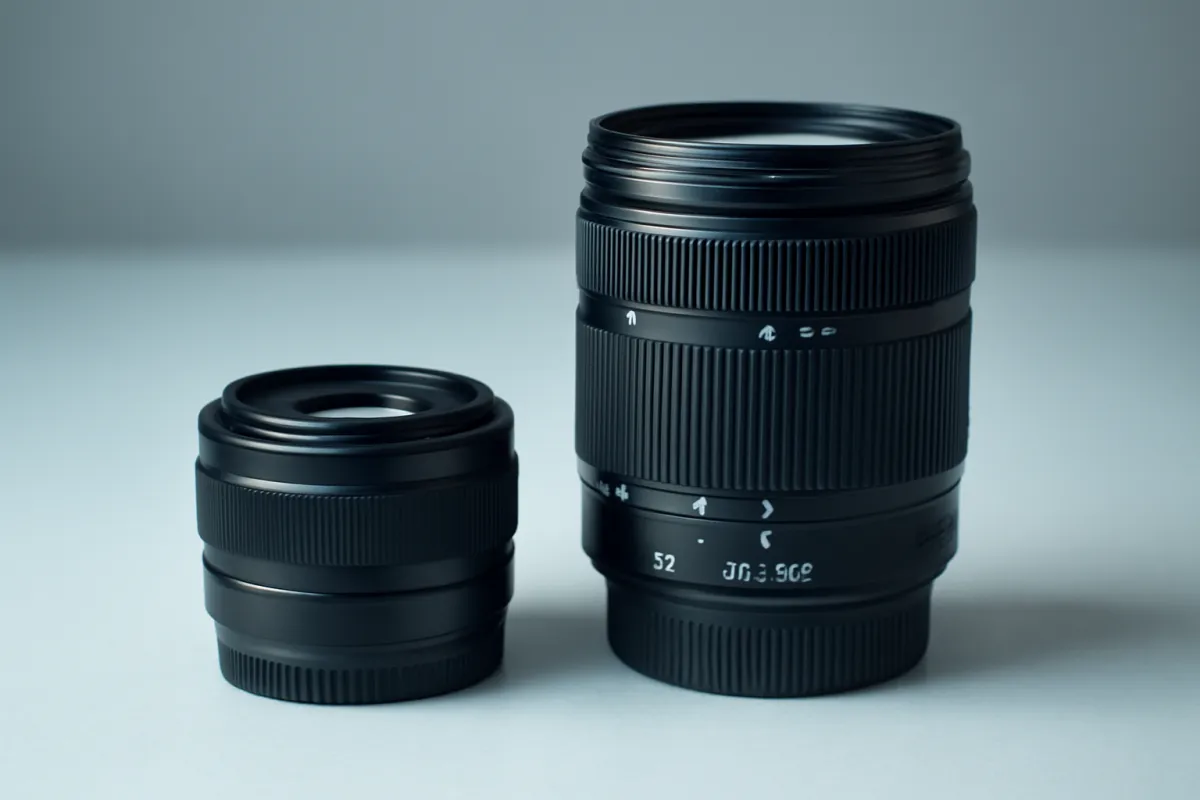
Here is the whole answer in one breath, because the rest of this field note is just the evidence for it. A kit lens is the zoom that came bundled with your camera, almost always an 18-55mm that covers a useful range of framings at a narrow, variable maximum aperture of about f/3.5 at the wide end to f/5.6 zoomed in. A prime lens has one fixed focal length, no zoom ring at all, and in exchange for that limitation it opens to a much wider aperture, typically f/1.8. That is the difference in a sentence: the kit lens trades light for range, and the prime trades range for light.
Every practical gap between them, sharpness, low-light ability, background blur, price, weight, flows from that one trade. The kit lens is a small marvel of value, giving you wide-to-portrait framing in a single cheap package so you can shoot almost anything on day one. The prime gives up that flexibility to be simple, bright, and sharp. Neither is better in the abstract, any more than a zoom is better than a fixed-focal lens in our prime versus zoom field note. The only question that matters is which trade your photography actually cashes, and that is what the sections below decide.
What a kit lens actually is
The kit lens gets sneered at unfairly, so start with what it does well. It is the 18-55mm (or similar) zoom that ships in the box to make the camera useful the moment you unbox it, and it is genuinely versatile: 18mm is wide enough for rooms and landscapes, 55mm is long enough for a flattering head-and-shoulders portrait, and the range between covers most everyday framings without touching your feet. It is also light, cheap, and often surprisingly sharp when stopped down. For learning the craft, it is close to ideal, because it lets you discover which focal lengths you actually reach for before you spend on a prime.
Its two real weaknesses are both aperture. First, that maximum aperture is narrow and it gets narrower as you zoom, sliding from f/3.5 to f/5.6, so the lens gathers relatively little light and struggles indoors and at dusk. Second, a narrow aperture keeps almost everything in focus, so backgrounds stay sharp and busy rather than melting away. Kit zooms also tend to be softest exactly where you shoot them, wide open in dim light. None of this makes the kit lens bad. It makes it a generalist, superb in good light and outmatched the moment the light gets thin or the shot needs separation.
What a prime lens actually is
A prime is a lens with one focal length, full stop. A 50mm prime frames the world one way forever, and to change the framing you move your body or you change the lens. In return for accepting that constraint, the lens designer gets to optimize a much simpler optical formula, and the payoff shows up as a wide maximum aperture, lower weight, lower cost for the quality, and sharper results wide open. The classic first prime, the 50mm f/1.8, is the purest example: tiny, light, inexpensive, and brighter than any kit zoom by a wide margin.
That wide aperture is the entire point. At f/1.8 the prime admits a flood of light the kit lens cannot, which is what makes handheld indoor shots possible and cleans up grain at dusk. The same wide aperture throws backgrounds far out of focus, which is what produces the soft blur and subject separation people associate with a professional look. And with less glass to compromise, primes tend to be crisp and contrasty at their widest settings, where kit zooms are at their softest. The trade you accept is the zoom: you lose the range and have to think about where you stand. Which focal length to pick is its own decision, covered in our 35mm versus 50mm field note.
Kit lens vs prime lens image quality
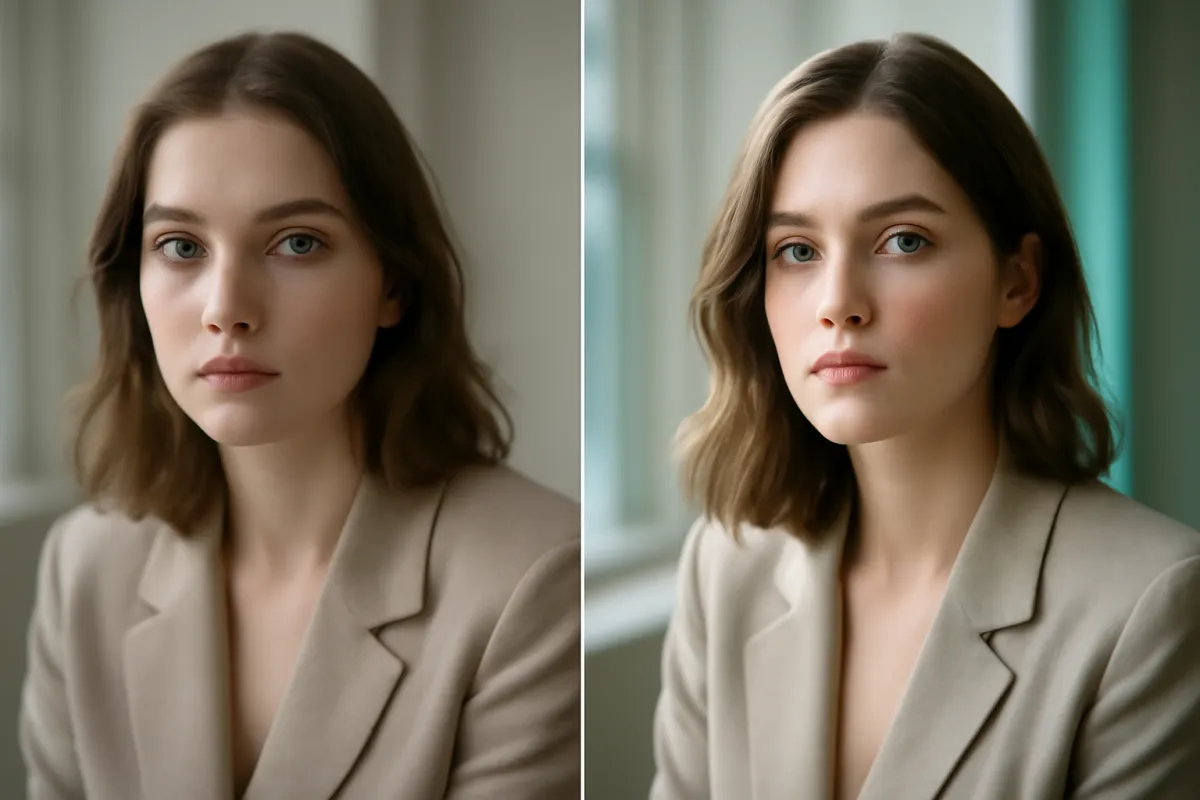
Now the claim that needs honesty rather than cheerleading. Yes, a good prime produces higher image quality than a kit zoom, but the size of the gap depends entirely on the settings. Wide open, the difference is stark: a cheap 50mm f/1.8 at f/1.8 is sharp, contrasty, and clean, while a kit zoom cannot even reach f/1.8, and at its own widest aperture it is at its softest and lowest in contrast. In that comparison the prime wins by a mile, because the kit lens is not allowed to play.
Stop both lenses down to f/8 in bright daylight, though, and the picture changes. A kit zoom at f/8 on a tripod can produce a genuinely excellent, sharp image, and the honest gap to the prime narrows to something only a pixel-peeper notices. This is why the internet’s blanket claim that kit lenses are junk is wrong: they are not junk, they are just weak wide open. The prime’s two durable image-quality advantages are its aperture, which the kit lens simply lacks, and its quality per dollar at the budget end, where a $150 prime clearly beats a $150 zoom. In the middle of the market, as our prime versus zoom field note argues, price and aperture predict quality better than the prime label does.
Kit vs prime, scored by attribute
It helps to see the trade laid out on a single scale rather than argued paragraph by paragraph. Score each lens out of ten on the four attributes that actually decide purchases: sharpness wide open, low-light reach, background blur, and versatility of range. The pattern that emerges is not that one lens wins everything, but that each lens owns a different half of the chart.
Kit zoom versus cheap prime, scored by attribute
Illustrative scores out of 10. Longer bars are better. Notice each lens owns a different pair of rows.
The prime dominates light, blur, and wide-open sharpness; the kit zoom dominates range. Buy for the rows you care about, which is exactly what the companion above helps you weigh.
The takeaway is not a winner but a division of labor. If the rows you care about are low-light reach and background blur, the prime is your upgrade and it is not close. If the row you care about is versatility, the kit lens already has you. Most photographers care about some of each, which is the first hint at this field note’s eventual verdict: own both.
The low-light gap
If one attribute decides the kit-versus-prime question for most people, it is light, so it deserves real numbers. Light gathering scales with the square of the aperture ratio, which means the gap between apertures is far bigger than the numbers suggest. A kit zoom at its f/5.6 long end, set against a prime at f/1.8, is not a little behind: the prime gathers roughly nine to ten times the light, about three and a third stops. Even against the kit lens’s brighter f/3.5 wide end, the prime pulls nearly four times the light.
Translate that into shooting and it gets vivid. Three and a third stops is the difference between a smeary handheld shot at 1/15 of a second and a sharp one at 1/160. Or it is the difference between grainy ISO 12800 and clean ISO 1250 at the same shutter speed. The dim restaurant, the birthday candles, the school play, the living room at dusk: the prime shoots all of them at settings the kit lens cannot reach, which is why no body upgrade at any price delivers a low-light jump this large. If a real share of your photos happen indoors or after sunset, this section alone answers your upgrade question. The lens, not the camera, is your low-light bottleneck, a point our upgrade-order field note makes at length.
Kit lens vs prime lens for portraits
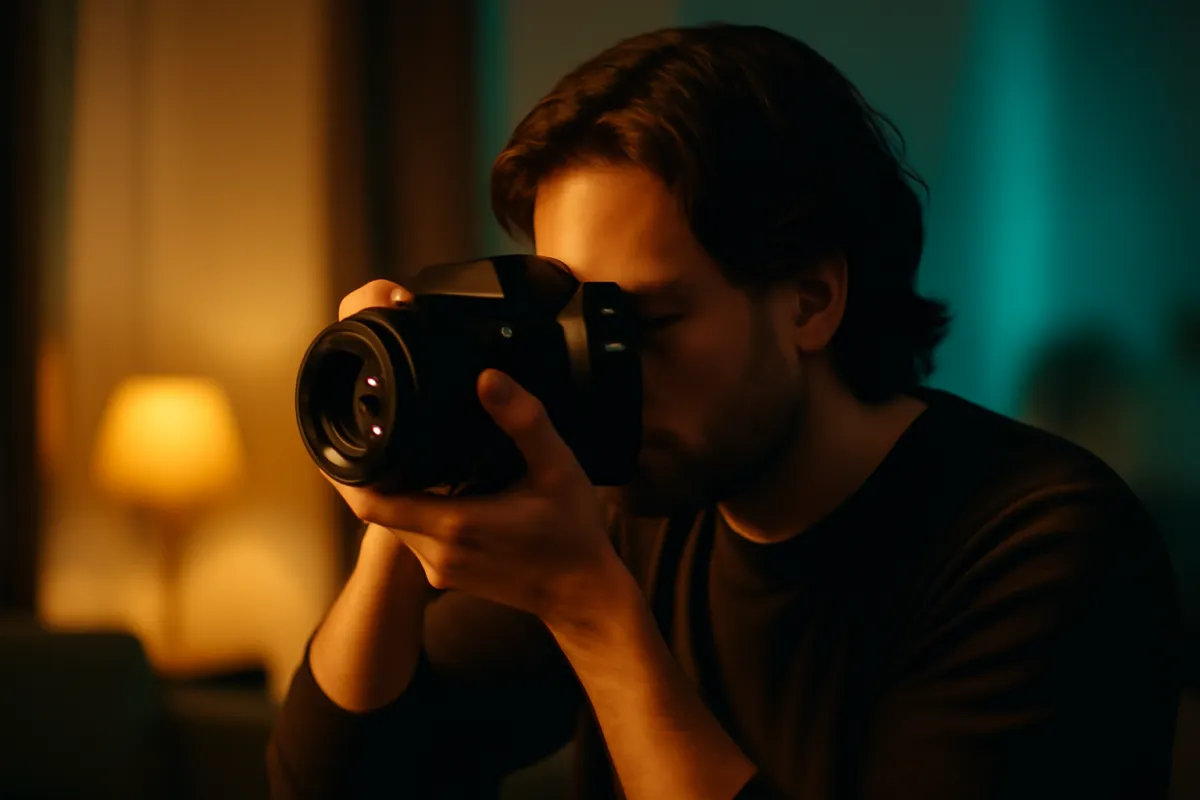
Portraits are where the prime advantage is most obvious, because a good portrait is built almost entirely on the two things the kit lens cannot do: gather light and blur the background. At f/1.8 the plane of focus is thin, the background behind your subject melts into soft color, and the face lifts cleanly off the scene with the separation people point at when they call a photo professional. That look is not a filter or an edit. It is aperture, and the kit lens does not have the aperture to make it.
Shoot the same portrait on a kit zoom at f/5.6 and everything from the subject’s eyes to the parked cars behind them shares similar sharpness, so the eye has nowhere to land and the image reads as a snapshot. This is the single most common reason people upgrade, and it is a good reason. The standard first portrait prime is a 50mm f/1.8, or an 85mm f/1.8 if you have room to back up and want the flattering compression of a longer lens. On a crop-sensor body the math shifts, and our 35mm versus 50mm field note walks the focal-length choice in detail. But the headline is simple: if you shoot people and want them to pop, a prime is the purchase that does it, and no kit lens at any setting substitutes.
The background-blur gap
It is worth separating blur from light, because they are related but not identical, and understanding the difference stops you from overpaying. The soft, melted background, often called bokeh, comes from shallow depth of field, and depth of field gets shallower with wider apertures, longer focal lengths, and closer subjects. The prime’s wide aperture is one big lever on that blur, which is why a 50mm f/1.8 melts a background the kit lens keeps sharp. But it is not the only lever.
Two honest footnotes keep this from becoming prime propaganda. First, distance does heavy lifting: a subject standing well in front of a distant background blurs even at moderate apertures, so a kit lens at 55mm with the subject far from the wall gets you partway there. Second, blur is a taste, not a virtue: landscape, architecture, and group shots often want deep focus, and there the kit lens’s everything-sharp rendering is the right look, not a handicap. The prime’s advantage is real and large when the background is close, the room is small, and you still want the subject to separate, which is exactly the case where aperture is the only lever left. If the photographs you save from other people share that isolated-subject look, weight this section heavily.
Whether a prime is worth it over the kit
Whether a prime is worth it depends on a single honest question: is the kit lens the thing failing you? If your photos come out blurry or grainy indoors, flat and snapshot-like in portraits, or lacking the blurred-background look you want, then yes, unambiguously, and the prime is likely the biggest visible upgrade you can buy at any price. A cheap fast fifty changes the look of your photos more than a body costing several times as much, which is why our upgrade-order field note crowns a fast prime the largest jump per dollar in the hobby.
If, on the other hand, your photos are already fine, you shoot mostly in good light, and you value covering a range without swapping lenses, then the prime is optional rather than urgent, and buying one out of upgrade anxiety mostly buys a lens that lives in the bag. Worth it is not a property of the lens. It is a relationship between the lens and your photography, and the way to test it is to look at the photos you are unhappy with and ask what is wrong with them. If the answer is light, blur, or wide-open sharpness, the prime is worth it. If the answer is nothing, keep your money. Price the specific lens for your case with the upgrade budget planner before you decide.
When the kit lens is genuinely fine
The pro-prime internet rarely says this, so this field note will: the kit lens is genuinely all you need for a large amount of photography, and pretending otherwise sells lenses that gather dust. In good light, the kit lens is excellent. Daylight landscapes, travel snapshots in the sun, product shots with a window, family gatherings by day, all of these want deep focus and plenty of light, which is precisely the kit lens’s comfort zone. Stopped down to f/8 on a steady support, a kit zoom resolves beautifully and gives up almost nothing to a prime.
The kit lens is also the better learning tool for your first several months. Its range lets you discover which focal lengths you naturally reach for, information that tells you which prime to buy later instead of guessing. And it is the better travel-light lens on days when you do not want to choose a focal length in advance or swap glass in a crowd, a point our prime versus zoom field note makes about zooms generally. If your shooting is mostly daylight, mostly varied framing, and mostly casual, the honest advice is to keep shooting the kit lens, learn its limits, and spend the lens money only when you hit a wall you can name.
When to upgrade from a kit lens
The clean rule is to upgrade when a specific situation keeps failing, not on a schedule and not out of boredom. Three triggers cover almost every legitimate upgrade. The first is low light: if your indoor, evening, and event photos are consistently blurry or grainy, that is an aperture problem, and the kit lens cannot solve it at any setting, so a fast prime is the fix. The second is portraits: if you want the blurred-background, subject-separated look and the kit lens keeps everything flatly in focus, again the answer is aperture, again a prime. The third is a plateau: if you have learned the kit lens, know your favorite focal length, and feel the camera holding you back rather than the reverse, you are ready.
Just as important is when not to upgrade, because the wrong upgrade is worse than none. Do not buy a second slow zoom that overlaps the kit lens, an f/4-5.6 range that duplicates what you own and solves nothing it fails at, the single most common lens-buying mistake. Do not buy a new body hoping it fixes soft, dim, or flat photos, because those are lens problems wearing a body disguise. And do not upgrade at all if daylight, landscapes, and travel snaps are most of your shooting, because the kit lens already handles those. Upgrade at the wall, not at the whim.
Should I upgrade from my kit lens right now
Take the general rule and make it a yes-or-no you can answer today. Pull up the last hundred photos you took and sort them into two piles: the ones you are happy with and the ones that disappointed you. Now look only at the disappointing pile and ask what went wrong. If the failures cluster around dim rooms, motion blur indoors, grain at night, flat portraits, or a background you wish had melted, then yes, upgrade now, because every one of those is a fault the kit lens cannot fix and a prime can. The problem is diagnosed, and the prescription is a fast prime.
If instead the disappointing pile is about composition, timing, focus misses in daylight, or simply not being in the right place, then no, do not upgrade, because a prime fixes none of those and the money is better kept. And if the honest answer is that there is no disappointing pile, that you are shopping because upgrading feels like progress, then the most useful thing this field note can tell you is to close the tab and go shoot. The best upgrade for a photographer with no complaints is more frames, not more glass. Run your specific case, including the illustrative cost, through the companion above and the upgrade budget planner before any money moves.
The nifty fifty: the first prime to buy
When the diagnosis says upgrade, the prescription is almost always the same lens, and it has a nickname: the nifty fifty, the inexpensive 50mm f/1.8 that nearly every camera system sells. It exists at a freakish point on the price-performance curve. Its optical formula is old, simple, and refined over generations, so manufacturers stamp it out cheaply, and for a typical illustrative $125 to $250 you get an aperture over three stops faster than the kit zoom and center sharpness that holds up against lenses costing ten times more. It turns a beginner kit into a low-light and portrait kit overnight.
There is no other purchase in photography where so little money changes the look of the photos so much, which is why our first-camera budget field note folds a fast prime into even modest starter budgets. Two small caveats. On a crop-sensor body the 50mm frames tighter than it does on full frame, like a short portrait lens, and if you want the classic normal-lens feel you should look at a 35mm f/1.8 built for crop instead, a translation our 35mm versus 50mm field note unpacks. And the nifty fifty is one focal length, so it asks you to move your feet. Those are small prices. For the vast majority of upgraders, the cheap fifty (or its 35mm crop-body twin) is the correct and often only prime you need to start.
What you gain and what you give up
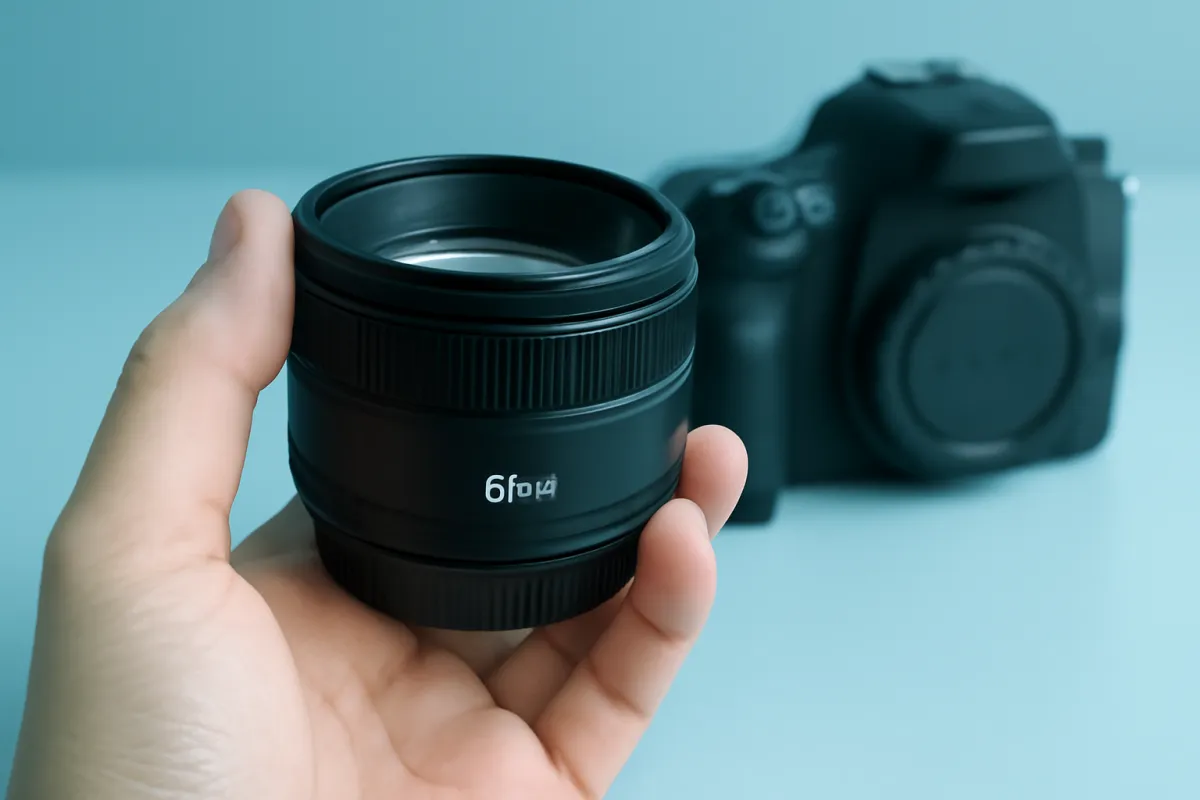
An upgrade is a trade, and it is worth naming both sides so you buy with open eyes. What you gain with a prime is concrete: three-plus stops of light, meaning sharp handheld shots in rooms where the kit lens forces blur or grain; a blurred-background look the kit lens cannot produce; sharper, higher-contrast results wide open; and a smaller, lighter lens that rides along by default. For low light, portraits, and the professional look, those gains are large and immediate.
What you give up is equally concrete: the zoom. With a prime you cannot twist a ring to reframe from wide to tight, so you move your feet or you miss the shot, and there are shots feet cannot reach, across a fence, a stage, a canyon. You also give up the one-lens convenience of never having to think about focal length or swap glass mid-scene. This is why the trade is genuinely a trade and not a free upgrade, and why the answer for so many people is not to replace but to add. The prime does not have to beat the kit lens at everything to be worth buying. It only has to beat it at the shots you care about most, while the kit lens keeps covering the rest.
How crop and full frame change the math
One translation layer matters before you buy, and it trips up more first upgraders than any other: sensor size. As our full-frame versus crop field note explains, a crop sensor sees a tighter slice of every lens, typically 1.5 times tighter, so the printed focal length is not the framing you get. On a crop body the beloved 50mm frames like a 75mm short telephoto, which feels tight indoors and is a touch long for casual portraits, while a 35mm frames like a normal 50mm and is often the more natural first prime.
The practical adjustments are simple. Crop-body owners who want the classic normal-lens feel should shop the 35mm f/1.8 primes built for their format, which are usually just as cheap as the fifty. Full-frame owners get the 50mm as a true normal lens and the 85mm as a true portrait lens, no translation needed. And there is a hedge worth knowing: full-frame primes mount happily on crop bodies, so a buyer who suspects a future format move can buy full-frame glass now and carry it across. None of this changes the kit-versus-prime logic, which is about aperture, not framing. It just tells you which prime to point the logic at. Do the 1.5 times arithmetic before checkout and the right lens stays right.
What it costs
Money makes the decision real, so put numbers on it. The upgrade itself is cheap by camera-gear standards: a nifty fifty runs a typical illustrative $125 to $250, and even a nicer 85mm f/1.8 for portraits lands around $350 to $500. Against a camera body that cost four figures, adding the single lens that most changes your photos for a couple hundred dollars is the best-value move in the hobby. You do not need to spend more, and spending more, on an f/1.4 version or an exotic focal length, buys refinement you cannot yet use.
An illustrative $300 kit-lens upgrade budget
One sensible split: the cheap prime that does the work, the small stuff, and a little banked toward a second prime later. Illustrative.
The whole upgrade fits inside a modest budget, and none of it requires selling the kit lens. Tune the split to your use with the companion above.
Notice what the budget does not include: replacing the kit lens. You are adding a lens, not swapping one, so the kit zoom stays in the bag at no extra cost, covering the range the prime gives up. Buying used drops these figures further on the pricier primes, though the cheap fifty is so inexpensive new that the warranty is usually worth more than the small used discount. Sequence the spend against your real money in the upgrade budget planner so the lens lands when the budget genuinely covers it.
Three shooters, three verdicts
Theory into practice: three composite shooters, each holding a kit lens and an illustrative few hundred dollars, each getting a different correct verdict.
Shooter one photographs her kids indoors, mostly evenings, mostly grabbed moments in ordinary room light. Her disappointing pile is all blur and grain, a textbook low-light problem, so her verdict is upgrade now. She buys the 35mm f/1.8 for her crop body at an illustrative $200, gains three-plus stops exactly where her photos were dying, and keeps the kit lens for daytime outings. Prime, decisively. Shooter two shoots portraits of friends and wants the melted-background look he keeps saving from other photographers. His problem is separation, an aperture problem, so his verdict is also upgrade, but toward the 85mm f/1.8 at an illustrative $450 for the flattering compression, with the kit lens retained for group shots that need everyone sharp. Shooter three photographs landscapes and travels in daylight, and her disappointing pile is about composition and timing, not the lens. Her verdict is hold: the kit lens at f/8 already nails her work, and a prime would sit unused, so she banks the money and shoots more. Same lens in hand, three honest answers, because the verdict tracked the photography, not the forum.
The honest verdict: keep the kit lens too
Strip away the tribalism and the real recommendation for most people is not kit lens or prime but kit lens and prime. They are not competitors for the same job; they are specialists for different ones. The prime owns light, portraits, and the blurred-background look, the shots the kit lens cannot take at any setting. The kit lens owns range, travel, daylight versatility, and the days you do not want to choose a focal length or swap glass. Owning both means the right tool is always in the bag, and the total spend is just the price of one cheap prime added to gear you already have.
This is also why selling the kit lens after buying a prime is usually a mistake. Kit lenses resell for very little, so selling one rarely funds much, while it removes a genuinely useful range from your kit. Keep it. Let the prime specialize in the shots that pulled you into the hobby, and let the kit lens keep doing the broad, everyday work it does well. The classic, most efficient enthusiast kit remains exactly this pairing, a truth our prime versus zoom field note reaches from the other direction. Two lenses, different jobs, one small upgrade between you and covering both.
The bottom line
Kit lens vs prime lens stops being a war the moment you ask it as a matching question. The kit lens is a versatile daylight generalist that is genuinely excellent stopped down and outmatched only when the light gets thin or the shot needs separation. The prime is a specialist that buys light, sharpness wide open, and the blurred-background look for a couple hundred dollars, and it is the biggest visible upgrade in the hobby for anyone shooting portraits or in dim rooms. Diagnose your disappointing photos: if they fail on light, blur, or wide-open sharpness, upgrade now, and the cheap nifty fifty is almost always the lens. If they do not, keep shooting the kit lens and save the money. Either way, when you do add the prime, keep the kit lens too, price the plan in the upgrade budget planner, and let the forums keep arguing while you go shoot.
This field note is written to teach a buying decision, not to sell you a lens: no manufacturer paid for a mention, and none is named on purpose. Every dollar amount here is an illustrative planning figure rather than a quote, since real lens prices swing with brand, mount, condition, and the season you happen to shop. Lens lineups also differ by camera system, so confirm which primes actually exist for your specific mount before you commit, and let your own disappointing photos, not any writer’s enthusiasm, decide whether the kit lens is the thing holding you back.
Frequently asked questions
What is the difference between a kit lens and a prime lens?
A kit lens is the versatile 18-55mm zoom that ships in the box with the camera: it covers a range of focal lengths but opens only to a narrow, variable aperture of about f/3.5 to f/5.6. A prime lens has one fixed focal length and no zoom, and its simpler design buys a much wider aperture, usually f/1.8. That single design difference is why the prime is sharper wide open, gathers far more light, and blurs backgrounds the kit lens cannot. The kit lens wins on range and convenience; the prime wins on light, sharpness, and the look.
Is a prime lens worth it over a kit lens?
For most people who shoot portraits, in low light, or who want blurred backgrounds, yes, and it is usually the biggest visible upgrade you can buy for the money. A cheap 50mm f/1.8 costs an illustrative $125 to $250 and changes the look of your photos more than a body upgrade costing several times as much. If you mostly shoot in good light and value covering a range without swapping lenses, the prime is optional rather than urgent. Worth it tracks what you shoot, not the label on the lens.
Should I upgrade from my kit lens?
Upgrade when the kit lens is the thing failing you, not before. The clean signals are dim-room photos that come out blurry or grainy, portraits that look flat because the background stays in focus, and a growing envy of the blurred-background look. If those describe your photos, a fast prime fixes exactly what the kit lens cannot. If your photos are fine and you are shopping out of boredom, the honest move is to keep shooting the kit lens and save the money.
Is a prime lens better than a kit lens for portraits?
For portraits the prime is decisively better, and portraits are where the gap is most obvious. A wide aperture like f/1.8 melts the background into soft color and lifts the subject off the scene, the separation people mean when they say a photo looks professional. The kit lens at f/5.6 keeps the subject and the clutter behind them at similar sharpness, which is exactly why kit-lens portraits read as snapshots. A 50mm or 85mm f/1.8 is the standard first portrait lens for this reason.
How much better is the image quality of a prime over a kit lens?
The gap is largest wide open, where a cheap prime is noticeably sharper and higher in contrast than a kit zoom at its widest aperture. Stopped down to f/8 in good light the two close much of the distance, so a kit lens on a tripod in daylight can look excellent. The prime's durable advantages are aperture, which no kit lens offers, and quality per dollar at the budget end, where a $150 prime clearly beats a $150 zoom. In the middle of the range, price and aperture predict quality better than the prime-versus-zoom label does.
What is a nifty fifty and why is it recommended?
The nifty fifty is the inexpensive 50mm f/1.8 prime that nearly every camera system sells, and it is the most recommended first prime in photography. Its optical design is old, simple, and cheap to manufacture, so for a typical illustrative $125 to $250 it delivers an aperture over three stops faster than a kit zoom and center sharpness that embarrasses lenses costing far more. It turns a beginner kit into a low-light and portrait kit overnight. No other purchase changes the look of your photos so much for so little money.
When should I upgrade from a kit lens?
Upgrade when a specific shooting situation keeps failing: dim interiors, evening events, or portraits that need a blurred background. Those are aperture problems, and the kit lens cannot solve them at any setting, so a fast prime is the fix. Do not upgrade to a second slow zoom that overlaps the kit lens, because it solves nothing the kit lens already fails at. And do not upgrade at all if daylight, landscapes, and travel snaps are most of your shooting, since the kit lens handles those genuinely well.
Should I sell my kit lens after buying a prime?
Usually not. The kit lens and a prime cover different jobs, so the honest kit is often both: the prime for light, portraits, and blur, and the kit zoom for range, travel, and the days you do not want to swap lenses. Kit lenses also resell for very little, so selling one rarely funds much while removing a genuinely useful range from your bag. Keep the kit lens as your daylight and everyday zoom, and let the prime specialize in the shots the kit lens cannot take.