What's on this page
- What “waterproof” actually means on a camera
- Waterproof versus water-resistant versus splashproof
- Action camera versus dedicated waterproof compact
- Depth rating and dive housings: when you need an added extra
- Image quality tradeoffs: small sensor realities
- Durability beyond water: drops and dust
- Battery and charging in wet or cold conditions
- Buoyancy: floating versus sinking
- Underwater video versus stills: what matters more
- Lens and port fogging: a genuinely common problem
- Saltwater versus freshwater: the care routine that matters
- Matching the camera to the activity
- Memory cards for waterproof camera use
- New versus used for a waterproof camera
- Renting a dive housing for one trip
- Budget split for a waterproof camera kit
- Illustrative depth tiers by camera class
- Kids, loaners, and a camera anyone can hand to anyone
- Mounting accessories and getting the shot you actually want
- Common waterproof camera buying mistakes
- Cold water, wetsuits, and gloved hands
- The worked example: two buyers, two activities
- Post-use care and long-term storage
- Warranty terms specific to water damage
- Your waterproof camera buying checklist
- The bottom line
Short answer: The best waterproof camera depends on your activity more than any other camera category on this site. A dedicated rugged compact suits snorkeling, pool days, and beach use with the convenience of an optical zoom; an action camera suits swimming, surfing, and hands-free mounted video. Check the exact depth rating and duration for the specific model, not the general marketing claim, and budget for a dedicated rinse-and-dry routine regardless of which you choose.
Choosing a waterproof camera is a different exercise from choosing almost any other camera on this site, because the single most important spec, how deep and for how long the camera actually survives submersion, is tested and certified per exact model rather than implied by the broad category the camera is marketed under. Two cameras both labeled “waterproof” can have meaningfully different real-world limits, and the gap between a splash-resistant camera and one genuinely built for snorkeling depth matters enormously once you are actually in the water.
This field note picks a waterproof kit the way the activity actually demands it: what the depth rating genuinely means, how action cameras and dedicated waterproof compacts differ, the honest image-quality tradeoff behind the small sensors these cameras use, and the care routine that keeps a waterproof seal working for years rather than one season. It complements our best action camera field note, which this field note leans on for the mounted, hands-free side of the category, and our point and shoot camera field note, which covers the compact form factor in general terms. Price your own kit in the waterproof camera planner as you read.
Key takeaways
- A depth rating is tested per exact model and stated with a duration; confirm the specific figure rather than trusting the general word "waterproof."
- A dedicated rugged compact suits zoom-and-frame shooting; an action camera suits mounted, wide, hands-free video.
- Image quality trails a mirrorless or DSLR body meaningfully in low light and high contrast, narrowing considerably in good daylight.
- Rinse in fresh water after any saltwater exposure; dried salt crystals on seals accelerate the wear that eventually causes a leak.
- Buy used more cautiously than other camera gear, since a failed seal is often invisible from the outside until it fails again.
What “waterproof” actually means on a camera
The word “waterproof” on a camera is a marketing-friendly shorthand for a specific, tested rating that varies meaningfully between models, and understanding the actual system behind it matters more than trusting the headline word. Manufacturers typically test and certify a camera to survive submersion to a stated depth for a stated duration, often expressed through an ingress-protection style rating or a manufacturer-specific depth and duration figure in the product’s own specifications. That number, not the word “waterproof” on the box, is the real spec to check.
Two cameras can both be fairly called waterproof while supporting very different activities: one rated for a shallow depth and a short duration suits splashing, rain, and brief dunking, while one rated for several meters and sustained use genuinely supports snorkeling. Always find the specific depth and duration figure for the exact model you are considering, confirm it against your actual planned activity, and treat any camera used beyond its stated rating as outside its warranty coverage for water damage.
Waterproof versus water-resistant versus splashproof
These three terms get used loosely enough in casual conversation that it is worth separating them by what they actually promise. Splashproof or weather-resistant typically means the camera tolerates light rain, splashes, or brief exposure to moisture without an expectation of submersion at all; this is the level of protection many ordinary mirrorless and DSLR bodies offer through weather sealing, covered in our travel camera field note, and it is not the same category as a camera meant to go underwater.
Water-resistant generally implies a somewhat higher tolerance, perhaps brief shallow submersion, but still well short of a camera designed for sustained underwater use. Genuinely waterproof, in the sense this field note uses it, means the manufacturer specifically tested and certifies the camera for underwater use to a stated depth and duration. If a product description uses one of these words without stating a specific depth and duration figure, treat that as a reason to look for the actual spec sheet before trusting the camera near real water.
Action camera versus dedicated waterproof compact
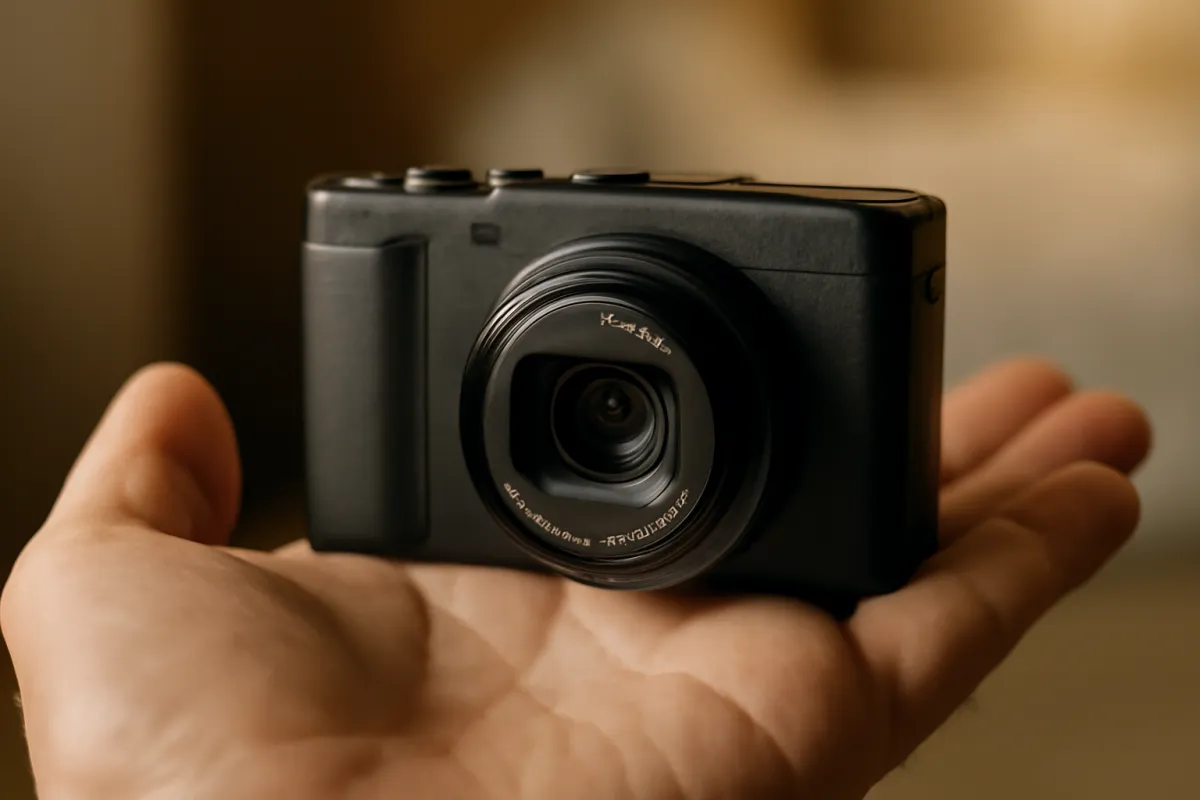
An action camera and a dedicated waterproof compact overlap in capability but optimize for different experiences, and picking between them is really a question of how you plan to hold and use the camera. An action camera typically has a fixed, very wide-angle lens with no optical zoom, built to be mounted on a helmet, a chest harness, a surfboard, or a pole, and it shoots wide video well suited to capturing an entire activity hands-free. A dedicated waterproof compact more closely resembles an ordinary point-and-shoot, usually with a real optical zoom and a screen you frame a shot with directly, built to be held and operated the way a traditional camera is.
If your priority is hands-free footage of an activity you are doing, surfing, cycling through a creek crossing, or swimming laps, an action camera’s mounting options and wide field of view are the better fit. If your priority is framing an individual photograph underwater or at the beach, a family at the pool, a close look at something in shallow water, the dedicated compact’s zoom and more traditional handling usually serves better. Many enthusiasts eventually own both for exactly this reason, since neither fully replaces the other’s strength.
Depth rating and dive housings: when you need an added extra
Most dedicated waterproof cameras and action cameras handle snorkeling depths and casual pool or beach use without any added housing, which is a major part of their appeal over a standard camera that would need one. Genuine scuba diving, especially beyond a shallow recreational depth, is where many consumer waterproof cameras reach the edge of their native rating, and an aftermarket dive housing, rated for a meaningfully greater depth than the camera alone, becomes the honest solution rather than trusting the camera’s own seal beyond its tested limit.
Check a housing’s own depth rating independently of the camera’s, since a housing exists specifically to extend depth tolerance beyond what the bare camera supports, and a mismatched or poorly fitted housing defeats the purpose of buying one. If your diving plans are occasional, renting a housing for a specific trip, covered later in this field note, is often more sensible than buying one for a handful of uses per year.
Image quality tradeoffs: small sensor realities
The honest tradeoff behind every current waterproof compact and action camera is sensor size: these cameras use sensors meaningfully smaller than a typical mirrorless or DSLR body, a physical constraint of building a small, rugged, sealed enclosure, and that size difference shows up predictably in the resulting images. Low-light performance is the area where the gap is most visible, since a smaller sensor gathers less light and shows more noise as conditions dim. Dynamic range, the ability to hold detail in both bright skies and darker water or shadow within the same frame, also narrows compared to a larger sensor.
In good daylight, which describes the large majority of actual waterproof camera use, pool days, beach afternoons, bright snorkeling conditions, this gap narrows considerably, and most casual users are genuinely satisfied with the results. The gap becomes most noticeable in dim underwater conditions, overcast beach days, or any high-contrast scene with both bright and dark elements in frame. Set expectations around daylight, well-lit use, and treat low-light underwater image quality as a secondary consideration behind depth rating and durability for this category specifically.
Durability beyond water: drops and dust
Most cameras built to be waterproof are also built to survive a meaningful drop onto a hard surface and to resist dust and sand intrusion, since the same rugged, sealed design that keeps water out also tends to protect against these other hazards. Manufacturers typically state a separate drop-height rating alongside the depth rating, and it is worth checking both specs independently, since a camera can be excellent at one and only adequate at the other depending on its specific design.
Sand deserves particular attention for beach use specifically, since fine grit works into buttons, ports, and seals in a way that a quick rinse does not always fully clear, and grit trapped against a seal over repeated use can accelerate the exact wear that eventually causes a leak. Rinsing sand off promptly, rather than letting it dry onto the camera’s seals and ports, is a simple habit that meaningfully extends a waterproof camera’s working life at the beach specifically.
Battery and charging in wet or cold conditions
Battery compartments on waterproof cameras are sealed with the same gaskets that keep water out of the rest of the body, and opening that compartment with wet or sandy hands, or in a dusty environment, is one of the more common ways grit or moisture ends up where it should not be. Dry your hands and the camera’s exterior thoroughly before opening any door or compartment, and avoid changing a battery or memory card at the water’s edge where spray or sand is still actively present.
Cold water and cold air both reduce battery performance meaningfully, the same general effect covered in our travel camera field note for cold-weather travel, so a winter beach outing or a cold mountain lake swim will drain a battery faster than the same camera used on a warm summer day. Carry a spare battery for any cold-weather outing where you expect to shoot for an extended period, and keep spares in an inner, warmer pocket rather than directly against cold skin or in an outer bag pocket.
Buoyancy: floating versus sinking
Many dedicated waterproof compacts are designed to float if dropped in water, a genuinely useful feature for a camera that will inevitably slip from a wet hand at some point during active use, while many action cameras, especially in certain mounts or cases, sink. If buoyancy matters to you, check the specific model’s floating claim rather than assuming every waterproof camera shares it, since this varies meaningfully across the category.
A floating foam accessory or a brightly colored float strap, sold separately for models that do not float on their own, is inexpensive insurance against losing a camera to open water permanently rather than merely getting it wet. For any camera used over water deeper than you are comfortable diving to retrieve it from, a float accessory is one of the cheapest and most overlooked purchases in this entire category.
Underwater video versus stills: what matters more
Video has become the dominant use case for much of this category, since moving footage captures the motion and texture of being underwater, surfing, or swimming in a way a still frame often cannot, and action cameras in particular are built primarily around video first. If video is your primary goal, prioritize stabilization, frame rate options, and the field of view a model offers over its still-photo resolution or zoom range.
If stills are your priority, a dedicated waterproof compact’s zoom and more deliberate framing usually serves better than an action camera’s fixed, very wide lens, which tends to make a subject look small and distant unless you get genuinely close. Many models now do both reasonably well, so decide which you will actually use more often and weight your choice toward that strength rather than assuming a camera marketed around video will satisfy a stills-first photographer, or the reverse.
Lens and port fogging: a genuinely common problem
Fogging on the inside of a lens port, a hazy film that forms between the camera and the sealed enclosure protecting it, is one of the most common and most preventable problems in waterproof photography, and it is caused by humid air trapped inside the housing condensing when it meets colder water. Once fogging happens mid-session, there is little fix beyond ending the session and drying the housing fully; prevention beforehand is the only reliable solution.
Store the camera in a dry, air-conditioned or at least low-humidity environment before a planned swim or dive rather than a humid bathroom, a car trunk in the sun, or a beach bag, since the air sealed inside the housing at the moment you close it is the air that may later fog. A small anti-fog insert or silica packet, sized for the specific model and sold by several accessory makers, absorbs excess humidity inside the housing and meaningfully reduces fogging risk. Letting the camera acclimate gradually to water temperature rather than plunging a warm camera straight into cold water also reduces the temperature differential that causes the problem in the first place.
Saltwater versus freshwater: the care routine that matters
Saltwater and freshwater both work on a waterproof camera’s seals over time, but saltwater does so faster and more aggressively, because salt crystals left to dry on a seal, a button, or a port edge are abrasive and can work their way into the fine gaps a gasket depends on staying clean. The single most important habit for anyone using a waterproof camera regularly in the ocean is rinsing it in fresh water as soon as reasonably possible after use, before the salt has a chance to dry.
A simple rinse in plain tap water, followed by thorough drying before any compartment is opened, is sufficient for most models and most casual use; check your specific model’s manual for any additional manufacturer-recommended care, since some models specify a particular rinse duration or caution against certain cleaning products. Freshwater use, a pool or a lake, is gentler on seals but still benefits from a rinse and dry routine, particularly to clear chlorine residue from a pool, which can also be mildly corrosive to metal contacts and seals over repeated exposure.
Matching the camera to the activity
Snorkeling, scuba diving, swimming laps, surfing, and casual beach or pool photography are genuinely different activities with different real demands on a camera, and matching the category to the activity, rather than buying the most expensive or most heavily marketed option, is the decision that actually determines satisfaction. Casual beach and pool use rewards a simple, floating, easy-to-operate compact that a less experienced family member can also use without instruction. Snorkeling rewards the same category but with somewhat deeper confidence in the depth rating and a zoom that helps frame a fish or a reef feature from a respectful distance.
Surfing and swimming reward an action camera’s mounting options and wide field of view far more than a compact’s zoom, since the camera is rarely hand-held during the activity itself. Scuba diving beyond shallow recreational depths is the activity most likely to need an added housing rather than relying on the camera’s native rating alone, a distinction worth settling before a dive trip rather than discovering the limit underwater.
Memory cards for waterproof camera use
A waterproof camera places the same demands on its memory card that any other camera recording continuous video or fast bursts does, and a slow or unreliable card is just as much a bottleneck here as on any landlocked camera. Our SD card buying guide covers the speed classes that matter for video and burst photography in depth; the version specific to waterproof use is to buy a card rated for your exact model’s maximum video bitrate and to carry a spare, since swapping a card at the water’s edge is an awkward, grit-prone process best avoided mid-session.
Keep a card specifically designated for waterproof use separate from cards used in other cameras if you shoot in sandy or salty conditions often, since a card’s contacts can carry residue from a previous wet session into a different camera’s card slot. A simple labeling habit, a colored card case or a marked card, avoids this small but avoidable cross-contamination.
New versus used for a waterproof camera
Buying used is a riskier proposition for a waterproof camera than for most other categories on this site, because a waterproof seal is a wear item that degrades with age, UV exposure, and repeated use in ways that are frequently invisible from the outside. A seal that failed intermittently for a previous owner, letting in a small amount of moisture that then evaporated without catastrophic damage, may show no external sign at all of the near-failure that occurred.
If you do buy used, test the camera in shallow, supervised water, a bathtub or a shallow pool edge, for a short period before trusting it at real depth or on an irreplaceable trip, and check whether the specific model supports a seal inspection or a replacement O-ring kit, since some manufacturers sell these as routine maintenance parts. The money saved buying used is real, but weigh it honestly against the cost of a lost trip’s footage or a camera that fails mid-swim.
Renting a dive housing for one trip
Not every diving interest justifies buying a dedicated dive housing that extends depth tolerance well beyond a consumer camera’s native rating, and renting is a genuinely sensible option for an occasional diver with one specific trip in mind. A week’s rental of a proper housing costs a fraction of buying one that would otherwise sit unused for most of the year, and most dive shops at popular destinations offer housing rental alongside other gear.
Test a rented housing’s seal and fit with your own camera before the actual dive if the rental shop allows it, confirming the camera sits correctly and every control is accessible through the housing’s external buttons, since an unfamiliar housing discovered to fit poorly underwater costs you the dive rather than a quick fix on land. If diving is a regular, ongoing activity rather than an occasional trip, buying, especially used from a reputable dive shop, usually wins over repeated rentals over time.
Budget split for a waterproof camera kit
A waterproof camera budget, split three ways
A sensible starting division of a waterproof-kit total across the three buckets. Sums to 100 percent, illustrative.
On a $400 waterproof kit that is about $240 for the camera, $80 for protective accessories, and $80 for cards, a float accessory, and mounts. A diver adding a housing should weight that slice heavily higher.
Illustrative depth tiers by camera class
The chart below shows a rough, illustrative sense of how depth tolerance typically scales across common waterproof camera classes, intended to orient your expectations rather than to promise a specific figure for any model. Always confirm the exact rating of the model you are considering.
Illustrative depth tolerance by camera class
Rough, illustrative ranges only, not a guarantee for any specific model.
A dive housing extends depth tolerance well beyond any consumer camera's native rating; confirm the exact figure for your specific model and housing combination before diving beyond snorkeling depth.
Kids, loaners, and a camera anyone can hand to anyone
One of the quiet strengths of the dedicated waterproof compact category is how well it suits being handed to someone with little or no camera experience, a child on a beach trip, a friend borrowing it for an afternoon snorkel, a grandparent who wants to try the family activity without worrying about damaging an expensive body. The forgiving, simple controls and the peace of mind that a drop or a splash will not end the outing make this category genuinely more shareable than almost any other camera type covered on this site.
If this kind of shared, casual use is a real part of your plan, weight your choice toward the simplest control layout and the most forgiving drop rating over advanced manual controls or the longest zoom range, since the person actually holding the camera on a given afternoon may never open a menu at all. A camera your whole group will actually pick up and use beats a more capable one that sits unused because only one person understands it.
Mounting accessories and getting the shot you actually want
Both action cameras and many dedicated waterproof compacts support a range of mounting accessories, chest harnesses, helmet mounts, poles, and floating hand grips, and the right mount changes what kind of shot you actually get far more than most people expect before trying a few. A chest or helmet mount captures a genuinely immersive, first-person view of an activity but gives you no control over framing in the moment, since you are busy doing the activity itself rather than composing a shot.
A handheld floating grip or a short pole gives you some ability to aim and frame deliberately while still keeping both hands relatively free for swimming or paddling, and it is often the more versatile choice for anyone who wants some creative control without a second person acting as camera operator. Try a mount before committing to buying several, since the right one depends heavily on the specific activity and how much framing control genuinely matters to you versus simply capturing that you were there.
Common waterproof camera buying mistakes
The recurring ways a waterproof camera purchase, or a day using one, goes wrong, so you can avoid them.
- Trusting the word “waterproof” without checking the specific depth and duration rating. The category word covers a wide range of real-world capability.
- Diving beyond a camera’s native rating without a housing. This is the single most common cause of an otherwise preventable leak.
- Skipping the rinse after saltwater use. Dried salt crystals accelerate the exact seal wear that eventually causes a failure.
- Opening a battery or card door with wet or sandy hands. Grit and moisture at the seal is how water gets in later, not during the swim itself.
- Buying used without testing the seal first. A previously intermittent leak often shows no visible external sign.
- Expecting mirrorless-level image quality in low light. The small sensor tradeoff is real and most noticeable exactly when light is poor.
Every mistake on this list shares a root: treating the water-resistance as a fixed, permanent property of the camera rather than a tested limit that depends on seal condition, usage habits, and honest respect for the stated rating.
Cold water, wetsuits, and gloved hands
Cold-water activities, winter surfing, a cold mountain lake, or a dive in cooler water, add a practical handling wrinkle that warm-water use does not: small buttons and touchscreens built for bare, dry fingers can become genuinely difficult to operate through a wetsuit glove or with hands numbed by cold water. Some models address this with larger physical buttons specifically designed for gloved operation, while others lean on a touchscreen that a thick glove struggles to register at all.
If your planned use regularly involves cold water, test a model’s physical controls specifically with the gloves you actually plan to wear, in a shop if the retailer allows it, rather than assuming every waterproof camera handles this equally well. A model with excellent warm-weather handling can become frustrating to operate in exactly the conditions where a shot, the first run of the season, the one good wave, matters most.
The worked example: two buyers, two activities
Two composite buyers, each with an illustrative budget, land on different correct answers because their activities differ. Buyer one is outfitting a family for beach and pool days this summer, budget $300. Her case points to a simple, floating, rugged waterproof compact rated comfortably past casual pool and beach depth, with a bright float strap as a cheap insurance policy against a dropped camera in the shallow end, and no housing needed at all for this activity.
Buyer two is a recreational diver planning a reef trip to roughly 12 meters, budget $600. His case points to an action camera chosen specifically for a housing rated beyond his native camera’s limit at that depth, a spare battery for a full day of multiple dives, and a rinse-and-dry routine built into his post-dive habit from the first trip rather than added later. Two activities, two defensible kits, both built from the same honest question: what depth and duration does this specific trip actually require, matched against the model’s actual tested rating rather than the word on the box.
Post-use care and long-term storage
The habits that keep a waterproof camera’s seals working for years rather than one season start the moment you finish using it, not months later when you notice a problem. Rinse, dry thoroughly before opening any compartment, and inspect the main seal and the battery door gasket visually for any trapped sand, hair, or debris before closing the camera again, since even a single trapped grain can compromise a seal’s contact on its next use.
For longer-term storage between trips, a dry, moderate-temperature spot out of direct sunlight protects both the camera’s seals and its battery far better than a hot car trunk or a damp garage shelf, echoing the same storage principles our lens cleaning field note covers for ordinary gear. If your model supports a seal lubricant or an O-ring maintenance kit, following the manufacturer’s specific schedule for it is cheap, routine maintenance that meaningfully extends the camera’s working life.
Warranty terms specific to water damage
Read the warranty terms for water-related failure specifically before buying, since this is a category where the standard warranty language genuinely differs between manufacturers and matters more than it would for an ordinary camera. Some manufacturers cover water intrusion within the stated depth and duration rating as a standard warranty claim, treating a failure within spec as a defect; others require registration of the specific unit, proof that the stated depth and duration were not exceeded, or exclude water damage from standard coverage entirely, treating any water-related failure as user risk regardless of circumstance.
Knowing which policy applies to your specific model before you need it, rather than discovering the terms while filing a claim after a leak, changes how much risk you are actually taking on with any given purchase. A camera with a genuinely generous water-damage warranty is worth a modest price premium over one with a more restrictive policy, all else being roughly equal, since the warranty terms are effectively part of the product’s real value.
Your waterproof camera buying checklist
A short list worth running through before you buy: confirm the specific depth and duration rating of the exact model, not the general marketing word; decide between an action camera and a dedicated compact based on whether you will mount it hands-free or hold and frame shots directly; check whether your planned activity needs an added dive housing; confirm whether the model floats or needs a separate float accessory; read the warranty’s water-damage terms specifically; and plan your rinse-and-dry routine before your first saltwater or sandy use, not after.
Beyond the camera itself, confirm you have a memory card rated for the model’s video bitrate, a spare battery for a full day out, and a dry storage plan between outings. None of this is complicated, and all of it is the difference between a camera that serves you for years of trips and one whose seal quietly fails after one unlucky season.
The bottom line
The best waterproof camera is the one matched honestly to your actual activity rather than the one with the most impressive-sounding depth claim on the box. Treat the category word as a starting point, not a specification, and let the exact model’s tested depth and duration figure, checked carefully against your own real plans for the water, do the actual deciding. Confirm the specific depth and duration rating for the exact model, choose between an action camera and a dedicated compact based on how you will actually hold and use it, set realistic expectations for image quality in low light, and build a rinse-and-dry habit from the very first saltwater session. A used purchase deserves more caution here than almost anywhere else on this site, since a failed seal rarely announces itself before it fails again. Price your own kit in the waterproof camera planner, run the checklist above before your first trip, and let your actual activity, not the marketing word, decide what you buy.
This field note is written to help a waterproof camera purchase go well, not to sell one: no brand or specific model is named on purpose, and nothing here is sponsored. Every depth figure, budget split, and care step is an illustrative planning aid rather than a quote, since real depth ratings, warranty terms, and care instructions vary by brand and model, so confirm the exact rating and manufacturer-recommended care for your specific camera before you use it near water. Never exceed a stated depth or duration rating on the assumption that a camera has extra margin built in.
Frequently asked questions
What is the best waterproof camera?
There is no single best model, but the right category depends entirely on your activity. A dedicated rugged compact suits snorkeling, pool days, and beach use where you want a camera you can hand to anyone without a learning curve. An action camera suits swimming, surfing, and hands-free mounted use where a wide field of view and video matter more than optical zoom. Check the specific depth rating of any model against your actual activity rather than assuming a camera marketed as waterproof covers every depth and duration.
What does a waterproof camera's depth rating actually mean?
A depth rating states the maximum water depth the manufacturer tested and certifies the camera to withstand for a stated duration, typically without an added housing, and it is specific to that exact model rather than a general category claim. A camera rated for a shallow depth, suited to splashing and brief submersion, is a different product from one rated for genuine snorkeling depth, and exceeding a stated rating risks water intrusion the manufacturer does not cover under warranty. Always confirm the specific depth and duration figure for the exact model you are considering rather than assuming the word waterproof alone implies any particular number.
Is an action camera the same thing as a waterproof camera?
Not quite. Many action cameras are waterproof to a meaningful depth without an added case, which overlaps with what a dedicated waterproof compact offers, but the two categories optimize for different things. An action camera typically has a fixed, very wide lens built for mounted, hands-free video and stills, while a dedicated waterproof compact usually offers an optical zoom and a more traditional point-and-shoot handling style. Choose based on whether you want to mount the camera and shoot wide video, or hold it and frame a shot with zoom.
Will a waterproof camera's image quality match a regular camera?
Generally no, and that gap is the honest tradeoff behind every current waterproof compact and action camera. These cameras use smaller sensors than a typical mirrorless or DSLR body, which shows up most in low light, where noise increases, and in dynamic range, where bright skies and dark water in the same frame are harder to hold detail in both. In good daylight, the gap narrows considerably and most casual users are satisfied with the result; in dim or high-contrast conditions, the gap is more noticeable.
Can I use a waterproof camera in saltwater?
Yes, if the model's rating covers saltwater use, which most dedicated waterproof cameras do, but saltwater demands a more deliberate care routine than freshwater or a pool. Rinse the camera in fresh water as soon as possible after any saltwater exposure, since salt crystals left to dry on seals, buttons, and ports can accelerate wear and compromise the very seals that keep the camera waterproof over repeated use. Skipping the rinse is the single most common way a saltwater-rated camera's seals degrade faster than expected.
Should I buy a used waterproof camera?
Buy used more cautiously here than for ordinary camera gear, because a waterproof seal is a wear item that degrades with age and use in ways that are not visible from the outside, and a seal that failed for a previous owner may show no external sign of the leak that resulted. If you do buy used, test it in shallow water for a short, supervised period before trusting it at real depth or on an irreplaceable trip, and budget for a seal inspection or replacement kit if the model supports one.
How do I stop my waterproof camera's lens from fogging underwater?
Fogging on the inside of the lens port is usually caused by humid air trapped inside the housing meeting colder water, and it is prevented rather than fixed once it happens. Store the camera in a dry, low-humidity environment before a dive or swim rather than a humid bathroom or a hot car, use a small anti-fog insert or silica packet made for this purpose if your model supports one, and let the camera acclimate to water temperature gradually rather than plunging a warm camera into cold water all at once.