What's on this page
- The short answer: who a point-and-shoot camera is for
- What counts as a point-and-shoot camera
- Point-and-shoot camera vs your phone
- Point-and-shoot vs a mirrorless or DSLR
- Where compact point-and-shoot cameras still win
- The image-quality question, honestly sized
- Zoom, and the one spec that actually matters
- What a point-and-shoot camera costs
- Point-and-shoot cameras for beginners
- How to choose the best point and shoot camera for you
- Point and shoot digital camera specs, decoded
- Who should skip a point-and-shoot entirely
- Video and vlogging on a compact camera
- The used market makes compacts a bargain
- Battery, storage, and the small stuff that ends a shoot
- Rent or borrow before you commit
- The worked decision: three buyers, three answers
- What compact means, and how compact is compact
- The bottom line
Short answer: A point and shoot camera is worth buying when it clearly gives you something your phone cannot, in a body small enough to carry every day: real optical zoom reach, a one inch or larger sensor for cleaner low light files and softer backgrounds, or simply the pleasure of dedicated controls. If none of those matters to you, your phone has already replaced the cheap compact, which is why that tier has faded.
Is a point and shoot camera still worth buying? Ask that and you will hear two confident, opposite answers. One camp says the smartphone killed the compact years ago and only nostalgia keeps it alive. The other says a real camera always beats a phone, so of course a point-and-shoot is worth it. Both are wrong in the same way: they answer the question as if there were a single kind of point-and-shoot camera and a single kind of buyer, when the truth is that the category splits into very different tools that suit very different people.
This field note sorts the confusion. It defines what a point and shoot camera actually is now that the cheap tier has faded, weighs the compact honestly against the phone in your pocket and against a mirrorless or DSLR kit, and names exactly who each option serves. It leans on the reasoning in our first-camera budget field note and our mirrorless versus DSLR field note rather than repeating them, and you can price any of these routes against each other in about a minute with our upgrade budget planner.
Key takeaways
- The cheap point-and-shoot is dead because phones passed it; the compacts worth buying now clearly beat a phone at something specific: zoom reach, sensor size, or the pleasure of using them.
- Sensor size, not the headline zoom number, decides image quality. A one-inch or larger sensor is the line between a worthwhile compact and a glorified phone.
- A compact wins on portability, the single biggest predictor of whether a camera comes along at all, which for travel and everyday carry often beats the last increment of quality.
- A mirrorless or DSLR wins on image quality and room to grow, because interchangeable lenses and manual control reach looks a fixed lens cannot.
- Match the camera to the job, and many photographers rightly own both a compact for carry and an interchangeable-lens body for deliberate work.
The short answer: who a point-and-shoot camera is for
A point-and-shoot camera is worth it for the buyer who wants one specific thing a phone cannot give them, in a body small enough to actually carry. That is the whole answer, and everything below is detail. The three things a compact can offer over a phone are real optical zoom reach, a larger sensor for cleaner low-light files and gentler background blur, and the simple pleasure of a dedicated device that turns photography from a reflex into a deliberate act. If one of those matters to you, the right compact is genuinely worth buying. If none of them does, your phone has already replaced it.
The buyers who end up delighted with a compact tend to be travelers who want reach and portability without a bag full of lenses, everyday shooters who want image quality a notch above their phone in a pocketable form, and hobbyists who simply enjoy using a small camera with real controls. The buyers who end up disappointed bought a basic compact expecting a leap over their phone and found a lateral move, because the tiny-sensor short-zoom compact competes directly with the device they already carry and rarely wins. Sort yourself into the first group or the second before you spend, and the rest of the decision gets easy. Set your use and budget in the companion above and it will name your likely pick as you read.
What counts as a point-and-shoot camera
Before comparing anything, it helps to fix what the words mean, because the market has changed underneath them. A point-and-shoot describes how you use the camera: a lens fixed permanently to the body, automatic modes that handle exposure, and a workflow where you point the camera and press the shutter without fuss. A compact camera describes the size: small enough to pocket or drop into a jacket. In practice the two labels land on the same shelf, since nearly every point-and-shoot is compact and nearly every compact is a point-and-shoot, so this field note uses them interchangeably and you should feel free to as well.
What matters far more than the name is the split inside the category. At the bottom sat the classic cheap compact, a tiny sensor behind a modest zoom, the family camera of the 2000s, and that tier has largely collapsed because phones do its job better. Above it sit the compacts that survived and revived, and they come in a few honest shapes: the travel-zoom compact that stretches a long optical zoom into a pocketable body, the large-sensor compact that fits a one-inch or bigger sensor and a bright lens into a small shell for image quality near a much larger camera, and the enthusiast or retro compact built as much for the joy of using it as for any spec. When someone asks whether a point-and-shoot is worth it, the honest reply is a question back: which of these do you mean, because the answer is different for each.
Point-and-shoot camera vs your phone
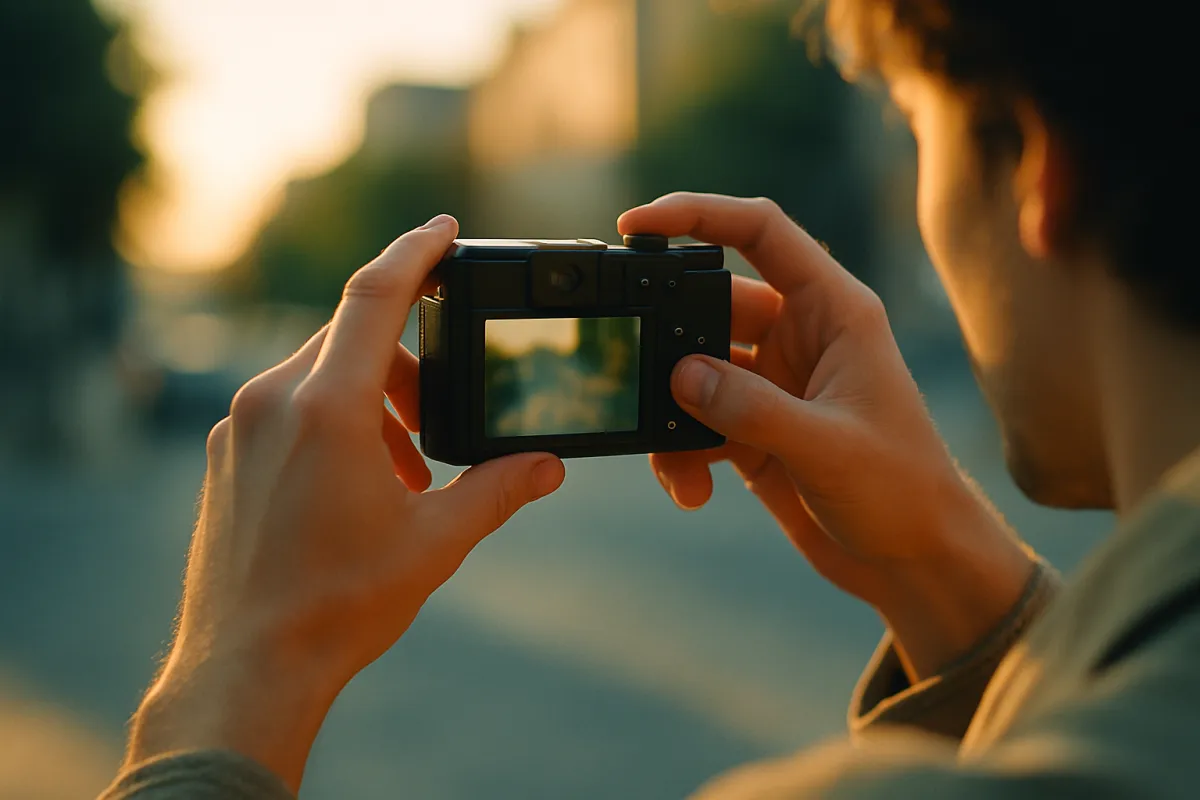
The phone in your pocket is the real competitor for any compact, and pretending otherwise is how buyers waste money. A modern phone has a small sensor and a short lens, but it hides those limits behind computational processing that stacks frames, lifts shadows, smooths noise, and flatters difficult scenes automatically, and it does it on a device you already own, always have with you, and can share from instantly. For everyday snapshots destined for a screen, that combination is genuinely excellent, and a basic compact with a similar-sized sensor and a similar-length lens will not beat it. That is the uncomfortable truth that killed the cheap compact, and it is worth stating plainly before spending a cent.
A compact beats a phone only where it brings hardware the phone cannot fake. The clearest is optical zoom: a travel-zoom compact reaches a distant subject with real glass, where a phone’s digital zoom simply enlarges and smears pixels. The second is sensor size: a one-inch or larger sensor gathers far more light than a phone sensor, which shows up as cleaner files in dim rooms, more natural background blur that does not rely on a software cutout, and more room to edit. The third is less about specs and more about experience: a dedicated camera with a real grip, a real shutter button, and real dials makes photography deliberate in a way that improves how carefully you shoot. Weigh those three against the phone’s convenience honestly. If you want reach, sensor size, or the deliberate feel, the compact earns its place. If you want none of them, the phone has already won, and our field note on how many megapixels you actually need explains why the spec race that once favored dedicated cameras no longer settles it.
Point-and-shoot vs a mirrorless or DSLR
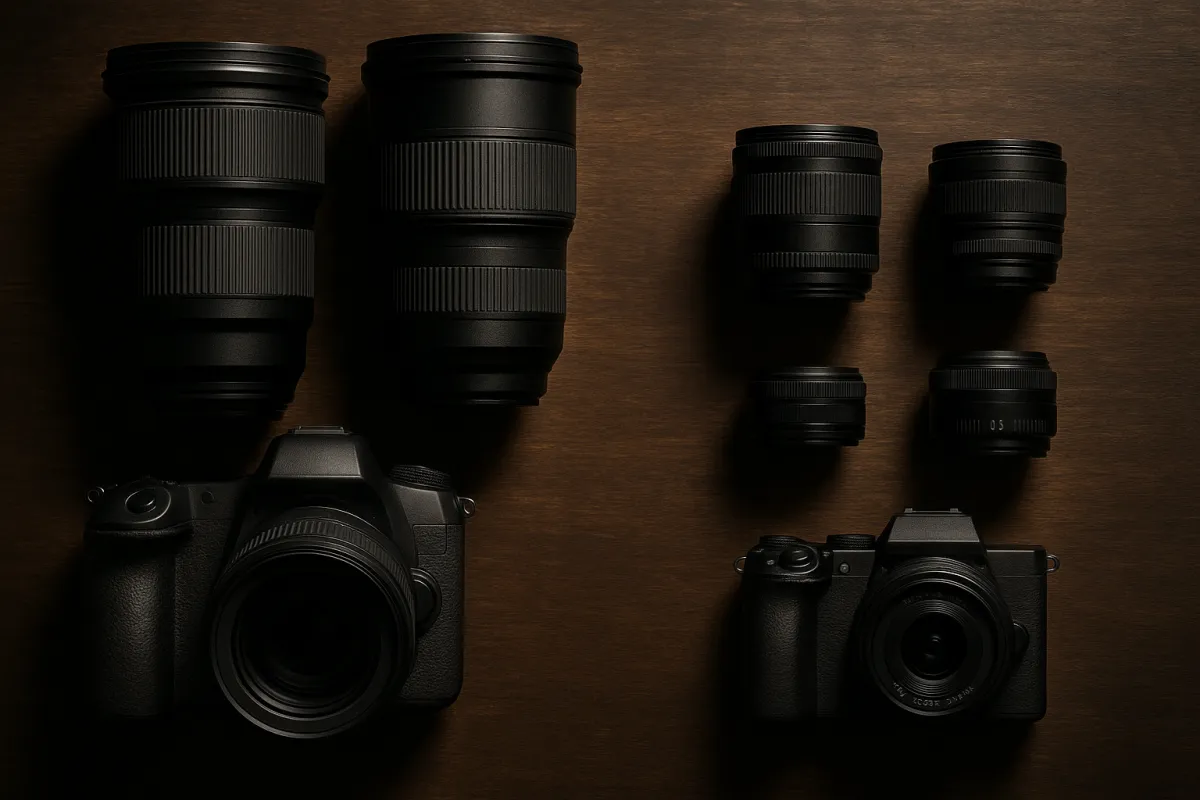
At the other edge of the decision sits the interchangeable-lens camera, the mirrorless or DSLR body, and the trade there runs the opposite way from the phone comparison. A compact wins on size, simplicity, and the fact that it comes along, while an interchangeable-lens camera wins on image quality, control, and the ability to grow. The single defining difference is the lens: a compact’s glass is fixed and chosen by the maker to balance reach and size, while an interchangeable-lens body lets you mount a fast prime for low light and blur, a wide zoom for scenery, or a long telephoto for wildlife, swapping the most important part of the system to suit the shot.
That flexibility is exactly what our field note on upgrade order argues matters most, because glass shapes a photograph more than the body does and a compact never lets you change it. The cost of the flexibility is size, expense, and a learning curve, which is precisely what a compact spares you. So the choice is not which is better in the abstract but which trade fits you: if you want the best possible image quality and are willing to carry and learn more to get it, the interchangeable-lens camera is the honest pick, and our mirrorless versus DSLR field note helps you choose between the two kinds. If you want a camera that disappears into a pocket and asks nothing of you, the compact is right, and no amount of image quality changes that if the bigger camera stays home.
Where compact point-and-shoot cameras still win
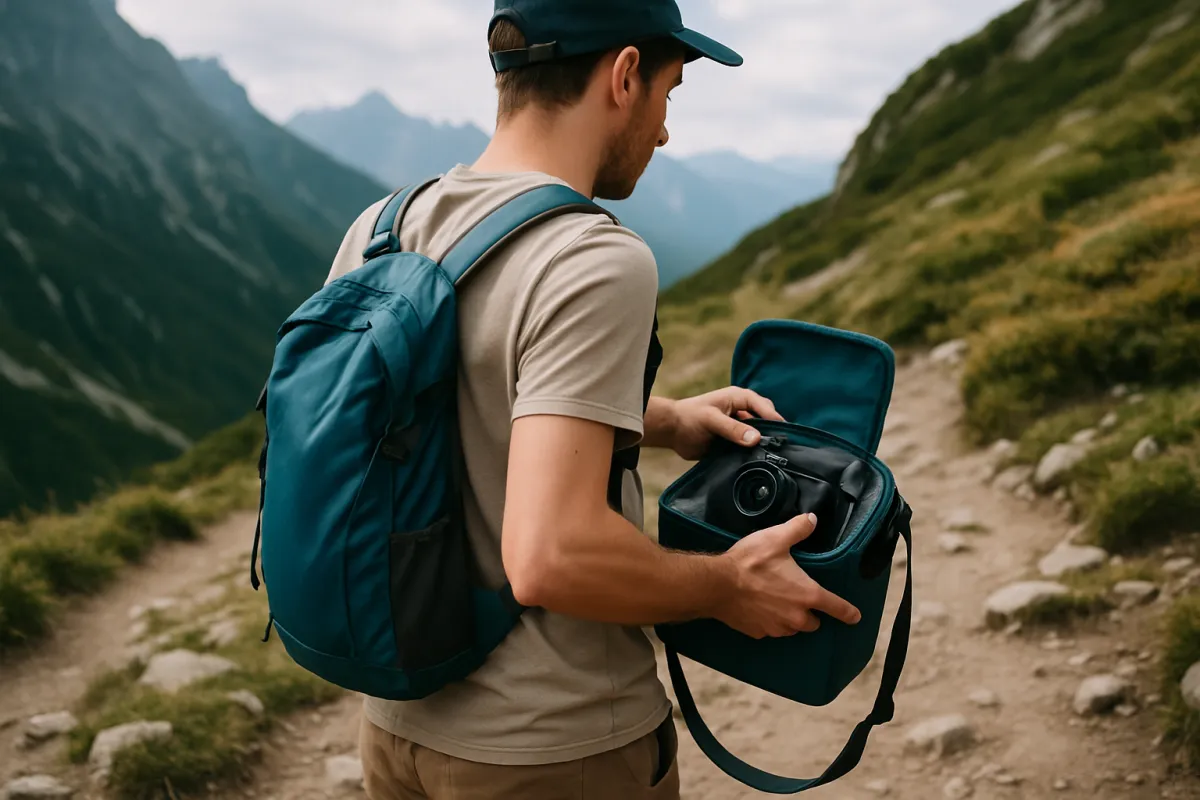
It is worth naming the specific situations where a compact is not a compromise but the correct tool, because the phone-killed-the-compact story oversells its case. The first is travel, where the camera that rides in a jacket pocket all day captures the moments a heavier kit misses back at the hotel, and where a travel zoom reaches distant landmarks without the weight of a long lens. The second is everyday carry, the camera you bring on a walk, to dinner, to a child’s recital, where the difference between a good photo and no photo is simply whether the camera was there. Portability is not a soft consideration; it is the biggest single predictor of whether a camera gets used, and a compact wins it outright.
The third situation is the deliberate everyday shooter who wants image quality above a phone without the bulk of an interchangeable-lens system, and here the large-sensor compact shines, delivering files close to a much bigger camera in a shell a fraction of the size. The fourth is the buyer who values the experience itself: the tactile pleasure of a real camera, the retro dials, the discipline of a fixed focal length, all of which make some people shoot more and better. None of these are consolation prizes. Each names a job where a compact does something a phone or a big camera does worse, and matching your own life to one of them is how you know the purchase is worth it rather than a duplicate of gear you already own.
The image-quality question, honestly sized
Image quality is where compacts get oversold and undersold at once, so it deserves an honest sizing. The single spec that governs it is sensor size, because a larger sensor gathers more total light, which produces cleaner files in dim conditions, more natural background blur, and more editing headroom. A compact with a one-inch sensor sits far above a phone or a basic compact, and a compact with an even larger sensor closes much of the gap to an interchangeable-lens camera. The headline zoom number, by contrast, tells you almost nothing about quality, and a huge zoom on a tiny sensor is often a warning sign rather than a feature, since stretching that much range over that little sensor forces optical compromises.
Where a premium compact's price actually goes
Illustrative split of what you pay for in a large-sensor compact. Sums to 100 percent.
Notice what leads: the sensor and the lens together are three quarters of the value, which is exactly why buying on the zoom number instead of the sensor is a mistake.
The honest framing is that image quality runs on a continuous line from phone sensors at one end through one-inch compacts in the middle to full interchangeable-lens sensors at the far end, and every step up buys cleaner low light and easier blur at the cost of size and money, a trade our field note on full frame versus crop walks in detail for the larger formats. A compact does not sit at a magic quality tier; it sits at a specific point on that line, and its worth depends on whether that point is above your phone and small enough for your life. Buy the sensor, not the zoom, and let the number on the box that actually predicts your photographs lead the decision.
Zoom, and the one spec that actually matters
Zoom is the spec compacts market hardest and buyers misread most, so it is worth untangling. There are two kinds, and only one is real. Optical zoom moves genuine glass to magnify the scene, preserving image quality across the range, and it is the reach a phone cannot match. Digital zoom simply crops and enlarges the existing image, throwing away quality, and it is a marketing number a phone can produce just as easily. When a compact advertises a giant zoom figure, check how much of it is optical, because that is the only part worth paying for, and treat the digital multiplier as noise.
Even within optical zoom, more is not automatically better, because reach trades against sensor size and lens brightness in a small body. A travel-zoom compact stretches a long optical range over a small sensor, which is the right call when reaching distant subjects is the whole point, at some cost to low-light quality and blur. A large-sensor compact uses a shorter, brighter zoom over a bigger sensor, which is the right call when image quality matters more than reach. Neither is superior in the abstract; they are tuned for different jobs, and the mistake is buying the biggest zoom when you actually wanted the bigger sensor. Decide which you value first, then read the zoom number in that light. As with lenses generally, our field note on prime versus zoom makes the same point for interchangeable systems: range and quality pull against each other, and the honest buyer picks a side on purpose.
What a point-and-shoot camera costs
Price sorts the category as clearly as anything, and seeing the tiers laid out prevents the most common overspend and underspend at once. Think in rough bands defined by what they buy rather than exact figures, since real prices swing with model year, features, and the used market where compacts can be excellent value.
Illustrative point-and-shoot camera price tiers
Rough typical cost by tier. Midpoints of wide ranges, illustrative only.
Widths scale with the dollar midpoints. Notice the trap at the top: an enthusiast compact often costs as much as a small interchangeable-lens kit that grows further, which is the comparison to run before you buy.
The tiers carry a clear lesson. At the bottom, a basic compact is rarely the smart spend, because a phone you already own tends to match it, so that money buys a duplicate. In the middle, a travel-zoom compact justifies itself through reach, the one thing the phone cannot fake, and it is often the sweet spot for travelers. At the top, a large-sensor or enthusiast compact clearly out-shoots a phone and is worth the money to the buyer who wants that quality in a pocket, but it runs into an important comparison: at those prices a small mirrorless body with one lens frequently costs the same and can grow into a fuller system. Price both before committing, which our upgrade budget planner makes quick, and buy the compact only if the portability is worth giving up that room to grow. The honest spend is the one that clears your phone at something you want without overpaying into the range where a bigger camera would have served you longer.
Point-and-shoot cameras for beginners
A beginner staring at the choice between a simple compact and an interchangeable-lens camera is really choosing between two goals, and naming the goal settles it. If the aim is to take good pictures with no learning curve and nothing to carry, a point-and-shoot is the honest recommendation, because it works the moment you switch it on and never asks you to understand aperture or swap a lens. Many people genuinely want exactly that, and pushing them toward a bigger camera they will find intimidating and leave at home does them no favor. The best beginner camera is the one that gets used, and for a lot of beginners that is a pocketable compact.
If instead the beginner wants to learn photography as a craft and improve over years, the interchangeable-lens camera is the better foundation, because the skills that matter, controlling depth of field, choosing focal lengths, working in manual, all depend on the control and the lens options a fixed-lens compact withholds. Our first-camera budget field note makes the case that even then the money should lean toward the lens rather than the body, and that logic simply does not exist for a compact, whose lens is sealed in. The clean way to decide is to ask honestly whether you want a camera or a hobby. A camera points at a compact; a hobby points at an interchangeable-lens body and the first fast lens to go with it.
How to choose the best point and shoot camera for you
There is no single best point and shoot camera, only the best one for a named job, and the fastest way to a good decision is to answer four questions in order rather than comparing spec sheets side by side. The first question is what your phone cannot already do, because that is the only reason to buy at all. If the honest answer is reach, you want a travel zoom. If it is image quality in dim light or gentler background blur, you want a large sensor. If it is the feel of a dedicated camera in the hand, you want an enthusiast compact and the specs matter less than the controls.
The second question is sensor size, which decides more about the pictures than any other line on the box. A one-inch or larger sensor is the practical threshold where a compact starts clearly out-shooting a current phone; below that the phone’s computational processing tends to close the gap or win. Our field note on full frame versus crop sensors explains why sensor area drives light-gathering, and the same logic runs all the way down to compacts. Megapixels are not the answer here, a point our megapixel field note makes at length.
The third question is the zoom range you will actually use, not the largest number offered. A long superzoom buys reach by using a smaller sensor and a dimmer lens at the long end, which is a real trade rather than a free bonus, and most people use the wide half of the range far more than the long end. The fourth question is size, because portability is the whole premise: a compact that does not fit the pocket or bag you actually carry has lost the argument it was meant to win.
Answer those four and the shortlist usually narrows to one shape of camera, at which point comparing individual models is a matter of handling and price rather than category. Price the shortlist against a small interchangeable-lens kit before committing, since at the top of the compact range the two often cost the same, and put both numbers into the upgrade budget planner to see the difference in plain figures.
Point and shoot digital camera specs, decoded
The spec list on a point and shoot digital camera is short, which is a mercy, but three of the entries are routinely misread. Sensor size comes first and is usually given as a fraction such as one over 2.3 inch, or as one inch, or as a format name. The fractions are legacy notation and not literal measurements, so the only reliable takeaway is the ranking: bigger is better for light gathering, and one inch is meaningfully bigger than the fractional sizes below it. This single number does more to set image quality than anything else in the list.
Focal length is the second, and it is usually printed twice: the true focal length of the lens in millimeters, and the equivalent range that tells you the angle of view in familiar terms. The equivalent figure is the useful one, because a compact’s true focal lengths are short and would mean nothing to someone used to the usual numbers. A range starting near the wide end suits interiors and landscapes, while a long top end suits distant subjects, and our telephoto lens field note covers what the long end really buys.
Aperture is the third and the most commonly skipped, usually written as a pair of f-numbers for the wide and long ends of the zoom. The smaller the number, the more light the lens admits and the better the camera performs indoors and at dusk, which is why a compact whose aperture stays reasonably bright at the long end is worth more than one whose lens dims sharply as it zooms. Our explainer on aperture covers the mechanism. Two other lines deserve a glance: whether the camera has image stabilization, which matters a great deal at the long end of any zoom, and whether it can record raw files, which decides how much room you have to edit later, a trade our raw versus JPEG field note settles. Everything else on the box, megapixel counts included, is noise next to those.
Who should skip a point-and-shoot entirely
Symmetry matters, so it is worth naming the buyers for whom a compact is the wrong spend. The first is the person who wants a basic compact expecting it to leap past their phone, because at the bottom of the range it will not, and the honest advice is to keep the phone and put the money elsewhere. The second is the photographer chasing maximum image quality or serious background blur, since a fixed lens on a small-to-medium sensor cannot match a fast prime on a larger sensor, and that buyer should read our field note on the best lens for low light and buy the system that lets them mount one.
The third is the buyer who will resent the fixed lens the moment their photography grows, because the fastest way to outgrow a compact is to develop a preference for a focal length or a look it cannot deliver, at which point the whole camera must be replaced rather than a lens added. If you already suspect you will want that flexibility, buying a compact is buying a stepping stone you will soon abandon, and the cheaper path over three years is often to start with a small interchangeable-lens camera. The compact is a genuine destination for the traveler, the everyday carrier, and the pleasure shooter, and a false economy for the buyer whose ambitions point past it. Knowing which you are is the entire decision.
Video and vlogging on a compact camera
Compacts split sharply on video, and the split matters because video is a growing reason people buy a camera at all. A basic compact shoots casual clips no better than a phone, and for most family video the phone wins on convenience and processing. But a specific slice of the compact market is built for vlogging and self-recorded video, with a screen that flips to face you, autofocus that holds your face reliably as you move, and a wide lens that fits you in frame at arm’s length. For a creator who wants a dedicated, still-pocketable tool, one of those purpose-built compacts is a real step up from a phone in audio inputs, lens quality, and the focus of a device made for the job.
The caveats mirror the ones that govern stills. Sensor size still sets the ceiling on low-light video and background separation, so a larger-sensor vlogging compact looks meaningfully better in a dim room than a small-sensor one, at a higher price. Stabilization varies widely, and a phone’s computational stabilization is often smoother than a compact’s, so walking-and-talking footage can favor the phone unless the compact has strong stabilization built in. And the fixed lens means the framing you get is the framing you keep, where an interchangeable-lens camera could swap to a wider or brighter lens for the same scene. If video is the main event and you want to grow into it, the reasoning in our mirrorless versus DSLR field note applies, and an interchangeable-lens body is the stronger long-term tool. If you want a small, dedicated vlogging camera that beats your phone at reach, audio, and feel without carrying a bag of gear, a vlogging compact is a legitimate and popular pick, and the companion above weighs it against the alternatives for your case.
The used market makes compacts a bargain
One factor tilts the whole compact decision in the buyer’s favor, and buyers routinely overlook it: the used market. Camera bodies depreciate on a predictable curve, and a compact a generation or two old, displaced by a newer model that improved little for everyday shooting, often sells for a fraction of its launch price while performing nearly identically in your hands. Because a compact is a sealed unit with no lens to buy separately, the used price is the whole price, which makes a secondhand compact one of the cleanest value plays in photography. The buyer who wants a large-sensor compact but balks at the new price frequently finds the previous model used at a discount that changes the math entirely.
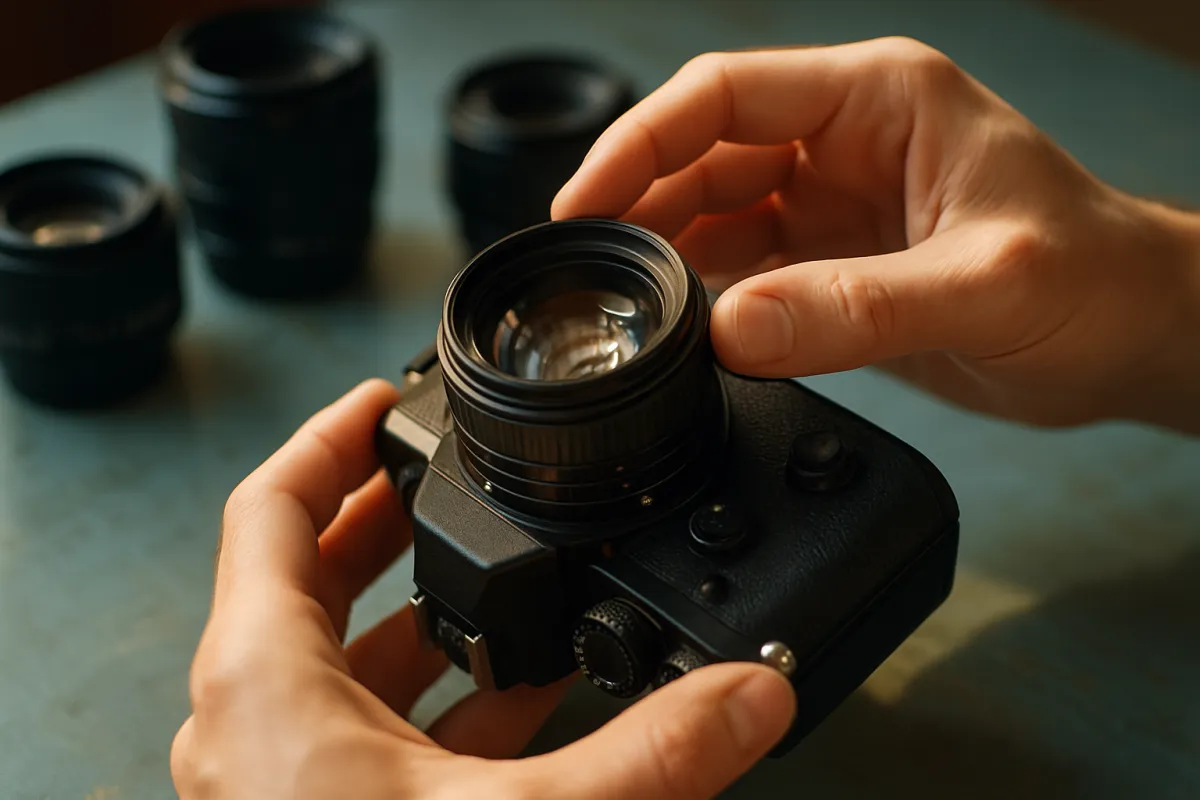
The inspection ritual takes only a few minutes and it removes most of the risk. Work the zoom through its full range and listen for grinding, fire the shutter at several speeds, check the screen and any viewfinder for dead pixels, look through the lens toward a light for haze or fungus, and shoot a few test frames of a plain surface to check the sensor. A compact that passes those checks is very likely to keep working for years, because it has fewer moving parts than an interchangeable-lens body and no mount to wear. The same discipline our first-camera budget field note applies to used bodies applies here, and it means a modest budget stretches to a better compact than the new-price shelf suggests. Buy the accessories new for warranty, and let the used market absorb the depreciation the first owner already paid.
Battery, storage, and the small stuff that ends a shoot
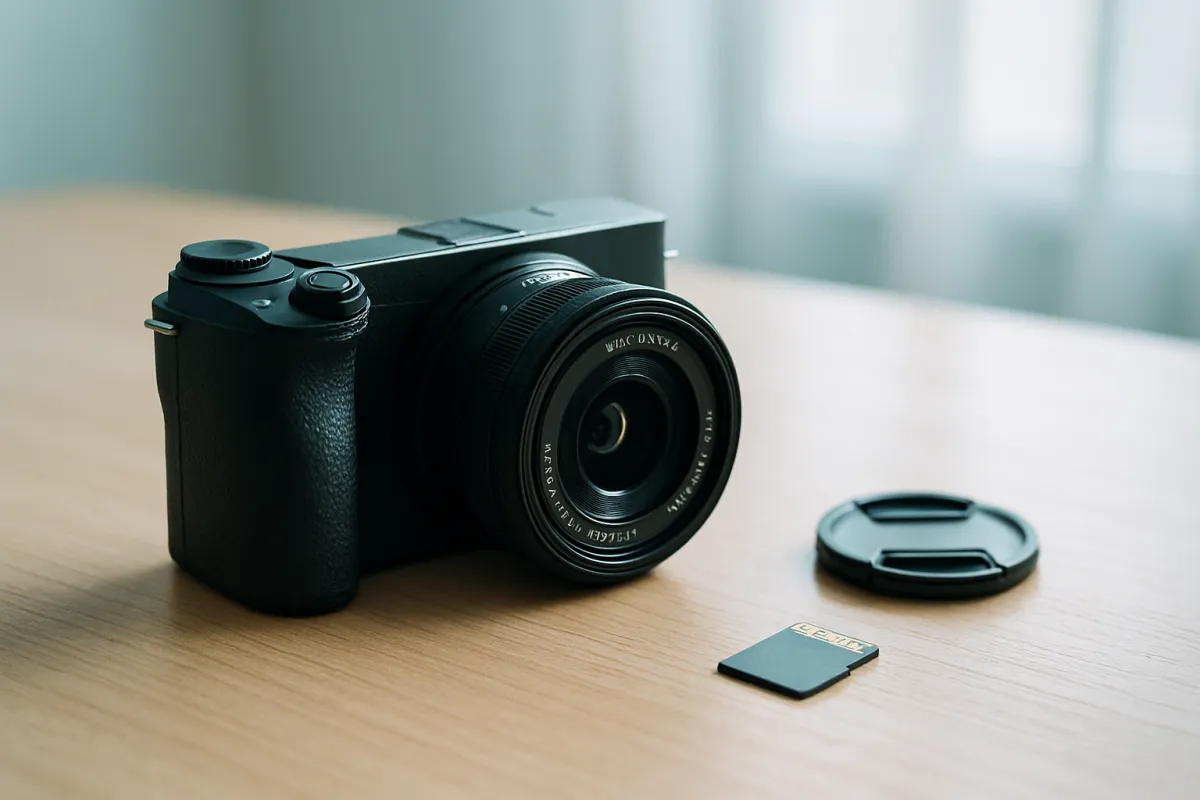
The compact’s price tag is not the whole cost, and the extras that follow are the same ones that quietly end shoots on any camera. A compact runs on a small battery that a full day of shooting can drain, especially in cold weather or with heavy screen use, so a spare battery is the first accessory to budget, not an afterthought. A memory card is the second, and a quality card from a reputable maker is worth the small premium, because a cheap card is where photographs go to corrupt. These two items cost little and prevent the two most common ways a day of shooting dies: a dead camera and a lost file.
The rest of the small stuff is short and predictable. A simple case or pouch protects the compact in a bag or pocket, which matters more for a camera you carry everywhere and knock against things. A way to transfer and back up files, whether a card reader or the camera’s wireless transfer, turns a single card failure from a disaster into an inconvenience. And a screen protector or a spare lens cap costs almost nothing and saves the parts most likely to scuff. None of this is glamorous, and all of it belongs in the plan from the start, because the whole appeal of a compact is that it comes along and works, and a dead battery or a full card breaks exactly that promise. Fold a modest accessories allowance into the total before you buy, the same way our budgeting reasoning folds it into a larger kit, and the compact stays the reliable everyday tool it is supposed to be.
Rent or borrow before you commit
For a purchase this personal, the cheapest way to spend wisely is often not to buy yet but to try first, because a compact lives or dies on how it feels in your hand and whether you actually carry it. Rental houses will hand you a compact for a small fraction of its price, and a friend’s spare costs nothing, so a weekend with the camera answers questions no review can. Slip it into the pocket you would really carry it in, shoot the subjects you actually photograph, and notice whether it comes out of the bag or stays in it, because that single behavior predicts whether the purchase will earn its keep.
The trial weekend tends to resolve into one of two clarities. Either the compact earned its place, the reach or the sensor or the simple pleasure of using it showed up in your photographs and in how often you reached for it, and you buy with confidence, or the weekend quietly revealed that your phone was doing the job already and the compact mostly duplicated it, and you keep the money. Both outcomes are wins, because the small rental fee de-risked a much larger purchase. This is the same discipline our upgrade-order field note applies to any gear decision: buy the thing you can name a reason for after testing it, and refuse the thing that looked good only on a spec sheet. A compact you tried and loved is money well spent; a compact you bought on a marketing number and left at home is the most expensive camera in the drawer. The same name-the-reason test anchors every camera upgrade decision, whether the purchase is a compact, a lens, or a whole new body.
The worked decision: three buyers, three answers
Theory lands best against real cases, so here are three buyers running the same reasoning to different, correct answers. The first is a traveler who wants one camera that fits a jacket pocket, reaches distant landmarks, and comes along every day of a trip. Their priority is reach and portability, image quality is secondary, and their honest pick is a travel-zoom compact, because it delivers the one thing their phone cannot, optical reach, in the smallest possible package. Spending up to a large-sensor compact would buy quality they did not rank and sacrifice some of the zoom they did.
The second buyer is a deliberate everyday shooter who wants image quality clearly above their phone but refuses to carry a bag of lenses. Their priority is sensor size in a pocketable body, and their pick is a large-sensor compact, worth the higher price because it beats the phone at exactly what they want. But they should first price a small mirrorless kit, because at that spend the interchangeable-lens option is close and grows further, and only the portability tips them to the compact. The third buyer wants to learn photography and improve for years, and for them the compact is the wrong tool regardless of price: their money belongs in an interchangeable-lens body and a first fast lens, per our upgrade-order field note, because the craft they want depends on the control a compact cannot offer. Same question, three answers, each driven by the buyer naming what they actually want before reading a spec sheet. Run your own inputs in the companion above and it lands you on your version.
What compact means, and how compact is compact
Compact point and shoot is used loosely enough to cover cameras that differ substantially in size and capability, so it helps to separate the tiers.
Pocketable compacts genuinely fit a jacket or trouser pocket, with small sensors and fixed zoom lenses. Convenience is the entire proposition, and a modern phone competes with them directly.
Enthusiast compacts carry a larger sensor in a body still small enough for a coat pocket. This is where a compact meaningfully outperforms a phone in low light and in shallow depth of field, and it is the tier worth paying for if image quality is the reason you are buying one.
Superzoom compacts trade pocketability for reach, with long zoom ranges in a body closer to a small bridge camera. They are compact relative to an interchangeable-lens kit rather than to a pocket.
The distinction matters because the honest answer to whether a compact is worth it depends almost entirely on tier. A pocketable compact has to justify itself against the phone already in your pocket, which is a demanding comparison. An enthusiast compact with a larger sensor is answering a different question and usually wins it.
Our note on full-frame against crop sensors covers why sensor size drives so much of that difference.
The bottom line
Are point-and-shoot cameras worth it? For the buyer who wants a specific thing a phone cannot give, in a body small enough to actually carry, yes, genuinely and clearly. The cheap compact that merely duplicated a phone is gone, and rightly so, but the compacts that survived earn their place by beating a phone at reach, at sensor size, or at the simple pleasure of shooting with a real camera. Sort yourself honestly: if you want one of those three, buy the compact that delivers it, checking the sensor before the zoom and pricing a small mirrorless kit alongside it at the top of the range. If you want none of them, keep your phone and spend the money on a trip. And if you want to grow into photography as a craft, skip the compact for an interchangeable-lens camera and its first lens. The point-and-shoot is not dead and not universal; it is a precise tool for a precise buyer, and knowing which buyer you are is the whole answer.
KitBorough field notes are written to help you spend well, not to sell you anything, and nothing here is sponsored or brand-affiliated. Every price tier, sensor threshold, and percentage is an illustrative planning figure rather than a quote or a lab result for any particular camera, and real numbers move with model year, features, and the used market. Before money changes hands, compare current listings against the photographs you actually take and the phone you already own, and buy the camera whose specific strengths your specific shooting will use.
Frequently asked questions
Are point-and-shoot cameras worth it in 2026?
For the right buyer, yes, but not for everyone, and the honest test is what you want that your phone cannot give you. A point-and-shoot camera earns its cost when you want a real optical zoom, a larger sensor than a phone for cleaner low-light files and gentler background blur, or simply a dedicated device that makes photography a deliberate act rather than a reflex. If you want none of those and mostly share to a screen, a modern phone already does the job, and a basic compact that matches it is money spent on a duplicate. The compacts worth buying today are the ones that clearly out-shoot a phone at something specific: reach, sensor size, or the pleasure of using them.
What is the difference between a point-and-shoot and a compact camera?
The terms overlap so heavily that most buyers use them interchangeably, and that is fine. A point-and-shoot describes how the camera is used: a fixed lens, automatic modes, and no fuss, so you point it and shoot. Compact describes the size: a camera small enough to slip into a pocket or a small bag. Nearly every point-and-shoot is compact, and nearly every compact is a point-and-shoot, so the labels land on the same shelf. The meaningful distinctions sit underneath the name, in sensor size, zoom range, and whether the camera offers manual control, which matter far more than which of the two words is printed on the marketing.
Is a point-and-shoot camera better than a phone?
At specific things, yes, and at plenty of others, no. A point-and-shoot with a genuine optical zoom reaches distant subjects a phone can only smear with digital zoom, and a compact with a larger one-inch or bigger sensor gathers cleaner light and blurs backgrounds more convincingly than a small phone sensor. What a phone still wins is convenience, computational processing that flatters difficult scenes, instant sharing, and always being with you. The compact that beats a phone is the one that offers reach or sensor size the phone lacks. A basic compact with a tiny sensor and a short zoom rarely beats a current phone at anything, which is why that category has largely faded.
What should I look for when buying a point-and-shoot camera?
Look past the headline zoom number and check the sensor size first, because it decides image quality more than any other spec on the box. A one-inch or larger sensor is the line between a compact that clearly out-shoots a phone and one that merely duplicates it. After the sensor, weigh the zoom range against how you shoot: a long travel zoom trades some image quality for reach, while a large-sensor compact with a shorter zoom trades reach for quality. Then consider the lens aperture for low light, whether you want manual control or pure automation, and the size, since a compact you leave at home takes no photographs. Match those to your subjects rather than buying the biggest number in each column.
What is the best point and shoot camera to buy?
There is no single best point and shoot camera, only the best one for a named job, so answer four questions in order. What can this camera do that your phone cannot: reach, low-light quality, or the feel of a dedicated device? How big is the sensor, where one inch or larger is the practical line for clearly out-shooting a phone? How much of the zoom range will you truly use, given that a long superzoom trades sensor size and brightness for reach? And will it fit the pocket or bag you actually carry? Answer those and the shortlist narrows to one shape of camera, at which point handling and price decide.
What specs matter on a point and shoot digital camera?
Three specs carry most of the weight. Sensor size decides image quality more than anything else, and the fractional notations are legacy labels rather than literal measurements, so the useful takeaway is simply that bigger is better and one inch is a meaningful threshold. Focal length is best read as the equivalent range, which tells you the angle of view in familiar terms. Aperture, the pair of f-numbers for the wide and long ends, tells you how the camera will behave indoors and at dusk, and a lens that stays reasonably bright when zoomed is worth more than one that dims sharply. Image stabilization and raw file support are worth a glance; megapixel counts are not.
Is a point-and-shoot or a mirrorless camera better for beginners?
It depends on whether the beginner wants to grow into photography or simply take good pictures with no learning curve. A point-and-shoot is the better pick for someone who wants a pocketable camera that just works, with nothing to learn and nothing to swap. A mirrorless or DSLR is the better pick for someone who wants to improve, because interchangeable lenses and manual control unlock the skills and looks a fixed-lens compact cannot reach. Neither is more serious; they solve different problems. Many photographers even own both: a compact for everyday carry and an interchangeable-lens body for deliberate shooting, and there is no contradiction in that.
Why did point-and-shoot cameras almost disappear?
Because the smartphone ate the bottom of the market. For most of the 2000s a basic compact was the family camera, and then phones caught up to and then passed those small-sensor cameras at everyday snapshots, while adding sharing, editing, and the convenience of always being in a pocket. The cheap compact had nothing left that the phone could not do, so that tier collapsed. What survived, and has quietly revived, are the compacts that do something a phone cannot: long optical zooms, large one-inch and bigger sensors, and retro or premium bodies people enjoy using. The category did not die so much as retreat to the ground it can still defend.
How much should I spend on a point-and-shoot camera?
It depends entirely on which job you are buying it for, and the illustrative range is wide. A basic compact sits low, but at that price a current phone usually matches it, so it is rarely the smart spend. A travel-zoom compact, where the reach justifies the purchase, tends to sit in the middle hundreds. A large-sensor premium compact, the kind that clearly out-shoots a phone on image quality, commonly runs from several hundred into four figures. The honest rule is to spend only where the compact beats your phone at something you actually want, and to price a small mirrorless kit alongside it, because at the top of the compact range an interchangeable-lens camera often costs the same and grows further.
Are point-and-shoot cameras good for travel?
They are one of the best tools for it, because the camera you carry all day beats the better one you leave in the hotel. A compact slips into a jacket pocket or a small bag and comes along by default, which for travel is often worth more than the last increment of image quality. A travel-zoom compact adds reach for distant landmarks and wildlife without the weight of a long lens, and a large-sensor compact delivers image quality close to a bigger camera in a fraction of the size. The trade is fixed glass and smaller sensors than an interchangeable-lens kit, but for many travelers the portability wins outright, which is exactly why the compact survives best in the travel bag.