What's on this page
- The best lens for landscape photography, in one answer
- What makes a good landscape photography lens
- Where wide angle lenses fit for landscapes
- Choosing a focal length for landscapes
- Best landscape lens by focal length: ultra-wide, wide, standard, telephoto
- Which lens for landscape photography, scene by scene
- The best lenses for landscape photography, as a kit
- Picking an aperture for landscapes
- Depth of field and holding the scene sharp
- Focusing a landscape lens for front-to-back sharpness
- Prime versus zoom for landscapes
- Shooting landscapes with a 50mm
- Telephoto landscapes and compression
- When a wide lens is actually necessary
- Crop sensor landscape lenses and the equivalence
- Crop-only or full-frame glass for a landscape kit
- Micro Four Thirds and other formats for landscapes
- Sharpness and corner performance
- Distortion, vignetting and flare
- Filters for landscape photography
- A landscape lens for night skies
- Weather sealing and build for the field
- Best budget lens for landscape photography
- Buying a landscape lens used
- The specification lines that actually matter on a landscape lens
- Mistakes people make choosing a landscape lens
- The worked recommendation, three landscape scenarios
- The bottom line
Short answer: The best lens for landscape photography is a wide-angle lens, roughly 16mm to 35mm on full frame, and in practice a wide-angle zoom covering that whole span is the best landscape lens most people can own. Shoot it at f/8 to f/11, where the lens is sharpest and the depth of field runs from a close foreground to the horizon. Crop-sensor shooters get the same view from a 10mm to 24mm lens.
The best lens for landscape photography is a wide-angle lens, roughly 16mm to 35mm on a full-frame camera, and the useful surprise is that it is usually not the widest lens on the shelf: a 24mm serves more scenes than a 14mm does, because the very widest options shrink a distant mountain into a speck unless something sits close enough to the camera to anchor the frame. The better question is which of the best lenses for landscape photography match the scenes you actually walk toward, since the answer splits cleanly by focal-length band, and a versatile wide-angle zoom covering that whole 16mm to 35mm span is the single most useful thing most people can own for the genre.
This field note is the landscape use-case, not another lens comparison. It sits alongside our field note on the best lens for low light as the other half of a pair: that one is about gathering light in the dark, this one is about holding a whole scene sharp in daylight, and the right tool is different in each. It leans on our field note on prime versus zoom lenses, the crop math in our full-frame versus crop field note, the focal-length feel in our 35mm versus 50mm field note, and the aperture mechanics in our exposure triangle field note. Price your own answer as you read with the upgrade budget planner.
Key takeaways
- The best landscape lens is a wide angle, about 16mm to 35mm on full frame, because a wide field of view fits the whole scene and exaggerates the near-to-far depth that gives a landscape its impact.
- Wider is not automatically better: past about 20mm the widest lenses need a strong close foreground or the distance collapses into an empty frame, so 24mm is the safer starting number.
- You shoot landscapes stopped down to f/8 or f/11, not wide open: that band is where lenses are sharpest and the depth of field runs from foreground to horizon.
- Focal length and corner sharpness decide a landscape lens, which is why a versatile wide zoom beats a fast prime here, the reverse of the low-light answer.
- A complete kit is a wide zoom plus a telephoto, and the kit zoom you already own, used wide and stopped down, is a capable budget landscape lens, so you can start without buying anything.
The best lens for landscape photography, in one answer
The best lens for landscape photography is a wide-angle lens, a focal length in the neighborhood of 16mm to 35mm on a full-frame camera, and in practice a wide-angle zoom that covers that whole span is the most useful single lens you can own for the genre. That is the whole thing in one breath, and the rest of this field note is the evidence for it. That wide field of view is the entire reason it wins for classic landscapes. It fits a sweeping scene into the frame and it stretches the distance between a near foreground and a far horizon, which is what makes a flat photograph feel like it has depth.
Everything else people fuss over in a landscape lens, a fast maximum aperture, exotic glass, brand prestige, matters far less here than it does in other kinds of shooting, because you shoot landscapes stopped down and off a tripod, where the lens has an easy job. What matters instead is the focal length, how sharp the lens stays into the corners, and how well it controls distortion and flare. The rest of this article walks the focal-length choices, the aperture, the wide-versus-telephoto question, the crop math, and the budget options, but the headline never moves: for a sweeping landscape, reach for the wide end first, then stop short of the extreme end unless the scene gives you a foreground worth looming.
Asked in the plural the answer widens rather than changes. The best lenses for landscape photography are two: that wide zoom, plus a telephoto covering roughly 70mm to 200mm on full frame, which compresses distant ridgelines into layers and lifts a single lit detail out of a busy scene. Between them they cover nearly every view a location hands you. And if what you want is simply a lens for landscape photography rather than a whole kit, the one-line version is a wide zoom in the 16mm to 35mm band on full frame, or a 10mm to 24mm crop lens that frames the same way, shot between f/8 and f/11 off a tripod. Three numbers decide it, in this order: focal length, aperture, sensor. The rest of this field note is what changes when your scenes change.
What makes a good landscape photography lens
A landscape photography lens is judged on four things, in roughly this order, and it is worth being precise about them, because the specs a camera shop leads with are mostly the wrong ones for this genre. First, does it give you the field of view the scene needs, which is a question about focal length and about your sensor size, not about optical quality at all. Second, does it stay sharp into the corners at f/8 to f/11, since the whole frame is the subject and a viewer’s eye is free to wander to any edge. Third, does it control the geometric and light-related faults that landscapes expose, meaning barrel distortion that bows a straight horizon, vignetting that darkens the sky at the corners, and flare when you shoot toward a low sun. Fourth, will you carry it up the hill.
Notice what is missing from that list. Maximum aperture, the headline number on almost every lens box, sits near the bottom for landscape work, because you deliberately shoot two or three stops down from wide open. Autofocus speed barely registers, because your subject is a mountain and it is not going anywhere. Bokeh, the quality of out-of-focus rendering, is close to irrelevant when your aim is to have nothing out of focus. This inversion is the single most useful thing to understand before you spend money, and it is why a modest, slow, sharp wide zoom outperforms an expensive fast prime for this one job. Test your own weighting in the companion above, then price the result in the upgrade budget planner.
Where wide angle lenses fit for landscapes
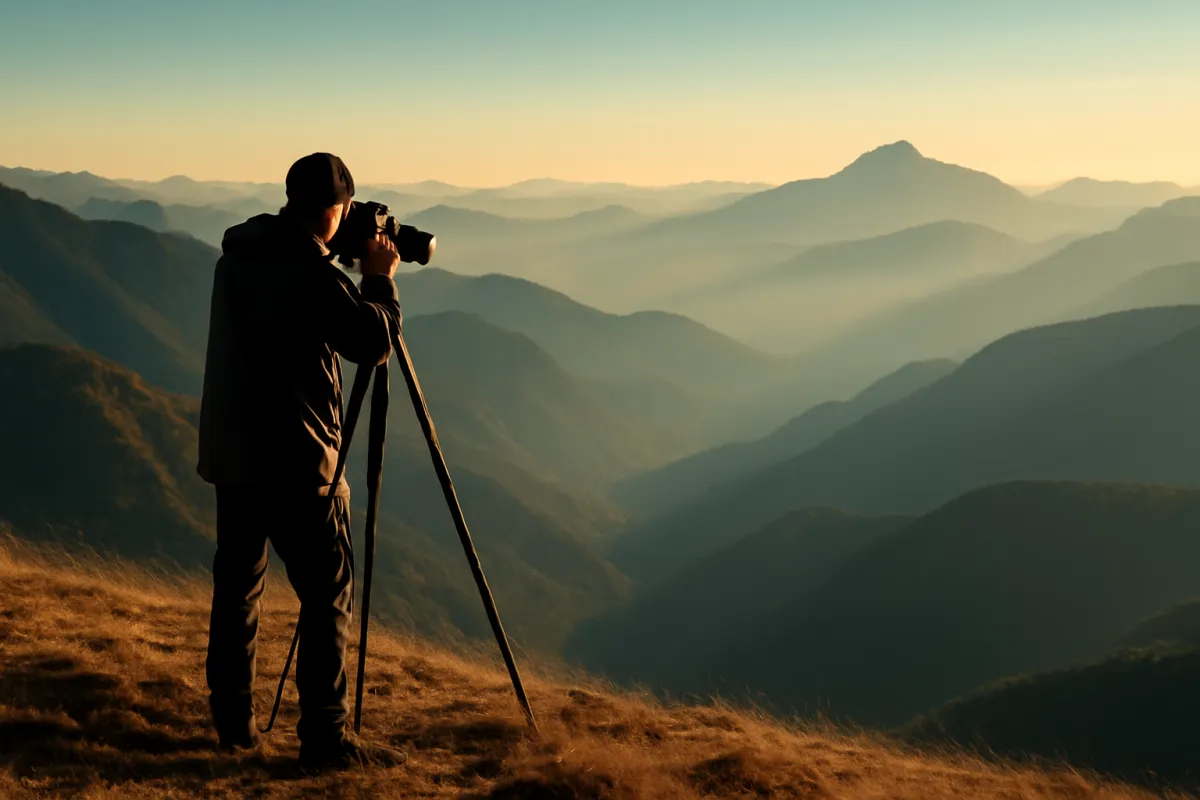
A wide-angle lens is the default landscape choice, and for the classic grand vista it is the right one, but the honest answer is that “best” depends on the scene in front of you. A wide angle fits more of the world into a single frame, which is the obvious appeal when the world in front of you is a whole valley or a coastline. Less obvious, and more important, is what a wide lens does to depth. Because it exaggerates the apparent distance between near and far objects, a wide angle lets you plant a strong foreground element, a rock, a flower, a stream, close to the camera and still keep the mountains and sky behind it, and that near-to-far tension is what gives a landscape its three-dimensional pull.
Where a wide angle is not best is the distant and the compressed. When your subject is a single far-off peak, a set of layered ridgelines, or a minimalist patch of light on a hillside, a wide lens shrinks it into a tiny element lost in a big empty frame, and a telephoto is the correct tool instead. So the accurate way to say it is that a wide angle is the most versatile and most common landscape lens, the one to own first, but a complete landscape kit pairs it with something longer for the scenes that wide cannot serve. Most photographers carry a wide zoom as their main lens and reach for a telephoto when the subject sits far away.
Choosing a focal length for landscapes
The workhorse landscape range is 16mm to 35mm on a full-frame camera, and if you had to name one number inside it, 24mm is the classic all-rounder. That range spans from ultra-wide, dramatic and expansive, up to a natural wide view that looks close to what your eye takes in, so it covers the great majority of sweeping scenes. 24mm in particular hits a sweet spot: wide enough to feel grand, but not so wide that the foreground stretches into the exaggerated, slightly cartoonish look that ultra-wides can impose when used carelessly. If a single prime were the whole landscape kit, a 24mm or a 35mm would be a defensible pick.
But landscape photography is not confined to the wide end, and treating it that way leaves good pictures on the table. A standard 50mm renders scenes in believable, undistorted proportion, which suits balanced compositions, and a telephoto in the 70mm to 200mm range is a genuine landscape tool for compressing distant layers and isolating detail. The chart below shows how the field of view collapses as focal length grows, which is exactly the lever you are pulling when you choose a lens: a wide lens opens the view up, a long lens narrows it down to a slice. If the millimetre numbers themselves are still abstract, our focal length field note explains what the measurement actually describes. On a crop-sensor body every one of these numbers multiplies by about 1.5, a translation the full-frame versus crop field note works in full, so plan the focal length around your own sensor.
Field of view by focal length, for landscapes
Approximate diagonal angle of view on a full-frame camera, in degrees. Wider lenses see more of the scene; longer lenses narrow to a slice.
A 16mm sees nearly nine times the angle of a 200mm, which is the whole difference between a sweeping vista and a compressed slice. Match the focal length to the scene, and price your pick with the companion above.
Best landscape lens by focal length: ultra-wide, wide, standard, telephoto
The single most useful way to shop for this is to stop asking which lens is best and start asking which band your scenes fall into, because each of the four bands does a different job and none of them is a compromised version of another.
The four bands side by side, with the crop and Micro Four Thirds lenses that frame the same way. Read your sensor’s column, not the full-frame one, or you will buy a lens that frames a stop narrower than the picture in your head.
| Band | Full frame | Crop, about 1.5x | Micro Four Thirds, 2x | What it is for | Shoot it at |
|---|---|---|---|---|---|
| Ultra-wide | 14mm to 24mm | 10mm to 16mm | 7mm to 12mm | Looming close foregrounds, arches and cave mouths, skies that fill the frame, night skies | f/8 to f/11, or wide open for stars |
| Wide | 16mm to 35mm | 10mm to 24mm | 8mm to 17mm | The everyday vista: coast, mountains, valleys, most of what you will actually shoot | f/8 to f/11 |
| Standard | 24mm to 70mm | 16mm to 50mm | 12mm to 35mm | Balanced scenes, woodland interiors, honest proportions with no edge stretch | f/8 to f/11 |
| Telephoto | 70mm to 200mm | 50mm to 135mm | 35mm to 100mm | Compressed ridgelines, distant peaks, isolated detail and texture | f/8 to f/11 |
Three things fall out of reading it as a table rather than as prose. The bands overlap on purpose, because a 24mm sits in both the ultra-wide and the wide column depending on how you use it, so the boundaries are habits rather than rules. The aperture column barely moves, which is the whole argument for spending on focal length and corner sharpness instead of on a fast maximum aperture. And the crop and Micro Four Thirds columns are pure arithmetic, the full-frame number divided by 1.5 or by 2, so you can extend the table to any focal length you are considering without looking anything up.
Ultra-wide, the 14mm to 24mm band in the table above and at its most extreme below about 20mm, is the dramatic tool. It fits enormous scenes and pushes foregrounds so close they loom, which is thrilling for a cave mouth, a towering rock, an arch, or a sky that fills the frame. The cost is that it stretches the edges and shrinks anything far away, so an ultra-wide punishes a lazy composition and rewards a deliberate, strong foreground you can get within a metre of. Buy this band second, not first, unless you already know that close-foreground drama is what you chase.
Wide proper, around 24mm to 28mm, is the everyday landscape view. It is expansive without the exaggeration, forgiving of composition, and the band most single-lens landscape shooters actually live in. If you own one landscape focal length, own this one.
Standard, at 35mm to 50mm, gives up breadth for a look that matches natural perception: honest proportions, no edge stretching, and usually the sharpest optics a system offers for the least money. It suits quieter, more balanced scenes, woodland interiors where a wide lens just records clutter, and any composition where you want the elements to sit in the relationship your eye saw.
Telephoto, from 70mm out to 200mm and beyond, does the opposite of an ultra-wide. It compresses distance, stacking ridgelines into layers, and it isolates a single lit tree or patch of texture out of a busy scene. Our telephoto lens field note covers the format in general; for landscapes, treat it as the second lens rather than a specialist toy. A zoom that spans 16mm to 35mm hands you the first three bands in one barrel, which is a large part of why the wide zoom is the landscape workhorse, and adding a 70-200mm completes the set.
Which lens for landscape photography, scene by scene
Bands are the theory. Here is the same answer sorted the way a trip actually presents itself, by what is in front of you when you get out of the car, using full-frame numbers you can divide for your own sensor.
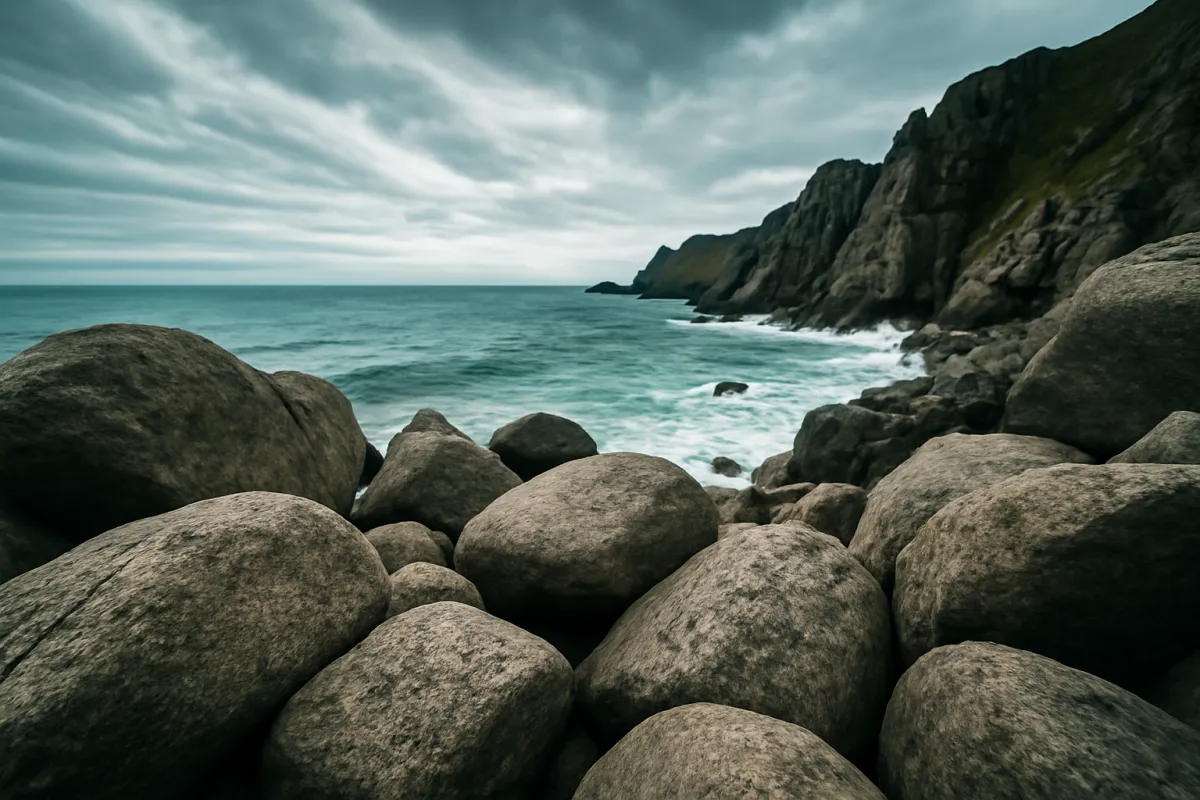
Coast and seascape wants wide, often the ultra-wide end, because the foreground is already there in the form of rocks, pools and wet sand, and the near-to-far pull is the picture. A 16mm to 24mm view plus a polarizer to cut the sheen off wet stone covers most of it, and a neutral density filter turns moving water into the smooth blur the subject suits.
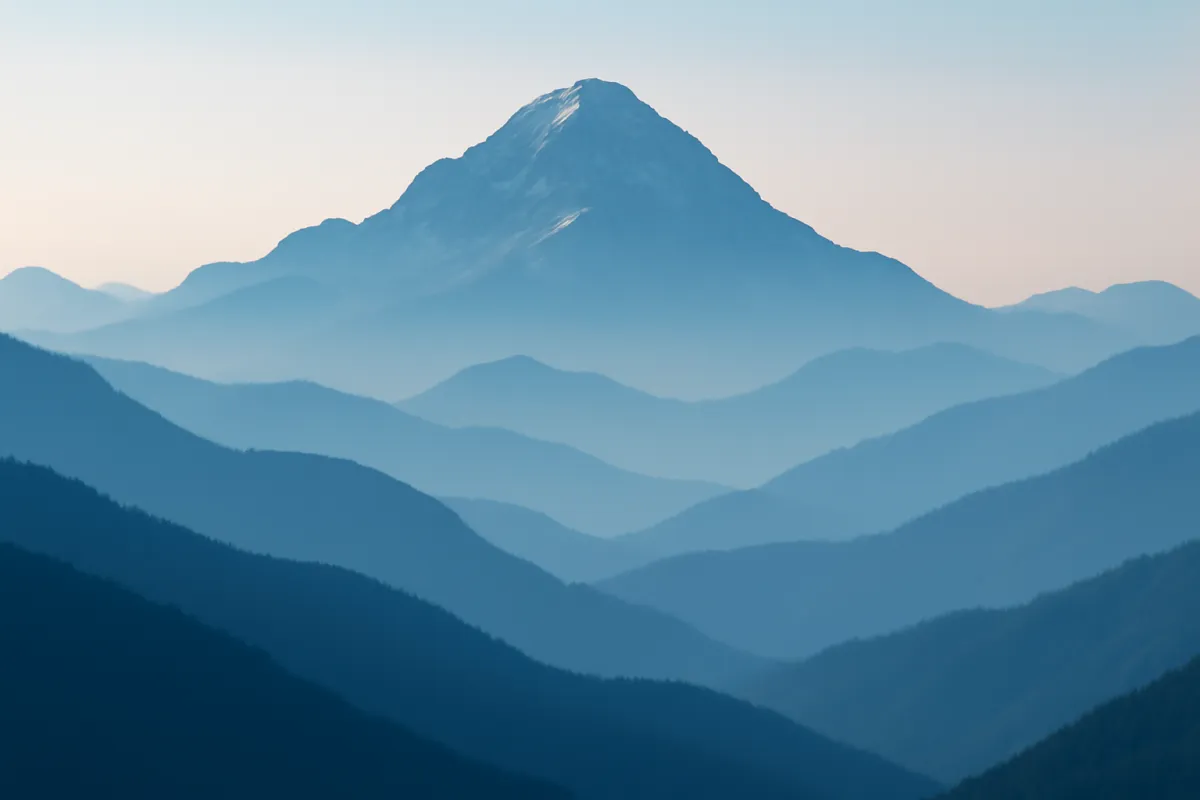
Mountains and ridgelines is the one people get wrong. The instinct is to reach for the widest lens in the bag, but from a distant viewpoint a wide lens shrinks the peak you drove three hours to see into a bump on the horizon. A short telephoto from 70mm to 135mm stacks the ridges into layers and gives the mountain the size it had in person. Carry the wide lens for valley foregrounds and the long one for the peaks themselves.
Woodland and forest interiors punish a wide lens, because there is no distant horizon to organise the frame and a wide view just records clutter. A 35mm or 50mm, or the long end of a kit zoom, isolates a smaller piece and gives it order. Woodland is also the one landscape scene where a slightly faster aperture earns something, since the light under a canopy is dim and you are often handheld between tripod spots. Our composition field note is more use here than any lens purchase, and our fall foliage field note covers the season that makes this scene worth the trip.
Deserts, dunes and open plains sit in the mid-wide to standard band, roughly 24mm to 50mm, because the interest is shape and repetition rather than one hero object, and an ultra-wide flattens a dune field into an empty stripe.
Waterfalls and rivers want wide to standard from close range, on a tripod, with an ND filter. The specification that decides the shot here is not focal length but minimum focus distance, because you will want the front of the lens close to a mossy rock or a bank edge.
Farmland, lakes and big skies is the classic 24mm case: wide, level horizon, and two thirds of the frame given to the sky.
Cities photographed as landscape, at golden hour or blue hour, do better from a distant vantage point with a standard or short telephoto that compresses the skyline into a stack, rather than from street level with a wide. Our golden hour field note covers the timing that matters more than the glass.
Night skies invert everything above. This is the single landscape scene where maximum aperture leads the specification list, because you are gathering starlight rather than stopping down, and our night sky field note works that case properly.
The pattern worth naming is that the lens follows two things: how far away your subject is, and whether you have a foreground worth putting close to the camera. Neither of those is a property of the word landscape, which is why one lens cannot be the answer to all of it, and why the kit below is two.
The best lenses for landscape photography, as a kit
Ask which single lens to buy and the answer is a wide zoom. Ask about the best lenses for landscape photography, plural, and the answer becomes a small, deliberate kit that covers every scene a location can hand you without turning into a bag you resent carrying. Three pieces do it.
The first is a wide-angle zoom in the 16mm to 35mm region on full frame, or 10mm to 24mm on crop. This is the anchor, the lens that stays on the camera, and it handles grand vistas, coastlines, foreground-driven compositions and most of what people picture when they picture landscape photography. Buy it first and buy it best, because it does the most work.
The second is a telephoto, 70mm to 200mm on full frame or roughly 50mm to 135mm on crop. This is the lens that doubles the number of pictures available from any given viewpoint, because it opens up the compressed, layered and isolated compositions the wide lens cannot see. Most beginners own the wide end and are missing this one, which is why it is the highest-value second purchase rather than a third wide-angle.
The third, optional piece is a small standard prime, a 35mm or 50mm, carried for weight rather than coverage. It weighs almost nothing, it is often the sharpest thing in the bag, and on a long hike it can be the whole kit when the alternative is leaving the camera at home. What the kit deliberately does not include is a duplicate: two wide zooms with overlapping ranges, or a fast f/1.4 prime bought for a genre where you never open past f/8. Weigh the sequence in the companion above and cost the two-lens version in the upgrade budget planner.
Picking an aperture for landscapes
The best aperture for landscape photography is usually f/8 to f/11, and this is the setting most likely to surprise someone arriving from portrait or low-light shooting, where the instinct is to open the lens wide. In a landscape you do the opposite: you stop down. Two reasons drive it. First, nearly every lens is at its sharpest across the whole frame a couple of stops down from wide open, and f/8 to f/11 is right in that band, so you get the crispest corners the lens can deliver, which matters when the whole frame is your subject. Second, a smaller aperture deepens the depth of field, the zone of acceptable sharpness, so both a close foreground and a distant horizon can be sharp at once.
There is a limit in the other direction, and it is worth knowing so you do not overshoot. Past about f/16, an optical effect called diffraction begins to soften the entire image, so cranking down to the smallest f-number the lens offers actually costs you sharpness rather than buying more. The sweet spot is the middle: f/8 to f/11 for most scenes, occasionally f/13 to f/16 when you truly need the extra depth and will accept a touch of diffraction. Because you are shooting at these narrow apertures, the light reaching the sensor drops, which is why landscape photographers lean on a tripod and a low ISO rather than a fast lens, a tradeoff the exposure triangle field note lays out in full and the aperture field note explains f-stop by f-stop. The whole balance is different from low light, and that difference is why the best landscape lens is not the same as the best low-light lens.
Depth of field and holding the scene sharp
The reason aperture and focal length keep tangling together in a landscape is depth of field, the depth of the zone that comes out acceptably sharp, and it is the quiet engine behind most landscape technique. Three things control it: the aperture (smaller opening, deeper zone), the focal length (wider lens, deeper zone), and the focus distance (focusing farther away deepens the near limit). A wide lens at f/11 has an enormous depth of field, which is precisely why the wide-and-stopped-down combination dominates the genre: it makes the whole front-to-back sharpness almost automatic. Our depth of field field note works the mechanism in detail if the interaction is new to you.
The refinement experienced landscape shooters use is to not simply focus on the horizon, because that wastes the near half of the depth of field behind the camera on empty air. Instead they focus a third of the way into the scene, or at a calculated near point, so the sharp zone stretches from close foreground all the way to infinity. You do not need to memorize the math to benefit from the idea: a wide lens, an aperture around f/8 to f/11, and a focus point set into the scene rather than on the far mountains will hold a landscape sharp end to end. This is also why a slow maximum aperture costs you nothing in landscape work, since you were never going to shoot wide open anyway, which flips the lens priorities completely from the fast-glass logic of our low-light coverage.
Focusing a landscape lens for front-to-back sharpness
Aperture gets the attention, but where you put the focus point decides more landscape frames than most people realise, and it is free. The habit worth building is to focus manually, in live view, magnified. Punch the screen in to ten times on a detail roughly a third of the way into the scene, turn the focus ring until that detail snaps crisp, then leave it alone and recompose without touching the ring. Autofocus is not wrong here, but it hunts on low-contrast subjects like a hazy ridge, and it can quietly grab the nearest branch instead of the rock you meant.
Two failure modes are worth naming. Focusing on infinity, or racking the ring to its hard stop, throws away the near half of your depth of field and often overshoots true infinity, because most modern lenses focus past it to allow for thermal expansion. And focusing on the closest foreground pebble at f/11 with a 24mm will usually still hold the horizon, but with a 35mm or on a longer lens it will not, which is where near-sharp, far-soft frames come from.
When the scene genuinely will not fit in one depth of field, the answer is not a smaller aperture, because diffraction takes back what you gain. The answer is focus stacking: two or three frames from the same tripod position, focused near, middle and far, blended later in software. That technique also removes the last argument for buying an exotic lens, since the limit you were fighting was physics rather than glass. Our sharp photos field note covers the shake and technique side of the same problem.
Prime versus zoom for landscapes
For landscapes specifically, a zoom is usually the better everyday choice, which is the reverse of the low-light answer, and the reason is that the thing a prime buys you, a wide maximum aperture, is the thing you least need here. You shoot landscapes at f/8 to f/11, so a fast f/1.8 prime and a slower f/4 zoom perform identically at the aperture you actually use, and the zoom hands you a range of focal lengths to compose with instead of one fixed view. Standing on a cliff edge where you cannot simply walk closer or farther, the ability to frame from 16mm to 35mm without swapping glass is a real, constant advantage, and it is why a wide zoom is the landscape workhorse.
That said, primes keep a foothold in landscape work for two reasons our prime versus zoom field note frames in general terms. First, a good wide prime is often sharper into the corners and controls distortion better than a zoom at the same focal length, which the demanding, edge-to-edge nature of landscape shooting can reward. Second, primes are lighter, which matters on a long hike to a viewpoint. So the honest split is: a wide zoom for versatility and most people, a wide prime when ultimate corner sharpness or pack weight is the priority. If the comparison you are actually weighing is your kit zoom against a first prime, our kit lens versus prime field note runs that specific case. Weigh your own in the companion above and price it in the upgrade budget planner.
Shooting landscapes with a 50mm
Yes, and a 50mm is a better landscape lens than its reputation suggests. It gets pigeonholed as a portrait or street lens because of its natural, human-eye perspective, but that same honest rendering is an asset in a landscape: a 50mm shows a scene in believable proportion, with no stretched foreground and no shrunken background, which suits balanced, restrained compositions where you want the elements to sit in the relationship the eye actually sees. It is also, in almost every system, one of the cheapest and sharpest lenses available, so it delivers superb corner-to-corner quality for very little money, which is exactly what a landscape rewards.
The catch is framing breadth. A 50mm simply cannot fit a broad panorama the way a 24mm can, so for a genuinely grand sweeping vista you either step back until the scene fits, accept a tighter slice of it, or shoot a series of frames and stitch them into a panorama in software, which is a common and effective workaround that gives you wide coverage at high resolution from a standard lens. For distant subjects, layered hills, and tighter compositions, a 50mm is not a compromise at all: it is the right proportion. If a 50mm is the lens you own, do not assume it disqualifies you from landscapes, and if you are weighing a 50mm against a 35mm for general use, our 35mm versus 50mm field note walks the feel of each.
Telephoto landscapes and compression
The most under-used landscape lens is the telephoto, and learning to see with one opens a whole category of pictures a wide lens cannot make. A telephoto, roughly 70mm to 200mm, does the opposite of a wide angle: instead of stretching depth it compresses it, stacking distant elements so a series of ridgelines pile up on one another like layers of cut paper, or so a far mountain looms enormous behind a nearer hill. That compression is not a distortion to apologize for, it is a compositional tool, and it produces some of the most striking landscape images, the ones where distance seems to fold in on itself.
A telephoto also isolates. Where a wide lens includes everything, a long lens lets you pull a single lit tree, a patch of texture, or a lone peak out of a busy scene and give it the whole frame, which is landscape as selective seeing rather than sweeping inclusion. The practical notes are that telephoto landscapes demand a steady tripod because any shake is magnified along with the subject, and that atmospheric haze becomes visible over long distances, which you can use for mood or fight with a polarizer. The same short-telephoto compression that flatters a portrait, the effect our 35mm versus 50mm field note touches on, is what stacks those distant layers. A complete landscape kit is a wide zoom plus a telephoto, and the telephoto is the half most beginners are missing.
When a wide lens is actually necessary
The honest answer is: for classic sweeping landscapes a wide lens is the most useful single tool, so most people buy one early, but you do not strictly need one to start, and plenty of great landscapes are made without one. A wide angle fits more of the scene and builds the near-to-far depth that gives a vista its impact, which is why the 16mm to 35mm range is so bound up with the genre in people’s minds. If sweeping vistas are what pull you, a wide lens is the highest-value landscape purchase you can make, and a wide zoom the most flexible form of it.
But need tracks what you shoot, not the stereotype. If you find yourself drawn to distant peaks, intimate details, and minimalist compositions, a standard or telephoto lens serves you better than a wide, and buying an ultra-wide you never reach for is money wasted. More to the point, if you already own a kit zoom, its wide end already covers a good chunk of landscape work, so the practical move for most beginners is to shoot landscapes with the lens they have, learn which focal lengths they actually gravitate to, and then buy toward that real preference rather than the assumed one. Our upgrade-order field note argues that same patience across the whole hobby: shoot first, diagnose the real gap, then spend. Run your own case in the upgrade budget planner before you commit.
Crop sensor landscape lenses and the equivalence
Crop shooters get the same landscape logic with one adjustment: the focal-length numbers all multiply by roughly 1.5, because a crop sensor sees a tighter slice of every lens. That means a 24mm lens on a crop body frames like a 36mm on full frame, which is a touch narrow for the grand vista, so to get the classic wide landscape view a full-frame shooter gets from a 24mm, a crop shooter reaches for a 16mm. This is exactly why crop-format systems sell dedicated ultra-wide zooms that start around 10mm to 12mm: a 10-18mm crop lens frames like a 15-27mm full-frame lens, squarely in landscape territory. The crop math, and why it does not cost you anything for landscapes, is worked in full in our full-frame versus crop field note.
The important reassurance is that everything except the focal-length label stays the same. You still shoot at f/8 to f/11 for sharpness and depth, you still want good corner performance, and you still put the camera on a tripod. Crop sensors even carry a small landscape advantage that rarely gets mentioned: at the same aperture a crop sensor gives slightly more depth of field, which makes front-to-back sharpness marginally easier to achieve. So a crop-body landscape kit is a wide crop zoom, something like a 10-18mm or a 12-24mm, plus a standard zoom or a short telephoto for the distant work, all shot stopped down. Do the 1.5-times arithmetic before checkout and the right landscape lens stays right.
Crop-only or full-frame glass for a landscape kit
There is a second crop decision hiding behind the focal-length arithmetic, and it costs more to get wrong than the numbers do. Most systems sell two families of lens: crop-only lenses designed to cover the smaller sensor, and full-frame lenses that fit the same mount. Both mount and both work. They fail differently later.
A crop-only wide zoom is the right landscape answer today. It is the family that contains the genuinely wide options, the 10mm to 18mm and 12mm to 24mm ranges that frame the way a full-frame 24mm does, and it is smaller, lighter and cheaper because it only has to throw an image circle over a smaller sensor. The catch is that if you move to a full-frame body later, a crop-only lens either will not mount or will run in a cropped mode that throws away most of the sensor you just paid for, so it is a lens you are likely to sell with the body.
A full-frame wide zoom on a crop body has the opposite shape. It survives an upgrade, and it is often the better-built option, but on a crop sensor it is no longer wide: a 16mm to 35mm full-frame lens frames like 24mm to 53mm on a 1.5x body, which is a standard zoom, not a landscape wide. Buying one for landscape work on a crop camera and expecting sweeping views is the single most common version of this mistake.
The honest split is by timeline. If a full-frame body is a real plan inside a year or two, buy full-frame glass and accept that you are shooting slightly narrow until the body arrives. If it is not, buy the crop-only wide zoom, get the pictures now, and treat the lens as part of the current system rather than an heirloom. Third-party makers sell wide zooms in both families and are worth considering, because landscape work asks for corner sharpness and distortion control rather than exotic autofocus, which is where the price premium on first-party glass usually goes. Our full-frame versus crop field note argues the body side of the same question, our upgrade-order field note covers the sequencing, and the upgrade budget planner will price either route against the number you actually have.
Micro Four Thirds and other formats for landscapes
The multiplier is not always 1.5, and picking a landscape lens on the wrong number is an easy and expensive mistake. Micro Four Thirds bodies use a 2x factor, so a 12mm lens frames like a 24mm on full frame and a 7-14mm frames like a 14-28mm, which is why the wide zooms in that system carry numbers that look startlingly short on paper. Our Micro Four Thirds field note covers the format itself; for lens shopping, just remember to double rather than multiply by 1.5. Some APS-C systems use roughly 1.6 rather than 1.5, a difference small enough to ignore in practice.
Two format effects genuinely help landscape shooters on the smaller sensors. Depth of field at a given aperture is deeper, so front-to-back sharpness comes easier and you may find f/5.6 doing what f/8 does on full frame. And diffraction arrives sooner, which is the flip side of the same physics, so the useful aperture band shifts down: on Micro Four Thirds the sharp band tends to sit closer to f/5.6 to f/8 than to f/8 to f/11, and going to f/16 costs you more than it would on a larger sensor. The kit weight difference is the other real argument, since a small-sensor wide zoom plus telephoto can weigh a fraction of the full-frame equivalent, and a lens you carry to the viewpoint beats a sharper one left in the car. The composition logic, the focal-length bands and the corner-sharpness priority are identical across every format.
Sharpness and corner performance
Landscape photography is the genre that stresses a lens the hardest on sharpness, because the whole frame is the subject and a viewer’s eye can wander to any corner. In a portrait, soft corners are invisible or even desirable, since the subject is centered and the edges are meant to fall away. In a landscape, a mushy corner means a smeared patch of forest or a soft edge of mountain in what is supposed to be a crisp, detailed scene, so corner-to-corner sharpness genuinely matters here in a way it does not for most other kinds of shooting. This is the single spec worth checking in a lens review if landscapes are your goal.
What makes a landscape lens
Illustrative weighting of what moves a landscape lens from limiting to excellent. Field of view and sharpness lead; aperture flexibility trails.
Aperture matters least here, the reverse of low light, because you shoot landscapes stopped down anyway. Focal length and corner sharpness carry the pick. Tune the weighting to your shooting with the companion above.
Two things get you most of the way to sharp corners without spending a fortune. The first is the aperture band already covered: stopping down to f/8 to f/11 tightens up the corners of almost any lens dramatically, so even a modest kit lens delivers respectable edges there. The second is choosing a lens known for even performance rather than one that is razor-sharp in the center and soft at the edges, a pattern that shows up in reviews as a center-versus-corner sharpness gap. Read the corner numbers rather than the headline center figure, and read them at f/8 rather than wide open, since wide-open corner results describe an aperture you will never use for this. None of this requires the most expensive glass, but it does reward reading the right line of the review.
Distortion, vignetting and flare
Three optical faults show up more in landscapes than anywhere else, because landscapes contain the exact things that expose them: straight horizons, even skies, and the sun near the edge of the frame. Knowing what they are turns a confusing review into a shopping list.
Distortion is the bending of straight lines. Wide lenses commonly show barrel distortion, where a horizon that runs across the middle of the frame is fine but one placed near the top bows upward, and the effect grows as the lens gets wider. It is the most correctable of the three, since lens profiles in editing software straighten it in one click, at the cost of a slight crop. Judge it by how much correction the lens needs, not by whether it needs any.
Vignetting is corner darkening, most visible against a clear sky, worst wide open and largely gone by f/8, which is where you were shooting anyway. It is also correctable in software, and some photographers add it back deliberately. Treat it as the least important of the three.
Flare and ghosting are the real ones, because they are not fixable afterwards. Shoot toward a low sun, which is exactly what a sunrise landscape asks you to do, and stray light bouncing inside the lens throws veiling haze across the frame or scatters coloured blobs in a line opposite the sun. Coatings and internal design decide how well a lens resists it, ultra-wides suffer most because the sun is so often in frame, and a filter of poor quality makes it worse. If you shoot into the light, this is the property to research and the reason to keep the front element and any filter genuinely clean.
Filters for landscape photography
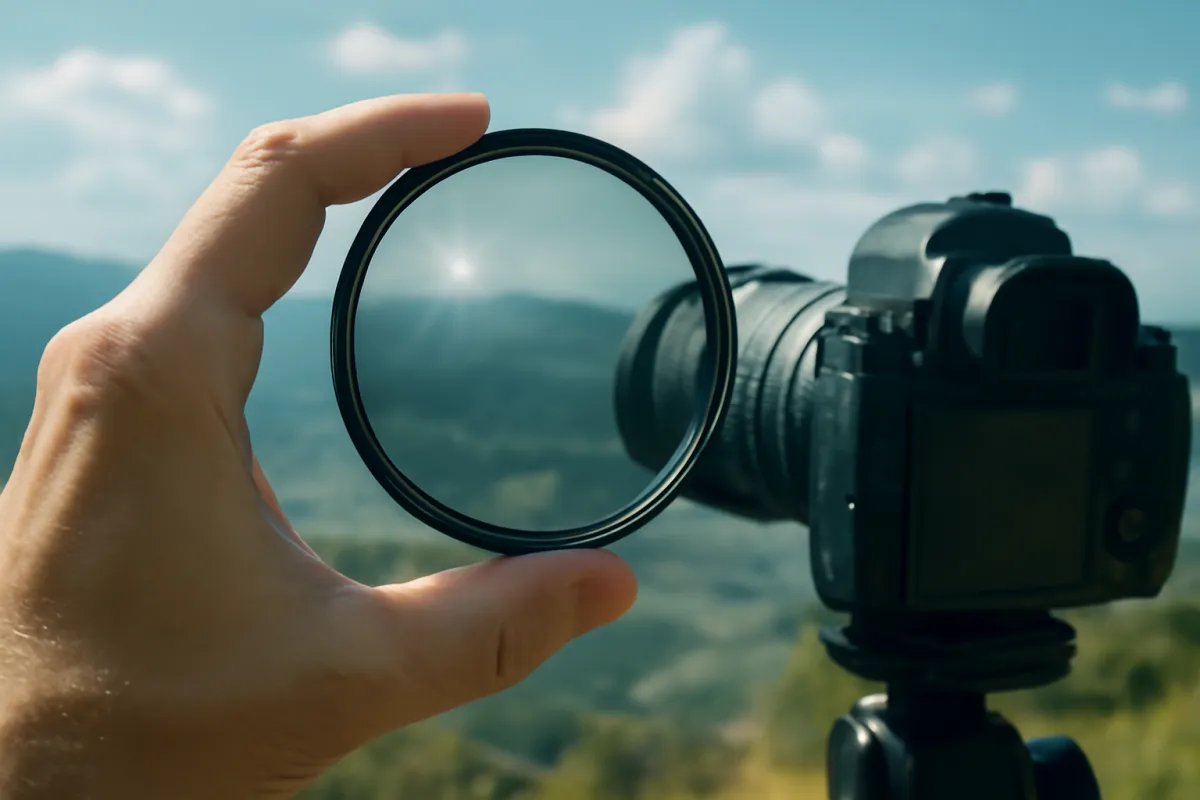
Filters are the one accessory category where landscape photography genuinely differs from most other genres, so a lens buying note would be incomplete without them. Two earn their place. A polarizing filter cuts reflections and glare, which deepens a blue sky, saturates foliage by removing the sheen off leaves, and cuts through haze and water reflections, and its effect cannot be replicated later in software, so it is the one filter many landscape shooters consider essential. A neutral density filter, or ND, simply darkens the scene evenly so you can use a long shutter speed in daylight, which is how you get silky blurred water and streaked clouds, effects that are impossible without it. Our camera filters field note goes deeper on both types.
The relevance to lens choice is practical: filters attach to the front of the lens by its filter thread diameter, so a kit with lenses that share a common thread size lets you buy one set of filters instead of several. Ultra-wide lenses complicate this, because some very wide and bulbous front elements do not accept standard screw-on filters at all and need a bulky, expensive square filter holder system, which is worth knowing before you buy an ultra-wide expecting to slap a polarizer on it. A polarizer on an ultra-wide also darkens the sky unevenly across such a broad angle, which can look odd. None of this changes the core lens recommendation, but budgeting a polarizer and checking filter threads belongs in any real landscape plan.
A landscape lens for night skies
Night landscapes are the one case where every priority in this field note flips, so they deserve their own paragraph before anyone buys the wrong lens for them. Under stars you cannot stop down to f/11, because the exposure would run for minutes and the stars would trail into streaks. You also cannot lift ISO indefinitely without the frame turning to noise. The lens has to do the work instead, which means a fast maximum aperture, f/2.8 or wider, becomes the top specification rather than an afterthought.
The focal length narrows too. The rough working limit before stars visibly trail is a shutter time that shortens as the lens gets longer, which pushes astro shooters toward 14mm to 24mm on full frame, or roughly 10mm to 16mm on crop, where a longer exposure is still safe. So the astro landscape lens is a fast ultra-wide prime, and that is a genuinely different purchase from the slow, sharp, versatile wide zoom that serves daylight landscapes. Coma, a fault that smears point sources of light into little wings at the corners, also matters here and nowhere else, because stars are the only subject that reveals it.
The practical advice is to be honest with yourself about how often you will shoot at night. If it is twice a year, use the widest end of the lens you own at its widest aperture and accept the result. If night skies are the reason you got into this, our night sky field note covers the settings, and the companion above will point you at the fast-wide answer instead of the daylight one.
Weather sealing and build for the field
Landscape photography happens outdoors, often in the exact conditions that make dramatic light, dawn cold, coastal spray, a squall rolling over a ridge, so build quality and weather sealing carry more weight here than for a lens that lives indoors. Weather sealing, a set of gaskets that keep dust and moisture out of the lens and lens mount, is not strictly necessary but is a real comfort when the best light arrives with the worst weather, and it is a common reason landscape shooters step up from the cheapest lenses to mid-tier ones. A sealed lens on a sealed body lets you keep shooting through a drizzle that would send an unsealed kit back into the bag.
That said, do not overstate it. Plenty of superb landscape work is made with unsealed lenses by people who simply carry a rain cover, a cloth, and some common sense, and sealing is not a substitute for care around salt water or sand. The other build consideration is weight, because landscape locations are often earned on foot, and a lighter lens is one you are more likely to actually carry to the good viewpoint. So the field priorities beyond optics are: reasonable weather resistance if your budget allows it, a weight you will carry uphill, and a solid filter thread for the polarizer. These are secondary to focal length and sharpness, but they are the difference between a lens that shoots the scene and one that stays home when the forecast turns. The tripod carries the same logic, and our tripod field note sizes that half of the kit.
Best budget lens for landscape photography
The best budget landscape lens is, for most beginners, the kit zoom already in the bag, and this is not a consolation prize. A typical 18-55mm kit lens on a crop body, or a 24-70mm on full frame, covers the core landscape focal lengths, and because you shoot landscapes stopped down to f/8 to f/11, the kit lens’s slow maximum aperture, its biggest weakness in low light, is completely irrelevant here. Stopped down, a kit lens is sharp across the frame and perfectly capable of a printable, frame-worthy landscape. The genre forgives the cheap lens precisely because it never asks the lens to do the hard thing, shoot wide open, that exposes its limits.
When you do want to spend, the highest-value landscape upgrades are, in illustrative terms, an inexpensive wide-angle prime or a third-party wide zoom in the roughly $250 to $500 range, which buys better corner sharpness, less distortion, and often weather sealing over the kit lens. A used copy stretches that budget further, and landscape lenses live an easy life optically, so a used wide zoom is a sound buy. The point our whole approach keeps returning to, and which our prime versus zoom field note reinforces, is that you do not need to buy anything to start shooting landscapes well: the kit lens plus a tripod plus a stopped-down aperture is a real landscape rig. Buy the upgrade once you know, from your own frames, which focal length you actually live in. Price the step in the upgrade budget planner.
Buying a landscape lens used
Landscape lenses are unusually good used buys, and the reason is structural rather than lucky. The properties you care about, focal length coverage and corner sharpness at f/8, do not degrade with age in a lens that has not been damaged, and the properties that do wear, autofocus motors and aperture actuation, are the ones you lean on least when the camera is on a tripod pointed at a mountain. A wide zoom that has spent five years on a shelf is optically the lens it was on day one.
What to check is short and physical. Look through the lens toward a bright, plain surface for fungus, which looks like fine branching threads on an internal element and spreads, and for haze, which reads as a uniform milky film that flattens contrast. Separation, where the cement between glued elements fails, shows as an iridescent patch at an element edge. Turn the zoom and focus rings for grit or a gritty catch, check that the aperture blades are dry rather than oily, and inspect the mount and filter thread for dents that will stop a filter screwing on straight. A few specks of internal dust are normal in any used lens and change nothing you can see in a photograph.
Price expectations should stay general rather than specific, because used values swing with mount, condition, age and what is currently in production. A reasonable framing is that a used copy typically saves a meaningful fraction against new, enough that the same budget moves you up one tier of lens, which is the practical argument. Set your number in the upgrade budget planner and shop against it rather than against a listing that happens to be in front of you.
The specification lines that actually matter on a landscape lens
Lens listings are long and most of the lines on them are irrelevant to this genre. Six are worth reading, roughly in this order.
Focal length range comes first, and it is the one covered by the table above: match it to your sensor and to the scenes you actually shoot. Everything below only matters once this is right.
Corner sharpness at f/8 comes second. Not the headline centre figure, not the wide-open result, but how the lens behaves in the outer thirds of the frame at the aperture you will genuinely use. A landscape puts detail in every corner, which no other genre does as consistently.
Minimum focus distance is the underrated one. The whole ultra-wide strategy depends on getting the front element close to a foreground object, and a lens that cannot focus nearer than half a metre quietly forbids the pictures you bought it for. Check this before you buy an ultra-wide.
Filter thread diameter matters because filters are a real part of a landscape budget, and lenses that share a thread size share a polarizer. If your two lenses differ, a step-up ring is a cheap fix that lets the larger filter serve the smaller lens.
Weight is a picture-quality specification in disguise. The sharpest lens in the world is worth nothing at the trailhead, and landscape locations are usually earned on foot, so the lens you will carry uphill at five in the morning outperforms the one you leave behind.
Aperture blade count is the small print that changes how your pictures look. The blades that form the aperture opening also shape the sunstars you get when a point light source, usually the sun clipping a ridge, is photographed at a narrow aperture. More blades and rounder blades give a softer, less defined star, while straighter blades give a crisper one, and an odd blade count produces twice as many points as an even one. It is a genuine aesthetic difference rather than a quality difference, and it is worth a glance if sunstars are part of the look you want.
Two specifications you can mostly ignore for this genre: maximum aperture, unless night skies are a real part of your plan, and image stabilization, because a tripod does that job better and stabilization systems are sometimes best switched off when the camera is locked down. Our image stabilization field note explains when it helps and when it does not, and our tripod field note sizes the support that replaces it.
Mistakes people make choosing a landscape lens
Five recurring errors account for most of the money wasted on landscape glass, and every one of them is avoidable before checkout.
Buying the widest lens available. The assumption is that wider means more landscape, but past about 20mm the frame fills with sky and empty middle distance unless you have a strong foreground within touching distance, and the mountain you came for shrinks to nothing. Most people who buy a 14mm end up shooting it at its long end.
Paying for a maximum aperture you will never use. An f/2.8 wide zoom costs substantially more than an f/4 version of the same range and performs identically at f/8, which is where landscape frames live. Unless you also shoot night skies or events, that money buys weight rather than pictures.
Ignoring the crop or format factor. A 16mm bought for a crop body frames like a 24mm, and on Micro Four Thirds like a 32mm, which is a different lens from the one the buyer pictured. Do the arithmetic before checkout, not after.
Buying a second lens that overlaps the first. A 24-70mm added to a 24-105mm is a purchase that changes almost nothing. The gap in a typical landscape kit is at the long end, so a telephoto is nearly always the better second buy.
Blaming the lens for a soft frame. Camera shake, a focus point on the wrong plane, and diffraction from shooting at f/22 explain far more soft landscapes than optical quality does. Fix the tripod, the focus method and the aperture first, and many people find they never needed the upgrade.
The worked recommendation, three landscape scenarios
Theory into practice: three composite shooters, each with a different landscape goal, each getting a different correct lens for the same underlying reasons.
Scenario one is a beginner on a crop-sensor camera who wants to shoot sweeping mountain and coast vistas on weekend hikes. The verdict is a wide crop zoom, something like a 10-18mm or 12-24mm, an illustrative $300 to $500, framing like a 15-27mm on full frame, shot at f/8 to f/11 off a lightweight tripod, with a polarizer for the skies. That single lens covers the grand-vista work this shooter is after. Scenario two is an enthusiast on full frame who already owns a 24-70mm and wants to grow their landscape range. The verdict is not another wide lens but a telephoto, a 70-200mm or a budget 70-300mm, an illustrative $500 to $900, to unlock the compressed, layered, detail-isolating pictures a wide lens cannot make, doubling the kinds of landscape available from the same locations. Scenario three is someone on the tightest budget with only a kit zoom. The verdict is to buy no lens at all yet: shoot landscapes at the kit lens’s wide end, stopped down to f/8 to f/11, on a cheap tripod, add an illustrative $40 to $80 polarizer, and learn which focal lengths pull hardest before spending on glass. Three different answers, one identical logic: match the lens to the scene you actually shoot, and shoot before you spend. Run your own scenario in the upgrade budget planner.
The bottom line
The best lens for landscape photography is a wide-angle lens, roughly 16mm to 35mm on full frame, and in practice a versatile wide-angle zoom that covers that range is the single most useful landscape lens you can own, with 24mm rather than the extreme wide end as the number to aim at first. That field of view fits the sweeping scene and builds the near-to-far depth that gives a landscape its impact, and you shoot it stopped down to f/8 or f/11, where the lens is sharpest and the depth of field runs from a close foreground to a distant horizon, the opposite instinct from the wide-open, fast-glass answer of our low-light coverage. Asked in the plural, the best lenses for landscape photography are that wide zoom plus a 70-200mm telephoto, because the long end doubles the pictures a location offers. A zoom beats a prime here because you never need the wide aperture and you do need the framing range; corner sharpness, distortion and flare resistance matter more than any other spec; and a 50mm earns a place for balanced scenes. Crop shooters run the same plan with the numbers multiplied by 1.5, Micro Four Thirds shooters by 2, and everyone benefits from a polarizer, a tripod, and, if the budget allows, some weather sealing. Above all, the kit lens you already own, used wide and stopped down, is a real landscape rig, so shoot first, learn the focal length you actually live in, and buy toward that. Price the plan in the upgrade budget planner, and go find the light.
This field note is written to teach a landscape lens decision rather than to push any particular product: no brand paid for a mention, and none is named on purpose, only focal lengths, apertures, and lens types that exist across every camera system. All dollar amounts are illustrative planning figures rather than quotes, because real prices swing with brand, mount, condition, and when you shop, and the wide zooms and telephotos described here exist for some mounts and not others. Confirm which lenses your specific camera actually offers, check the filter threads before you buy accessories, and let your own landscapes, not any writer’s preference, decide how wide a lens your shooting truly wants.
Frequently asked questions
What lens is best for landscape photography?
A wide-angle lens in the 16mm to 35mm range on full frame is the best lens for landscape photography for most people, and inside that range 24mm is the number to start from rather than the widest option you can find. That field of view fits a sweeping scene and stretches the distance between a close foreground and a far horizon, which is what makes a flat photograph feel deep. A wide-angle zoom covers the whole span in one lens, so it is the single most useful landscape purchase. Aperture matters less here than in low light, because you shoot stopped down to f/8 or f/11 for sharpness and depth rather than wide open, so focal length and corner sharpness decide the pick.
What are the best lenses for landscape photography?
As a kit rather than a single purchase, the best lenses for landscape photography are a wide-angle zoom covering roughly 16mm to 35mm on full frame and a telephoto covering roughly 70mm to 200mm, with a standard 35mm or 50mm prime as an optional light-pack third. The wide zoom handles grand vistas and strong foregrounds, the telephoto handles compressed ridgelines and isolated detail, and between them they cover almost every landscape a location offers. Buy the wide end first, because it serves the classic scenes and it is the range most beginners reach for. Add the telephoto second, because it is the half of a landscape kit most people are missing rather than a luxury.
What is the best lens for landscape on a crop-sensor camera?
The logic does not change on a crop sensor, only the numbers, because the smaller sensor sees a tighter slice of every lens by roughly 1.5 times on APS-C. To get the classic wide landscape view a full-frame shooter gets from a 24mm, a crop shooter reaches for a 16mm, which is why crop systems sell dedicated ultra-wide zooms starting around 10mm to 12mm. A 10-18mm crop lens frames like a 15-27mm full-frame lens, which sits squarely in landscape territory. The aperture priority is identical at f/8 to f/11, and crop sensors even carry slightly more depth of field at the same aperture, so front-to-back sharpness is marginally easier. Run the 1.5 arithmetic before you buy.
What focal length is best for landscape photography?
The workhorse range is 16mm to 35mm on a full-frame camera, which spans ultra-wide for dramatic foregrounds up through a natural wide view close to what your eye takes in. Within that, 24mm is the classic all-rounder: wide enough to feel expansive without the stretched look an ultra-wide can impose. On a crop-sensor body you multiply by roughly 1.5, so a 16mm to 24mm crop lens frames like that 24mm to 35mm full-frame view. Landscapes are not limited to wide, though. A telephoto around 70mm to 200mm is a genuine landscape tool for compressing distant ridgelines and isolating detail, and a 50mm suits balanced scenes where you want honest proportions.
What aperture is best for landscape?
For landscapes the best aperture is usually f/8 to f/11, which is the band where most lenses are at their sharpest across the whole frame and where the depth of field is deep enough to hold a close foreground and the horizon in focus at once. This is the opposite instinct from low-light or portrait shooting, where you open up wide to gather light or blur a background. In a landscape you stop down for sharpness and depth. Going too far, past about f/16, softens the image through an optical effect called diffraction, so f/8 to f/11 is the sweet spot rather than the smallest opening the lens offers.
Is a wide angle lens best for landscape?
A wide angle is the default and the most common landscape choice, and for classic sweeping scenes it is the right one, because a wide field of view fits the whole vista and exaggerates the near-to-far depth that makes a landscape feel three-dimensional. It lets you plant a strong foreground element close to the camera while keeping mountains and sky in frame behind it. But best depends on the scene. Wide suits grand vistas, while a telephoto suits distant peaks, layered hills and detail, and the very widest lenses can shrink a mountain into a speck. Most landscape photographers carry a wide zoom as their main lens and reach for something longer when the subject sits far away.
Can you use a 50mm for landscape?
Yes, a 50mm is a perfectly good landscape lens for the right scene, even though it is not the wide angle people picture first. A 50mm renders a view close to natural human perspective, without the stretched foreground of an ultra-wide, which suits balanced compositions and scenes where the elements should sit in believable proportion. It is also usually a cheap, very sharp lens, so it delivers excellent corner-to-corner quality. The limit is framing breadth: a 50mm cannot fit a broad panorama the way a 24mm can, so for grand sweeping vistas you either step back, shoot a stitched panorama, or reach for something wider.
What lens for landscape photography should a beginner buy first?
For most beginners the honest first answer is no lens at all, because the kit zoom already in the bag covers the core landscape focal lengths at its wide end, and landscapes forgive a slow maximum aperture since you never shoot wide open anyway. Stopped down to f/8 or f/11 on a tripod, a kit lens makes a genuinely printable landscape. When you do spend, the highest-value first landscape lens is an inexpensive wide-angle prime or a third-party wide zoom, an illustrative $250 to $500, which buys better corner sharpness, less distortion and sometimes weather sealing. Shoot for a season first, look at which focal lengths your own frames cluster around, then buy toward that.