What's on this page
- What a DSLR is, in one sentence
- What DSLR stands for
- Single lens and reflex: the name decoded
- How the mirror and optical viewfinder work
- What happens when you press the shutter
- The optical viewfinder, explained
- How a DSLR focuses: phase detection
- The key parts of a DSLR
- DSLR vs mirrorless: the shift
- Why the industry moved to mirrorless
- The pros of a DSLR
- The optical viewfinder advantage
- Battery life, the DSLR’s quiet strength
- The lens ecosystem you inherit
- The value of a used DSLR
- The cons of a DSLR
- The bulk and weight question
- The mirror as a moving part
- DSLR sensor sizes: full frame and crop
- Who a DSLR still suits in 2026
- Who should skip a DSLR
- How to tell a DSLR from a mirrorless camera
- Common myths about DSLRs
- Digital single lens reflex, in plain terms
- The bottom line
Short answer: DSLR stands for digital single lens reflex, meaning a digital camera that uses an angled mirror behind the lens to bounce light up through a prism into an optical viewfinder, so you compose through the actual lens. When you press the shutter, the mirror flips up, the sensor records the frame, and the mirror drops back. That mirror is the one feature separating a DSLR from a mirrorless camera.
A DSLR, or digital single lens reflex camera, is a camera that uses a mirror and a prism to send light from the lens straight up into an optical viewfinder, so you compose your shot by looking through the actual glass at the real scene. It is the camera shape most people picture when they imagine a “serious” camera: a chunky body, a big lens on the front, and a viewfinder you press to your eye. For roughly two decades the DSLR was the default choice for anyone graduating past a phone or a compact, and hundreds of millions of them are still in daily use.
This field note is the plain-language version of what that name actually means and how the camera works. It walks the three words behind DSLR, shows how the reflex mirror and optical viewfinder route the light, explains what happens in the instant you press the shutter, and names the key parts inside the body. It then covers the shift to mirrorless that reshaped the whole camera market, weighs the honest pros and cons, and lays out who a DSLR still suits in 2026. This sits alongside our mirrorless versus DSLR field note, which handles the buying comparison in full, our full-frame versus crop field note on sensor size, and our Micro Four Thirds field note on that specific format. Price any kit you are weighing in the upgrade budget planner before anything goes in the cart.
Key takeaways
- DSLR stands for digital single lens reflex: a digital camera that shows you the scene through one lens by way of a reflex mirror.
- The mirror sits behind the lens and bounces light up into a prism and out through an optical viewfinder, so you frame through the real glass, then it flips up when you shoot.
- The one thing that separates a DSLR from a mirrorless camera is that mirror; nearly every other difference in size, autofocus, video, and battery flows from it.
- The DSLR's remaining strengths are a lag-free optical finder, long battery life, a deep mature lens catalog, and outstanding value on the used market.
- In 2026 a DSLR suits budget buyers, existing lens owners, optical-finder fans, and stills-first shooters, while most people buying fresh are better served by mirrorless.
What a DSLR is, in one sentence
A DSLR is a digital camera that lets you frame a photograph by looking through the lens itself, using a mirror to redirect the light into an optical viewfinder until the instant you take the shot. That single sentence contains everything that matters. The camera has one lens, that lens feeds both your eye and the sensor, and a mirror is what makes the sharing possible. Understand the mirror and you understand the whole design, because every strength and every weakness of a DSLR traces back to that one piece of angled glass.
The word “reflex” is the part that trips people up, and it simply means reflection: the mirror reflects the incoming light upward. It has nothing to do with reflexes in the sense of speed or reaction. A DSLR is the direct digital descendant of the film SLR, the classic 35mm camera that dominated serious photography for decades, and it kept the same mirror-and-prism mechanism while swapping film for a digital sensor. So when you hold a DSLR you are holding a design lineage that stretches back to the middle of the last century, updated with a sensor and a screen. That heritage is part of why the format feels so familiar and why its controls are so thoroughly worked out.
What DSLR stands for
DSLR stands for digital single lens reflex, and each word does real work in describing the camera. “Digital” separates it from the film SLR cameras it evolved from: instead of exposing a strip of film, a DSLR records the image onto an electronic sensor, which is what lets you review a shot instantly, shoot thousands of frames on a memory card, and change sensitivity from frame to frame. This is the same digital leap that reshaped every kind of camera, and it is why a DSLR can do things a film SLR never could.
“Single lens” distinguishes the design from the older twin lens reflex camera, which used two stacked lenses, one for viewing and one for taking the picture, so the image you framed was never quite the image you captured. A single lens reflex uses one lens for both jobs, which means what you see in the viewfinder is exactly what the sensor will record, framed through the very same glass. “Reflex” names the reflex mirror that reflects the light from that single lens up into the viewfinder. Say the three words slowly and they stop being jargon and start being a description: a digital camera that shows you the scene through a single lens, using a reflecting mirror. Our mirrorless versus DSLR field note picks up where the naming leaves off.
Single lens and reflex: the name decoded
It helps to sit with the two ideas the name bundles together, because they answer a question beginners often ask without realizing it: how does the viewfinder show the same thing the lens sees? The single lens answer is that there is only one optical path. Light enters the front element, travels through the lens, and lands on the mirror, and because that is the only lens on the camera, the framing, focus, and any filter effects you see through the finder are the true framing, focus, and effects the sensor will get. There is no parallax error, no second window offset slightly from the first, no guesswork about what falls inside the frame.
The reflex half explains the routing. Without a mirror, the light coming through the lens would simply hit the sensor and stop, giving you nothing to look at until after the shot. The reflex mirror intercepts that light before it reaches the sensor and folds the optical path upward, into the prism and out to your eye, so you get a live optical preview. The elegant trick is that the mirror is temporary: it only needs to be in the way while you are composing, and it swings clear the moment you actually expose. The whole design is a clever answer to a single problem, letting you look through a taking lens without the film or sensor being exposed the entire time, and it held that answer beautifully for decades.
How the mirror and optical viewfinder work
Here is the light path in order, because seeing it as a sequence makes the whole camera click into place. Light enters the lens and travels back toward the body, where it meets the reflex mirror sitting at roughly a 45 degree angle. The mirror reflects that light straight up. Above the mirror sits a focusing screen where the image forms, and above that a prism, usually a solid glass pentaprism in higher-end bodies or a lighter, hollow pentamirror in entry models. The prism’s job is to flip and rotate the image so it appears upright and correctly oriented when it exits through the optical viewfinder to your eye.
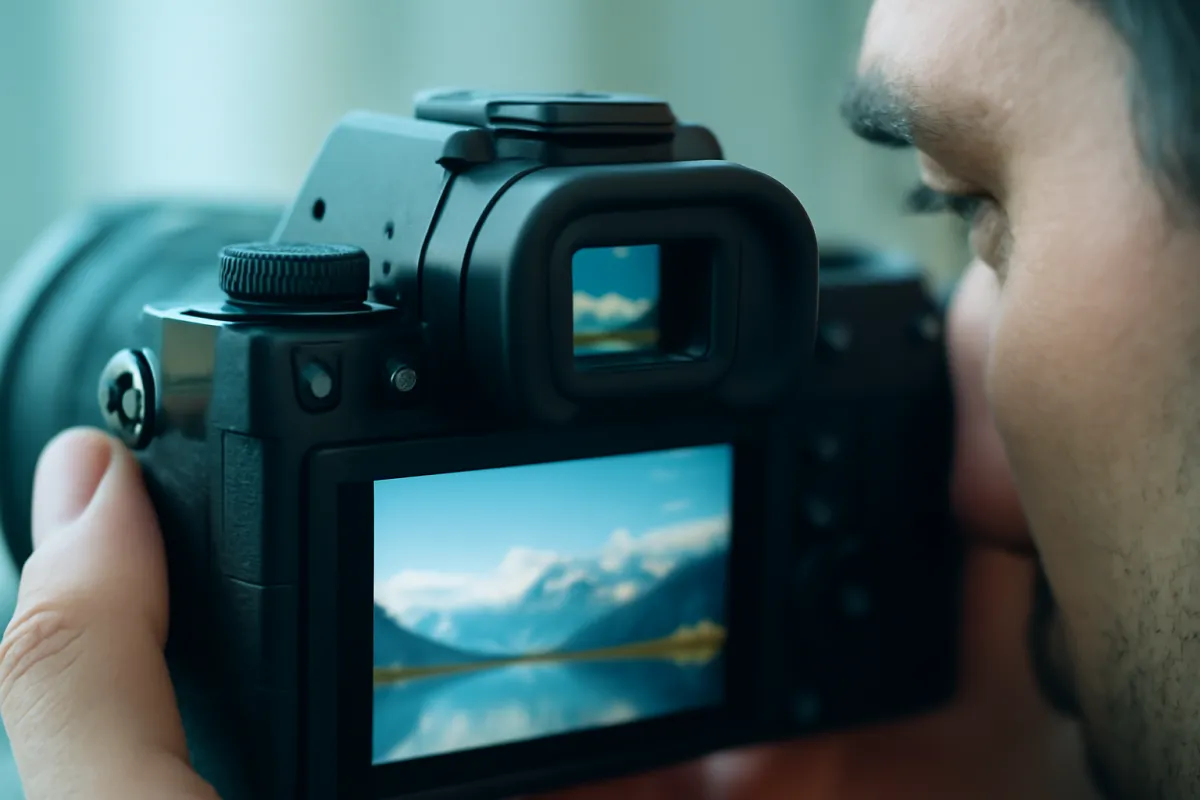
Because you are looking at real light that physically traveled through the lens, the optical viewfinder shows the world with perfect resolution, zero lag, and no electronic processing, since it is not a screen at all but a direct optical window. A pentaprism finder tends to be brighter and larger than a pentamirror one, which is one of the quiet ways higher-end DSLRs justify their price. The trade is that the finder cannot show you a preview of your final exposure the way an electronic one can, a limitation we return to when we compare the two systems. For now the point is simply that the mirror and prism together turn a taking lens into a through-the-lens window on the scene.
What happens when you press the shutter
The most instructive moment in a DSLR is the fraction of a second when you actually take the picture, because it reveals every moving part at once. While you compose, the mirror is down, feeding your eye and blocking the sensor. Press the shutter button fully and a rapid sequence fires. First the mirror swings up and out of the light path, which is why the optical viewfinder blacks out for an instant: with the mirror lifted, no light is being sent to your eye anymore. At the same time the aperture in the lens stops down to the setting you chose.
Then the mechanical shutter, a pair of curtains sitting just in front of the sensor, opens to uncover the sensor for exactly the shutter duration you set, whether that is a slow half second or a fast thousandth. Light floods onto the sensor and the exposure is recorded. The shutter closes, the mirror drops back down, and the viewfinder image returns. All of this happens in a small fraction of a second, and the combined slap of the mirror and shutter is the distinctive mechanical clatter people associate with a “real camera.” That clatter is also a hint at the format’s limits: the mirror is a physical object that has to accelerate, stop, and reverse every single frame, which caps how fast a DSLR can shoot and adds a small amount of vibration, a point our section on the mirror as a moving part develops. Our manual mode field note covers how the shutter, aperture, and ISO you set shape that exposure.
The optical viewfinder, explained
The optical viewfinder is the heart of the DSLR experience, and it earns its own section because it is both the format’s signature feature and one of its last real advantages. Looking through it, you see the scene as light, not as pixels: infinitely detailed, perfectly smooth, and instantaneous, because there is no sensor reading out and no display refreshing between your eye and the world. For many photographers that direct optical connection feels calmer and more immersive than any screen, and in fast action under bright light the lag-free view genuinely helps some shooters time a moving subject.
The optical finder also sips almost no power, which is a bigger deal than it sounds and drives the DSLR’s battery advantage covered below. Framing and composing draw essentially nothing from the battery, since the finder is just glass and a mirror, so the camera only spends real energy at the moment of capture. The honest limitation is that an optical finder can only show you the scene, not your photograph: it cannot preview how bright or dark your chosen settings will render the shot, cannot overlay a live histogram of the actual exposure, and goes dark the instant the mirror lifts. You confirm your result by taking the shot and checking the rear screen, the classic shoot-and-review rhythm. Whether that rhythm feels like freedom or friction is one of the real dividing lines between DSLR and mirrorless shooters.
How a DSLR focuses: phase detection
Autofocus on a DSLR uses a clever piece of engineering that lives underneath the mirror, and understanding it explains both why DSLRs focus so decisively for stills and why they struggle with video. The main reflex mirror is partly semi-transparent, so a fraction of the light passes through it to a small secondary mirror behind, which bounces that light down to a dedicated autofocus sensor in the base of the camera. That sensor uses phase detection, a method that reads the light coming from opposite sides of the lens and measures how far out of alignment it is, which tells the camera not just that focus is off but in which direction and by how much. That is why a DSLR can snap to focus in one confident move rather than hunting back and forth.
Phase detection through the mirror is fast and reliable, and it made DSLRs excellent for action and sports for years. The catch is structural: this autofocus system only works when the mirror is down, feeding the dedicated sensor. The instant you lift the mirror to shoot video or to use the rear screen in live view, the fast phase-detection module is blinded, and the camera has to fall back on a slower method that reads focus off the imaging sensor directly. This is the root reason a DSLR’s video autofocus tends to be weak, and it is the exact problem that a mirrorless camera, which focuses on the imaging sensor all the time, was able to solve. Our mirrorless versus DSLR field note traces that autofocus story in detail.
The key parts of a DSLR
Pull the design apart and a DSLR is a small set of parts working in concert, and naming them makes the camera far less mysterious. Starting at the front, the lens gathers and focuses light and attaches through a lens mount, the standardized ring that decides which lenses fit. Behind the mount sits the reflex mirror, the angled piece that defines the format. Above the mirror is the focusing screen and the prism, either a bright glass pentaprism or a lighter pentamirror, which route the image to the optical viewfinder you press to your eye.
Behind and below the mirror live the working sensors. The autofocus module reads focus by phase detection, the metering sensor reads the brightness of the scene to guide exposure, and the mechanical shutter, a pair of curtains, controls how long the sensor is exposed. The image sensor itself, full frame or the smaller crop size explained in our full-frame versus crop field note, is where the photograph is finally recorded. On the outside, the control dials, buttons, and mode dial give you fast physical control, and the rear LCD lets you review shots and shoot in live view. Of all these, only the mirror, prism, and optical viewfinder are unique to the DSLR: strip those three out and route framing to the sensor and a screen, and you have built a mirrorless camera. That is worth holding onto, because it makes the entire DSLR-versus-mirrorless question concrete rather than abstract.
DSLR vs mirrorless: the shift
The single most important context for anyone learning what a DSLR is in 2026 is that the camera industry has moved on from it, and knowing why keeps you from buying the wrong thing for the wrong reason. A mirrorless camera is exactly what its name says: a camera with the mirror removed. Light falls directly and continuously onto the sensor, and instead of an optical finder you frame on the rear screen or through a small electronic viewfinder, a tiny high-resolution display showing the sensor’s live feed. That one deletion cascades into nearly every practical difference between the two formats.
Without the mirror, mirrorless bodies can be smaller and lighter, they can preview the actual exposure in the finder, they focus using the whole imaging sensor for smooth video and subject tracking, and they escape the mechanical speed limit the moving mirror imposes. What they give up is battery life, since powering a sensor and a display constantly drains more than an optical finder does, and the pure lag-free optical view some photographers love. Over the past several years every major camera maker has redirected its new bodies and, crucially, its new lenses onto mirrorless mounts, leaving the DSLR lineups frozen and mature.
| Attribute | DSLR | Mirrorless |
|---|---|---|
| Mirror in the body | yes, reflex mirror | no, removed |
| Viewfinder | optical, through the glass | electronic, or rear screen |
| Exposure preview in finder | no | yes, live |
| Autofocus for stills | fast phase detection | on-sensor, subject detection |
| Autofocus for video | generally weak | smooth and continuous |
| Size and weight | larger, mirror box | smaller to start |
| Battery life | longer | shorter, carry spares |
| New lenses and bodies | frozen, mature catalog | where all development goes |
| Used-market value | excellent, heavily discounted | higher, holding value |
| Best suited to today | budget, stills, optical fans | most buyers starting fresh |
That table is not a knock on how a DSLR performs; a good one still takes superb photographs. It simply means the DSLR is now a finished system rather than a growing one, which reframes what buying one in 2026 actually means. Our mirrorless versus DSLR field note is the full buyer’s comparison; set your own inputs in the companion above and it will name your case as you read.
Why the industry moved to mirrorless
It is worth understanding why every major maker pivoted, because the reasons are also the honest limits of the DSLR design. Removing the mirror unlocked genuine engineering freedom rather than just shaving size. Without a mirror box dictating the distance from the lens to the sensor, designers could build lenses with new optical formulas that are sharper, faster, or more compact than the older mount allowed. Without a separate autofocus sensor fed by the mirror, focus could use the entire imaging sensor and its computing power, which is what enabled the eye and subject detection that now makes sharp photos so much easier to get.
The mirror, in other words, was a brilliant solution to a problem that modern sensors and screens solved a different, better way. Once a sensor could read out fast enough to drive a live electronic finder, and once processors were quick enough to focus and track using that live feed, the mirror became a moving mechanical part the camera no longer needed. Deleting it removed a speed limit, a source of vibration, a chunk of size and weight, and a manufacturing cost, all at once. For the buyer, the practical consequence outweighs the engineering story: research, new lenses, and new bodies now flow almost entirely to mirrorless, while DSLR catalogs receive few or no new models. A DSLR still works for a decade regardless, but it is a stake in a system the industry has finished building rather than one it is still expanding.
The pros of a DSLR
Give the DSLR a fair hearing, because it kept real advantages even as the market moved past it, and for the right buyer these strengths still decide the purchase. The first is the optical viewfinder itself: a lag-free, infinitely detailed, zero-processing window on the real scene that many photographers simply prefer to look through, and that some find steadier for fast action in bright light. The second is battery life, which is the DSLR’s clearest measurable edge and gets its own section below. The third is the lens ecosystem, a deep and now largely complete catalog of glass, both new-old-stock and used, that covers essentially every focal length and purpose a photographer could want.
What a DSLR still does well, scored
Rough strength score for a modern DSLR by category, 0 to 10. Higher means a bigger remaining advantage. Illustrative.
Each width is the score over ten. Four bars run long, where the DSLR still holds its own; video autofocus is the short bar, the format's clearest weakness. Illustrative scores, not measurements.
The fourth strength is value, and it is the argument that keeps the DSLR genuinely alive in 2026, treated in full further down. There is also a fifth, softer pro: ergonomics. Because the DSLR is a mature design refined over decades, the good bodies have deeply worked-out control layouts, comfortable grips sized for larger hands, and a reassuring physical heft that many shooters find balances big lenses well. None of these strengths reverses the industry’s direction, but together they explain why so many DSLRs remain in happy daily use and why buying one can still be the right call. Read the chart as a summary of where the format’s remaining value sits, then weigh it against what you actually shoot.
The optical viewfinder advantage
The optical viewfinder deserves a second look as a pro rather than just a mechanism, because it is the reason a devoted minority still choose a DSLR on purpose. Looking through glass at the actual world, with no lag, no processing, and no resolution limit, is an experience an electronic finder can approach but not exactly reproduce. Some photographers describe it as a more direct, less mediated connection to the scene, and that enjoyment is a real variable in whether a camera gets picked up and used, which is ultimately the only thing that makes any gear worth owning.
There is a practical edge alongside the aesthetic one. In very fast action under bright light, an optical finder shows the subject in true real time with no display refresh to introduce even a hint of lag, which some sports and wildlife shooters find helps them track and time a moving subject. Modern electronic finders have largely closed this gap and add live exposure preview the optical finder cannot match, so this is a preference rather than a knockout. The honest way to settle it is not to read about it but to raise both kinds of finder to your eye and notice which you enjoy looking through. If the optical view is the reason you love photography, that is a completely valid reason to choose or keep a DSLR, and no feature list should talk you out of the tool you actually want to pick up. Set your inputs in the companion above and it will read whether your case leans DSLR.
Battery life, the DSLR’s quiet strength
On battery life the DSLR wins cleanly, and it is not close, because the physics favor it. Composing through an optical viewfinder draws almost no power, since the finder is just glass and a mirror, so the camera sips energy while you frame and only spends real power at the instant of exposure. A single charge on a DSLR commonly outlasts a comparable mirrorless body by a wide margin, sometimes running well past a thousand frames where a mirrorless camera taps out sooner. This is the direct payoff of not having to power a sensor and an electronic display the entire time the camera is switched on.
How much this matters depends entirely on how you shoot. For everyday use it is often a minor convenience, easily matched by carrying a spare battery or two. But for specific shooters the edge is genuine and practical: photographers on multi-day trips far from any outlet, event shooters working long days who hate swapping batteries mid-moment, and anyone shooting in deep cold, where batteries fade fast and the DSLR’s low draw stretches every charge further. It is one of the few categories where the honest answer sometimes reads DSLR even for a buyer who would otherwise choose mirrorless, and it is a real point in the format’s favor rather than nostalgia. If you weight long endurance heavily, factor it into the companion above.
The lens ecosystem you inherit
Buy into a DSLR and you inherit one of the deepest, most complete lens catalogs in photography, which is a genuine strength as long as you understand its nature. Because the major DSLR mounts were built out over roughly two decades, they cover essentially every focal length and purpose a photographer could want, from cheap and superb fast primes to specialized macro, tilt-shift, and super-telephoto glass. That completeness is a real asset: whatever kind of photography you want to try, a lens for it almost certainly exists on a mature DSLR mount, often several, and often at prices the used market has driven far down.
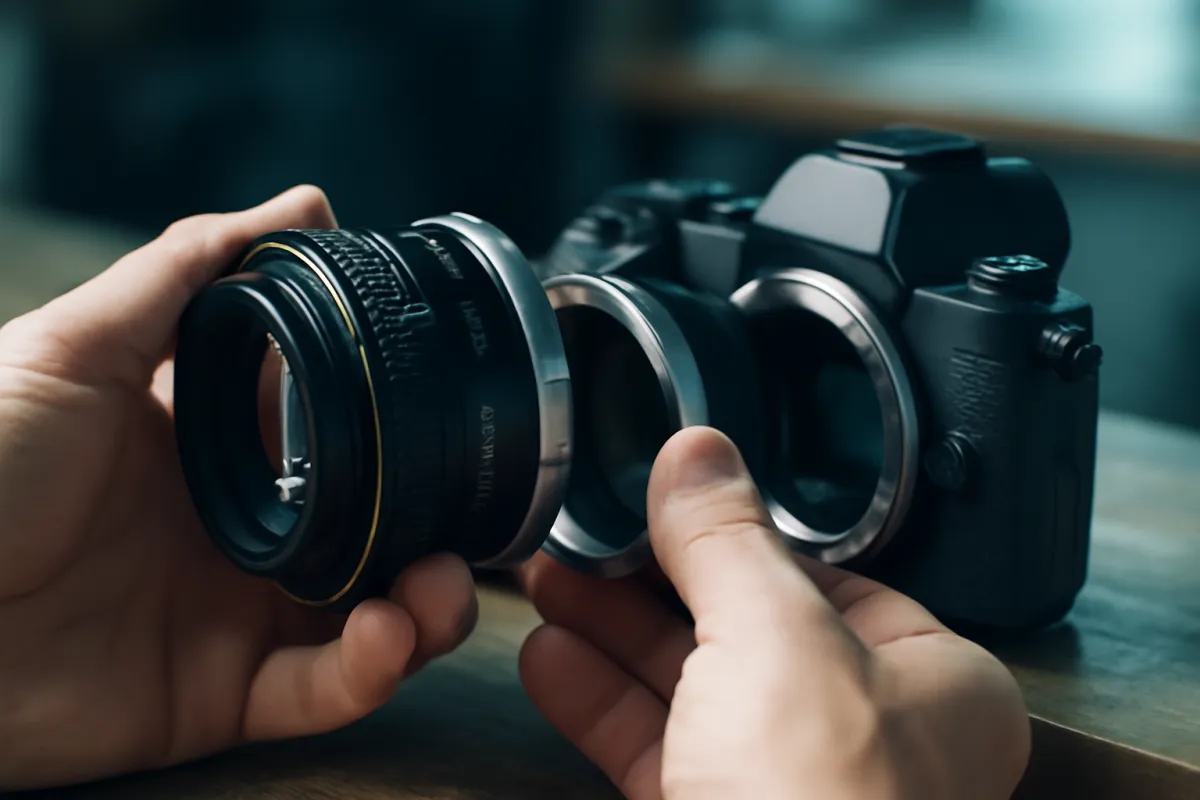
The important nuance is that this catalog is complete rather than growing. New DSLR lenses arrive rarely if at all, because makers now design for mirrorless mounts, so you are shopping a finished library rather than a stream of fresh releases. For most buyers that is fine, since the existing selection is enormous and the used market is generous, but it also means a DSLR lens collection is not a bridge to the future the way it once was. The reassuring counterpoint is that DSLR lenses are not stranded if you switch later: most makers sell an adapter that mounts their older DSLR glass onto their newer mirrorless bodies, usually keeping autofocus and stabilization working, so a shelf of good lenses can cross over with you rather than being sold at a loss. Our note on what to upgrade first keeps insisting that glass, not the body, is where the real money and longevity live.
The value of a used DSLR
Now the argument that keeps the DSLR genuinely alive, and it is about money rather than megapixels. Because the industry moved to mirrorless, the used market is flooded with excellent DSLR bodies and lenses selling for a fraction of what they cost new, while the people who owned them upgraded. That glut is a gift to any buyer whose first constraint is budget. A used DSLR kit can deliver still-image capability that would cost two or three times as much in new mirrorless, and every dollar saved on the body is a dollar that can go toward the lens, which, as our first-camera budget field note argues, is where the money should lean anyway. Shopping that used market rewards the checks in our checklist for upgrading your camera: shutter count, sensor condition, and a seller with a real return window.
A used-DSLR starter kit, split three ways
A sensible division of a first used-DSLR budget across the three buckets. Sums to 100 percent, illustrative.
Because a used DSLR body is cheap, the split tilts harder toward glass than a new-system budget would: the depreciated body frees money for the lens, which shapes the photograph far more. Illustrative shares, not a survey.
This is the value play, and it is a smart one for the right buyer. The tight-budget beginner, the student, the second-shooter needing a cheap backup, and the hobbyist who refuses to spend big can all get a tremendous amount of camera by shopping the depreciated DSLR market rather than the premium mirrorless one. The trade is honest: you are buying into a mature system rather than a growing one, and you accept older autofocus and weaker video in exchange for paying far less. For a shooter whose photography does not need cutting-edge tracking or serious video, that trade is often the sharpest use of money in the whole hobby. Price both routes in the upgrade budget planner before deciding, and let your actual subjects, not the spec sheet, settle it.
The cons of a DSLR
Name the weaknesses plainly, because buying honestly means knowing exactly what you are trading away. The first con is bulk: the mirror box and prism make a DSLR larger and heavier than an equivalent mirrorless body, which matters more than spec-sheet grams suggest, since the camera you actually carry takes more photos than the better one you leave home. The second is the mirror itself as a moving mechanical part, which caps burst speed, adds a little vibration and noise, and blacks out the finder at the moment of capture. The third is video: because the fast phase-detection autofocus depends on the mirror being down, a DSLR’s continuous autofocus in video mode is generally weak, and serious video shooters rarely choose one anymore.
The fourth con is the one that colors all the others: the DSLR is a system the industry has stopped developing. New bodies are rare, new lenses rarer, and the flagship features, the best autofocus, the strongest stabilization, the highest frame rates, now debut on mirrorless. A DSLR bought new in 2026 is a bet on a finished platform, which is fine if you know that going in and a mistake if you expected it to keep pace. None of these weaknesses stops a DSLR from taking beautiful photographs, and for a stills-first shooter on a budget they may barely register. But they are real, and they are exactly why the general recommendation for someone starting fresh has shifted to mirrorless. Run your priorities through the companion above to see which of these cons actually touch your shooting.
The bulk and weight question
The size difference deserves its own look, because it is the con most buyers feel first when they pick up a DSLR. The mirror box in the middle of the body, the prism above it, and the minimum lens-to-sensor distance the swinging mirror requires all add up to a camera that is simply bigger and heavier than a mirrorless equivalent. For travel, street, hiking, and everyday carry, that bulk is not a trivial complaint: system weight is one of the biggest predictors of whether a camera comes along at all, and a body that stays on the shelf takes no pictures.
Two honest qualifiers keep this from being a rout. First, the body is only part of the system, and fast lenses are substantial objects on any mount, so a DSLR kit is heavier than a mirrorless one but the gap narrows once serious glass is attached to either. Second, some photographers actively prefer the larger body: a bigger grip balances big lenses better, gives larger hands more to hold, and can feel steadier for long telephoto work, which is why several makers offer chunky grips even on mirrorless. So the bulk is a real disadvantage for the portability-minded and a mild preference in the other direction for others. Weigh it against your own carry habits rather than the marketing silhouette, and be honest about how often the camera actually leaves the house.
The mirror as a moving part
The mirror that defines the DSLR is also, unavoidably, a mechanical part that moves on every single frame, and that fact carries a few consequences worth understanding. Every time you shoot, the mirror has to accelerate up, stop, and drop back, which takes time and physically limits how many frames per second the camera can manage compared with a mirror-free design. It also introduces a small amount of vibration, sometimes called mirror slap, which at slow shutter speeds on a tripod can very slightly soften fine detail, which is why many DSLRs offer a mirror-lockup mode for critical work. And it makes noise, the familiar clatter that is charming in a cafe and unwelcome at a quiet wedding ceremony.
There is also the blackout: because the mirror lifts to expose the sensor, the optical viewfinder goes dark at the exact instant of capture, so you cannot see your subject in the finder during the shot itself. For fast action that momentary blindness can matter. None of this makes a DSLR unreliable, since the mirror mechanisms are engineered to survive an enormous number of cycles and the vast majority of users never wear one out. But it does explain, physically, several of the limits that pushed the industry toward removing the mirror entirely. Every one of these small frictions, the speed cap, the vibration, the noise, the blackout, simply disappears when there is no mirror to move, which is the quiet engineering case behind the whole mirrorless shift.
DSLR sensor sizes: full frame and crop
A common point of confusion is worth clearing up, because it is a separate decision that buyers constantly tangle with the DSLR question. Whether a camera is a DSLR or a mirrorless is a body-type question about the mirror; whether its sensor is full frame or crop is a sensor-size question, and the two are independent axes. DSLRs were made in both full-frame and smaller crop-sensor versions, just as mirrorless cameras are, so choosing a DSLR does not by itself decide your sensor size. You are really making two decisions at once, and keeping them separate keeps the reasoning clean.
The sensor size decides light gathering, depth-of-field behavior, effective reach, and a large share of the system’s cost and weight, none of which the mirror touches. A full-frame DSLR uses a sensor the size of the old 35mm film frame; a crop-sensor DSLR uses a smaller one, which sees a tighter slice of the scene and tends to cost and weigh less. Our full-frame versus crop field note works that trade-off in full, and its logic applies inside a DSLR body exactly as it does inside a mirrorless one. If you are exploring the smallest sensor formats, our Micro Four Thirds field note covers that mirrorless-only standard, which never had a DSLR version. The practical takeaway is to decide the body type and the sensor size on their own merits rather than assuming one dictates the other.
Who a DSLR still suits in 2026
Pull the exceptions together into a clear profile, because the DSLR is not dead, it is specialized, and matching yourself to the profile is the whole test. A DSLR still suits the budget-constrained buyer who can exploit the flooded used market to get far more camera per dollar than new mirrorless allows. It suits the photographer who already owns a set of DSLR lenses and would rather not rebuy or adapt them. It suits the shooter who genuinely prefers the optical viewfinder and the direct, lag-free view of the real world. And it suits the stills-first photographer, shooting landscapes, portraits, or general photography, where the mirrorless advantages in video and subject tracking change the results very little.
Notice what unites the profile: each case names a specific reason that outweighs the general trend, whether money already spent, money you want to save, a preference you actually feel, or a kind of shooting where the format’s weaknesses do not bite. The buyer who ends up happy with a DSLR can finish the sentence “I chose a DSLR because,” with budget, existing glass, an optical-finder preference, or a stills-only workflow. Long battery life for off-grid trips belongs on the list too. If your reason is genuine, a DSLR in 2026 is a smart use of a mature, heavily discounted system, and this field note is happy to send you there. Run your own inputs through the companion above and it will read whether your case lands on DSLR or points you toward mirrorless.
Who should skip a DSLR
Just as useful is naming who should not buy one, because the wrong buyer for a DSLR is easy to describe. Skip a DSLR if video is any real part of your plan: the weak continuous autofocus in video mode is the format’s clearest failing, and mirrorless is so far ahead here that serious video buyers rarely consider a DSLR at all. Skip it if you are starting completely fresh with no lenses to protect and you want your purchase to stay current as long as possible, because new lenses and bodies are overwhelmingly mirrorless and a fresh mirrorless kit puts your money where the industry is heading rather than where it is leaving.
Skip a DSLR, too, if you specifically want the features the mirror makes impossible: a live preview of your exposure in the finder before you shoot, subject-detection autofocus that finds and tracks eyes and animals across the whole frame, silent shooting with no mirror slap, or the smallest and lightest possible interchangeable-lens kit. What does not belong on anyone’s reasoning is buying a DSLR new at full retail with no existing glass because it “seems tougher” or “more serious,” when a mirrorless body would serve better and stay relevant longer. The DSLR is a specialist and value choice now, not a default one, and the buyer who ignores that ends up paying more for less future. If none of the skip reasons apply to you, the companion above will likely still read your case as a legitimate DSLR fit.
How to tell a DSLR from a mirrorless camera
If you are shopping used listings or looking at a friend’s camera and want to know which format it is, a few quick tells settle it. The surest is the size and shape of the top: a DSLR almost always has a raised hump or bulge in the center above the lens, the housing for the prism, whereas many mirrorless bodies have a flatter top or a smaller, more offset finder hump. Look through the viewfinder while the camera is off: a DSLR’s optical finder still shows the scene through the lens because it is just glass and a mirror, while a mirrorless electronic finder goes dark with no power, since it is a screen.
Another tell is the model name and the era. Camera makers use distinct naming for their DSLR and mirrorless lines, and any body designed in the last several years is far more likely to be mirrorless, since that is where all new development went. You can also take the lens off and look inside: a DSLR shows a mirror sitting at an angle in the body, reflecting upward, while a mirrorless body shows the sensor itself sitting right behind the mount with no mirror in front of it. That mirror, or its absence, is the definitive answer, since it is the one feature the whole distinction rests on. When in doubt, look for the mirror, because everything else about the two formats flows from whether it is there.
Common myths about DSLRs
A few persistent myths distort how people think about DSLRs, so it is worth clearing them. The first is that “DSLR” means “any big serious camera.” It does not: a DSLR is specifically a camera with a reflex mirror and optical viewfinder, and a large, professional mirrorless body is not a DSLR even though it looks the part. The distinction is the mirror, not the size or the price. The second myth is that DSLRs are obsolete and no longer take good photos. They are no longer in active development, which is different from obsolete: a good DSLR takes superb photographs today and will for years, and the used market makes it a value.
The third myth is that a DSLR is automatically tougher or more weather-sealed than a mirrorless camera. Durability tracks the price tier, not the presence of a mirror: high-end bodies of both formats are heavily sealed, and entry bodies of both are lightly built. The fourth is that you must buy a DSLR to look through a viewfinder, when in fact most mirrorless bodies include an electronic viewfinder that many shooters prefer. The fifth is that a DSLR’s optical finder is always better than an electronic one; it is a genuine preference, but the electronic finder previews your actual exposure, which the optical one cannot. Reading the format for what it actually is, a mirror-based design with real strengths and real limits, is the whole defense against buying for the wrong reason.
Digital single lens reflex, in plain terms
DSLR stands for digital single lens reflex, and each word describes a physical part of how the camera works.
Digital distinguishes it from the film SLRs the design descends from; the sensor replaced the film, and nothing else about the layout had to change.
Single lens means the viewfinder looks through the same lens that takes the picture, rather than through a separate window beside it. That is why what you see is what the sensor records, with no parallax offset.
Reflex refers to the mirror. Light entering the lens hits a mirror angled at forty-five degrees, bounces up into a prism, and reaches your eye. When you press the shutter, that mirror flips up out of the way so light reaches the sensor, which is the mechanical clack a DSLR makes and the reason the viewfinder blacks out for an instant.
Understanding the reflex part explains most of the practical differences people notice. The optical viewfinder shows the scene directly rather than as a processed preview. The mirror mechanism adds bulk, which is much of the size difference against mirrorless. And that same mechanism is what mirrorless cameras removed, which is where their name comes from.
Our comparison of mirrorless against DSLR covers what that removal changed in practice.
The bottom line
A DSLR is a digital single lens reflex camera: a digital camera that uses a mirror to bounce light from a single lens up into an optical viewfinder, so you frame through the real glass until the mirror flips up and the sensor records the shot. That mirror is the entire story. It gives the DSLR its signature optical finder, its long battery life, and its clatter, and it also gives the format its bulk, its speed limit, and its weak video autofocus. Understand the mirror and you understand every strength and weakness the design has, because all of them flow from that one angled piece of glass.
In 2026 the honest read is that the DSLR is a mature, specialized, and now heavily discounted format rather than the default it once was. Most people buying fresh are better served by mirrorless, which previews the exposure, focuses on the sensor for smooth video and subject tracking, and is where every new lens now lands. But a DSLR remains a smart, genuine choice for the buyer on a budget shopping the flooded used market, the owner of existing DSLR glass, the shooter who loves an optical finder, and the stills-first photographer who does not need what the mirror gives up. Read the fuller buying comparison in our mirrorless versus DSLR field note, settle the separate sensor question in our full-frame versus crop field note, price your own plan in the upgrade budget planner, and let the answer be the one that matches your budget and your subjects rather than the internet’s.
This field note explains how a camera works and is written to inform a decision, not to close a sale: nothing here is sponsored, and no brand or model is named on purpose. The optical facts about the reflex mirror, the prism, and the light path are stated as the settled mechanics of the format; every score, split, and dollar figure is an illustrative planning aid rather than a quote or a lab result, and real prices, specifications, and the fast-moving used market shift with brand and generation. Which lenses, adapters, and features actually exist varies by mount, so confirm what is available for the specific system you are weighing before any money changes hands, and when a purchase is close, hold both a DSLR and a mirrorless body before you choose.
Frequently asked questions
What is a digital single lens reflex camera in simple terms?
A digital single lens reflex camera, or DSLR, is a camera that uses a mirror set at an angle behind the lens to bounce incoming light up into a prism and out through an optical viewfinder, so you compose by looking through the actual lens at the real scene. The single lens part means one lens serves both your eye and the sensor, and the reflex part refers to that mirror reflecting the light upward. When you press the shutter the mirror flips up out of the way, the sensor records the frame, and the mirror drops back down. That mirror is the one feature that defines the whole design and separates a DSLR from a mirrorless camera.
What does DSLR stand for?
DSLR stands for digital single lens reflex. Digital means it records to an image sensor rather than to film, which distinguishes it from the older film SLR cameras it descended from. Single lens means one lens handles both the viewfinder image and the captured photograph, unlike older twin lens reflex cameras that used two separate lenses. Reflex refers to the reflex mirror inside the body that reflects light from the lens up into the optical viewfinder. Put the three together and the name describes exactly how the camera works: a digital camera that shows you the scene through a single lens by way of a reflex mirror.
How does the mirror in a DSLR work?
The mirror sits at roughly a 45 degree angle in the light path directly behind the lens, and it reflects the light coming through the lens upward into a prism, which flips the image the right way around and sends it out through the optical viewfinder. Because you are seeing the light that actually passed through the lens, the viewfinder shows the true scene with no processing and no lag. When you take the photo the mirror rapidly swings up out of the light path so the light can reach the sensor, the shutter opens and closes to make the exposure, and the mirror falls back down. That flip is the source of the characteristic clatter a DSLR makes and the brief blackout you see in the finder at the moment of capture.
What is the difference between a DSLR and a mirrorless camera?
The one real difference is the mirror. A DSLR uses a reflex mirror and a prism to send light up into an optical viewfinder, so you frame through glass at the live scene, and the mirror flips out of the way when you shoot. A mirrorless camera removes that mirror entirely: light falls continuously onto the sensor, and you frame either on the rear screen or through a small electronic viewfinder that shows the sensor's live feed. Nearly every other difference, in size, autofocus behavior, video strength, and battery life, flows from that single design choice. A DSLR carries a mirror in the box; a mirrorless camera does not.
Are DSLRs still worth buying in 2026?
For specific buyers, yes, though they are no longer the default recommendation for someone starting fresh. The strongest case is value: because the industry has shifted to mirrorless, used DSLR bodies and lenses sell for a fraction of their original price, so a tight budget buys far more capable gear secondhand in the DSLR world than new in mirrorless. A DSLR also suits people who already own its lenses, who prize the optical viewfinder, or who want long battery life for stills-first shooting. What a DSLR is not is future proof, since new lenses and bodies are overwhelmingly mirrorless now, so a 2026 DSLR purchase is a smart use of a mature, discounted system rather than a stake in a growing one.
What are the main parts of a DSLR camera?
The defining parts are the lens and its mount, the reflex mirror that sits behind the lens, the prism (a glass pentaprism or a lighter pentamirror) above it, and the optical viewfinder you look through. Below and behind the mirror sit the autofocus module that reads focus, the metering sensor that reads light, the mechanical shutter, and the image sensor that records the photo. On the outside you have the control dials, buttons, mode dial, and rear LCD screen. The mirror, prism, and optical viewfinder are the parts that make it a DSLR specifically, since removing them is exactly what turns the design into a mirrorless camera.
Why is a DSLR bigger than a mirrorless camera?
The extra size comes directly from the mirror. A DSLR needs a mirror box in the middle of the body to hold the angled reflex mirror, plus a prism above it to route the image to the viewfinder, and that assembly takes up real space and adds weight. The mirror also forces a minimum distance between the lens mount and the sensor, so it has to swing freely, which shapes how the whole camera and its lenses are built. Remove the mirror and prism, as a mirrorless camera does, and you delete that box of glass and metal from the center of the camera, which is why mirrorless bodies started life smaller and lighter. Some photographers actually prefer the larger DSLR grip, so bigger is not automatically worse.
Should a beginner buy a DSLR or a mirrorless camera?
For most beginners starting fresh in 2026, mirrorless is the more future-friendly path, because the electronic viewfinder previews your exposure before you shoot, subject-detection autofocus makes sharp photos easier, and every maker is putting its new lenses on mirrorless mounts. The one strong reason a beginner might choose a DSLR is money: a used DSLR kit can cost far less for similar still-image capability, which frees budget for the lens that matters more than the body anyway. If your budget is tight and you shoot mostly stills, a used DSLR is a legitimate and often smart way to learn real photography cheaply. If you want easy video and the longest relevant life from the purchase, lean mirrorless.