What's on this page
- The one rule that makes photography gifts work
- Why a lens or a camera is usually the wrong gift
- How to find out what they already own
- Gifts in the lowest budget band
- Gifts in the lower middle band
- Gifts in the upper middle band
- Gifts in the highest band
- Support and stabilisation
- Bags straps and carrying
- Storage backup and the gift that prevents a catastrophe
- Cleaning and maintenance
- Filters and optical extras
- Light diffusion and close range extras
- Prints books and the physical photograph
- Consumables that always run out
- Learning courses and experiences
- Gifts for the phone photographer
- Gifts for someone who just got their first camera
- Gifts for the photographer who owns everything
- What not to buy a photographer
- How useful each category actually is
- Where a photography gift budget tends to land
- A worked example with three recipients
- The bottom line
Short answer: Buy the thing that removes friction from what they already do. Spare batteries, fast cards, a strap they can wear all day, a clamp or small tripod, a real cleaning kit, and backup storage are inexpensive, universally useful, and never wrong. Avoid anything mount specific, thread specific, or creatively committing unless they named the exact item; when in doubt, a camera retailer gift card paired with something small to open beats an expensive guess.
Buying a gift for a photographer looks easy from the outside. The hobby is visibly full of equipment, the equipment is visibly expensive, and there appears to be an obvious ladder of nicer things to climb. In practice it is one of the harder hobbies to shop for, because most of the visible equipment is system specific, size specific, or thread specific, and a generous purchase in the wrong mount is worth exactly nothing to the person receiving it. Meanwhile the things photographers genuinely run short of are unglamorous enough that nobody thinks to wrap them.
This field note fixes that by sorting gifts for photographers two ways at once: by budget band, so you can find the useful thing at the money you have, and by category, so you can see what each type of gift actually does once it reaches their bag. It also covers the one structural rule that prevents nearly every disappointing photography gift, the small set of items to avoid entirely, and a short method for finding out what someone already owns without giving away the surprise. Every band below is an illustrative grouping rather than a set of prices to expect, and no specific products are named anywhere, because the right version of any of these depends on the camera the recipient owns. Price your own kit plans against our upgrade budget planner while you are here, and use the companion above to match a recipient to a category.
Key takeaways
- The best photography gifts remove friction from something the recipient already does; the worst ones commit them to a creative choice or a system you had to guess at.
- Never buy a lens, a body, a mount adapter, or a filter without knowing the exact mount and filter thread, because all three are the classic wrong-purchase traps.
- Consumables win: spare batteries and memory cards are used constantly, never refused, and equally welcome to a beginner and to someone who owns everything.
- Support and backup are the two categories photographers under-buy for themselves, which makes a clamp, a small tripod, or a drive the highest value per dollar in the whole list.
- A print of one of their own photographs, framed, is consistently among the most memorable gifts a photographer receives, and it costs less than most accessories.
The one rule that makes photography gifts work
Every good photography gift has the same shape: it makes something the person already does slightly easier, faster, or more comfortable. Every bad one has the opposite shape: it asks them to do something new, in a way you chose on their behalf. That single distinction explains almost all of the difference between a gift that lives permanently in a camera bag and a gift that lives permanently in a drawer.
The reason it holds so reliably is that photographers develop very specific habits. Someone who shoots landscapes at dawn on a tripod and someone who shoots their children indoors handheld have almost nothing in common in terms of what would help them, even though both own a camera. Buy either of them a spare battery and both are pleased. Buy either of them a specialist accessory built for the other one’s habits and it becomes a polite thank you followed by silence. You do not need to know what they shoot to buy a good gift, but you do need to respect that you probably do not know, and to pick accordingly. The whole structure of this field note follows from that: the universally useful categories come first, the specific ones are flagged as needing information you may not have, and the traps are named plainly so you can avoid them without knowing anything technical at all.
Why a lens or a camera is usually the wrong gift
The instinct to buy something big is understandable and almost always misfires, for three separate reasons that compound. The first is the mount. Lenses attach to cameras through a mount that varies by manufacturer and, within some manufacturers, by camera generation, so a lens bought for the wrong mount is not merely a poor choice but physically unusable. Verifying a mount without asking is difficult and getting it wrong is expensive.
The second reason is that focal length is a creative decision rather than a specification. A photographer who works at wide angles and one who works at long focal lengths will each find the other’s favourite lens close to useless, and there is no neutral middle choice that pleases everyone, as our prime versus zoom field note and our 35mm versus 50mm comparison both make clear. The third reason is that a camera body is not a product, it is an entry ticket to a system: buy someone a body in a different system from the one they already own and you have handed them a device that none of their lenses fit. If your budget genuinely stretches to this level, the right move is not to guess better, it is to change the shape of the gift. Contribute toward an item they have already chosen, or give a camera retailer gift card, or ask them outright and accept that the surprise is worth less than the accuracy. Our field note on when a new camera is actually justified is the piece to send them if they are the one wondering.
How to find out what they already own
A small amount of quiet reconnaissance transforms your odds, and none of it requires giving anything away. The single most valuable fact is the brand and model of their camera, which is usually printed on the front of the body and readable in any photograph of them holding it, or visible on the box or manual if you have access to their home. From that one string you can determine the mount, the battery type, and the memory card format, which covers the three areas where wrong purchases happen most.
The second most valuable fact is the filter thread diameter, which is a number printed on the front rim of a lens or inside the lens cap, written after a small circle with a line through it. If you can read it, filters become a safe category. If you cannot, they do not. Beyond that, look at the shape of what they carry: someone with a large bag and a tripod already has support solved, while someone who carries a body and one lens loose in a rucksack has an obvious gap. Ask an oblique question if you can get away with one, such as what they wish they had brought last time they went out shooting, which is a normal conversational question and reliably produces the answer you need. If none of this is available to you, that is genuinely fine, and it simply means you should shop from the universal categories in the following sections rather than the specific ones.
Gifts in the lowest budget band
The cheapest band is, counter-intuitively, where some of the most used gifts live, because these are the items photographers constantly need and constantly fail to buy for themselves. A pack of good microfibre cloths sits at the top of the list. Photographers destroy them, lose them, and end up wiping expensive front elements on a shirt, and a supply of clean ones is genuinely welcome, a point our lens cleaning field note makes at length.
A rocket style air blower belongs in the same band and does the job that no cloth should be asked to do, lifting loose dust off glass and sensors without contact. A small hard case for memory cards prevents the classic disaster of a loose card lost in a bag. A lens pouch protects a spare lens carried loose. A notebook for shot planning and location notes suits the more deliberate kind of photographer. A simple hot shoe spirit level, a cable tie set for managing straps and cords, or a colour reference card for setting white balance all cost very little and solve a real annoyance. And at the very cheap end, a printed photograph of theirs in a simple frame costs almost nothing and outperforms most of the list on the emotional axis. The thing that unites this band is that none of these items commit the recipient to anything, so none of them can be wrong.
Gifts in the lower middle band
Move up a band and the options broaden into items that solve a whole problem rather than a small annoyance. A spare battery is the standout, because running out of power is the single most common way a day of shooting ends prematurely, and cameras almost never ship with a second one. This is mildly system specific, so you need the camera model, but it is the easiest specificity to verify and the payoff is large.
A memory card of good speed and reasonable capacity sits in the same band and carries the same mild requirement to check format, which our field note on formatting an SD card touches on. A tabletop tripod or a clamp with a ball head opens up long exposures, self portraits, and low angles for very little money and takes up almost no bag space. A comfortable strap is transformative for anyone still using the thin manufacturer strap that came in the box, since a wide, well designed strap turns a heavy camera from a burden into something you forget you are carrying. A remote release, a decent lens cleaning kit as a complete set rather than a single cloth, and a small light for close range work all sit comfortably here. This is the band where the highest number of genuinely good options live, and it is the one to shop in if you want a real gift without a research project.
Gifts in the upper middle band
Here the options become more substantial and slightly more specific, which means the reconnaissance from earlier starts to pay off. A proper travel tripod is the flagship of this band. Photographers routinely under-buy support for themselves because it is unglamorous, and a light, stable tripod that fits in luggage is a gift that changes what someone is able to shoot rather than merely making it more comfortable, which our phone tripod field note explores at the smaller end of the same category.
A camera bag also lives here, with the caveat that bags are personal and it helps to know whether they carry a backpack, a shoulder bag, or a small pouch. An external drive for backup belongs in this band and is the most quietly valuable gift on the entire list, because losing a photo library is the one catastrophe in this hobby that money cannot fix afterward, a case our photo backup field note makes in full. A quality filter, if and only if you have verified the thread diameter, offers a real creative capability. A small flash with a diffuser opens up indoor and close range work. A subscription to an online learning platform, or a substantial book, buys skill rather than gear, which for many photographers is where the actual bottleneck sits.
Gifts in the highest band
At the top of the range the calculus changes, because the risk of an expensive mistake rises with the price while the number of safely universal items falls. The reliable answers here are not gear at all. An experience gift, such as a workshop with a photographer whose work they admire, a guided trip built around photographing something specific, or a permit and access to somewhere they have wanted to shoot, delivers a memory and a set of pictures rather than an object, and it is almost impossible to get wrong in a technical sense.
Large format printing of their own work is the second strong option. A big, well made print of a photograph they took, mounted and framed, is something photographers almost never do for themselves and consistently treasure. A high capacity backup system, whether a large drive or a small network attached storage unit, is the practical version of the same generosity. And if it really must be gear, the honest move at this level is to fund something they have already chosen: pay toward the specific lens on their list, or give a camera retailer gift card of a size that clearly signals the intent. Every one of these avoids the mount, thread, and taste traps entirely, which at this budget is worth far more than the element of surprise.
Support and stabilisation
Support is the category photographers most consistently under-buy for themselves, which makes it the category with the best return on gift money. The reason for the under-buying is that a tripod is boring to want and heavy to carry, so it loses out to glass and bodies every time somebody has money to spend. Meanwhile the number of photographs that are impossible without support is large: anything at night, anything long exposure, anything requiring the photographer to be in the frame, and almost all careful close range work.
The category runs from tiny to substantial. A flexible clamp with a small ball head wraps around railings, branches, and chair backs and weighs almost nothing. A tabletop tripod stabilises a camera on any flat surface and folds into a jacket pocket. A full travel tripod, light enough to carry and stable enough to be worth carrying, is the serious version. A monopod suits people who shoot sports or long lenses and need to take weight off their arms without the setup time of legs. The one thing to avoid is the very cheapest full sized tripod, which flexes enough that it introduces the very blur it is meant to prevent and teaches the recipient that tripods do not work. A small stable support beats a large wobbly one every time, and our field note on taking sharp photos explains exactly why.
Bags straps and carrying
How a camera is carried determines how often it comes along, and how often it comes along determines how many photographs get taken, which makes carrying a more consequential category than its price suggests. The manufacturer strap included in the box is almost universally poor: thin, slippery, and often printed with branding the owner would rather not advertise. A wide, comfortable replacement strap, or a sling style strap that lets the camera hang at the hip and swing up to the eye, is a small change with a daily payoff.
Bags are more personal but not unknowable. The key question is not brand but shape, and the shape follows the use: a shoulder bag suits someone moving around a city and reaching for the camera constantly, a backpack suits someone walking distances with more equipment, and a small padded insert that drops into a normal bag suits someone who does not want to look like they are carrying a camera at all. That last option is underrated and makes an excellent gift precisely because it is compatible with bags they already own. If you cannot determine what they carry, a strap is the safer half of this category and is close to universally welcome.
Storage backup and the gift that prevents a catastrophe
This is the most valuable category on the list and the least likely to be chosen by anyone shopping on instinct, because backup storage is the least exciting object it is possible to wrap. It is also the only category here that protects against a loss that money cannot undo afterward. A failed drive containing the only copy of a decade of photographs is the one genuinely irreversible disaster in this hobby, and it happens to people constantly.
The gift is straightforward: an external drive large enough to hold their library several times over, or, at a higher budget, a two drive enclosure or a small network attached storage unit that keeps a redundant copy automatically. Portable solid state drives are compact, fast, and pleasant to use, while conventional spinning drives give more capacity for the money and are perfectly good for backup duty. You do not need to know anything about their camera to buy this, which makes it one of the few substantial gifts that carries no compatibility risk at all. Pair it with a note pointing at our photo backup field note so the drive actually gets set up rather than sitting in a drawer, because an unplugged backup drive protects nothing.
Cleaning and maintenance
Photographers are hard on their equipment and casual about maintaining it, which makes a proper cleaning kit a gift that is used far more than it is anticipated. The core of a good kit is a rocket style air blower for lifting loose dust without contact, a soft brush for stubborn particles, several clean microfibre cloths, and a bottle of proper lens cleaning solution. Wipes in individual sachets are convenient for a bag. A sensor cleaning kit is a step further and suits confident owners, though it is worth knowing that some people prefer to have sensor cleaning done professionally.
The value here is partly practical and partly educational, because a surprising number of photographers clean their lenses badly, dragging grit across coatings with whatever cloth is to hand. Giving somebody the right tools quietly fixes that. Beyond optics, a small maintenance set can include contact cleaner for battery terminals, silica gel packs for a damp bag, a spare body cap and rear lens cap, and a hood if you know the lens. All of it is inexpensive, none of it is mount specific except the caps and hood, and every part gets used. Our lens cleaning field note is the method that turns the kit into results.
Filters and optical extras
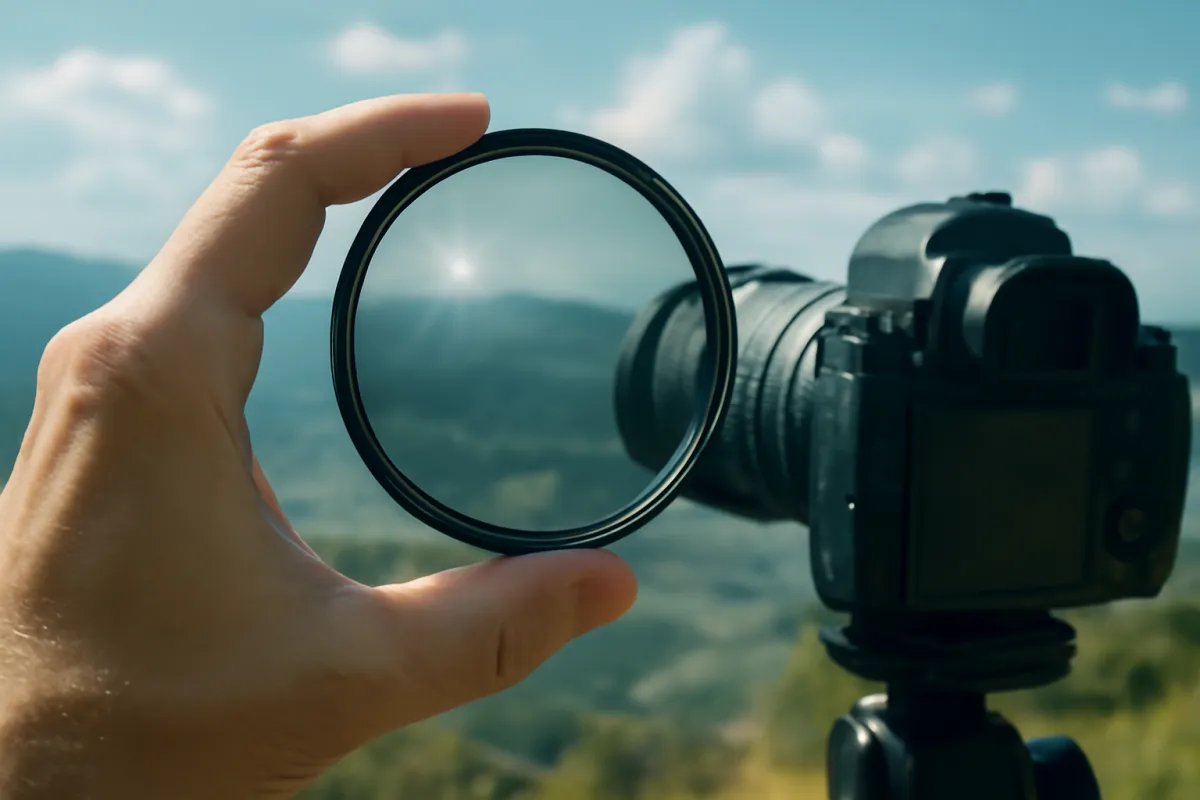
Filters are one of the few genuinely creative gifts you can buy without knowing what somebody shoots, provided you clear a single hurdle: the thread diameter printed on the front of the lens. Get that right and this is a rich category. Get it wrong and you have bought a metal ring that fits nothing, which is why the reconnaissance section exists.
The two filters worth knowing about are the polariser and the neutral density. A circular polariser cuts reflections from water, glass, and wet foliage, and deepens skies in a way no editing tool truly replicates, which makes it the most genuinely useful filter for anyone who shoots outdoors. A neutral density filter simply reduces the light entering the lens, which allows long exposures in daylight for smooth water and blurred cloud, and it pairs naturally with the tripod from the support category. Variable neutral density filters trade a little optical quality for a lot of convenience. A step up ring set is a small, clever addition that lets one filter fit several lenses of different thread sizes, and it makes a filter gift considerably more future proof. Skip the protective clear filter as a gift; it is a debate rather than a present.
Light diffusion and close range extras
Light is where photographs are actually made, and it is a category most casual gift buyers skip entirely because it looks technical. It is less technical than it seems. A small continuous light panel, which is essentially a rechargeable rectangle of adjustable brightness, is genuinely useful for tabletop work, close range subjects, and video, and it requires no compatibility knowledge whatsoever. A folding reflector, which is a collapsible disc of white and silver fabric, bounces existing light back into shadows and costs very little.
For anyone who photographs small subjects, a diffuser makes more difference than almost any other purchase, as our macro photography field note explains in detail. A light tent, which is a small collapsible fabric cube, turns any table into a controlled space for photographing objects, and it is the single most useful item for anyone selling things online or documenting a collection. That overlaps neatly with the setup our product photography field note describes. Flash units are the one part of this category with compatibility concerns, since dedicated units are system specific, so treat them the same way you treat lenses unless you know the model.
Prints books and the physical photograph
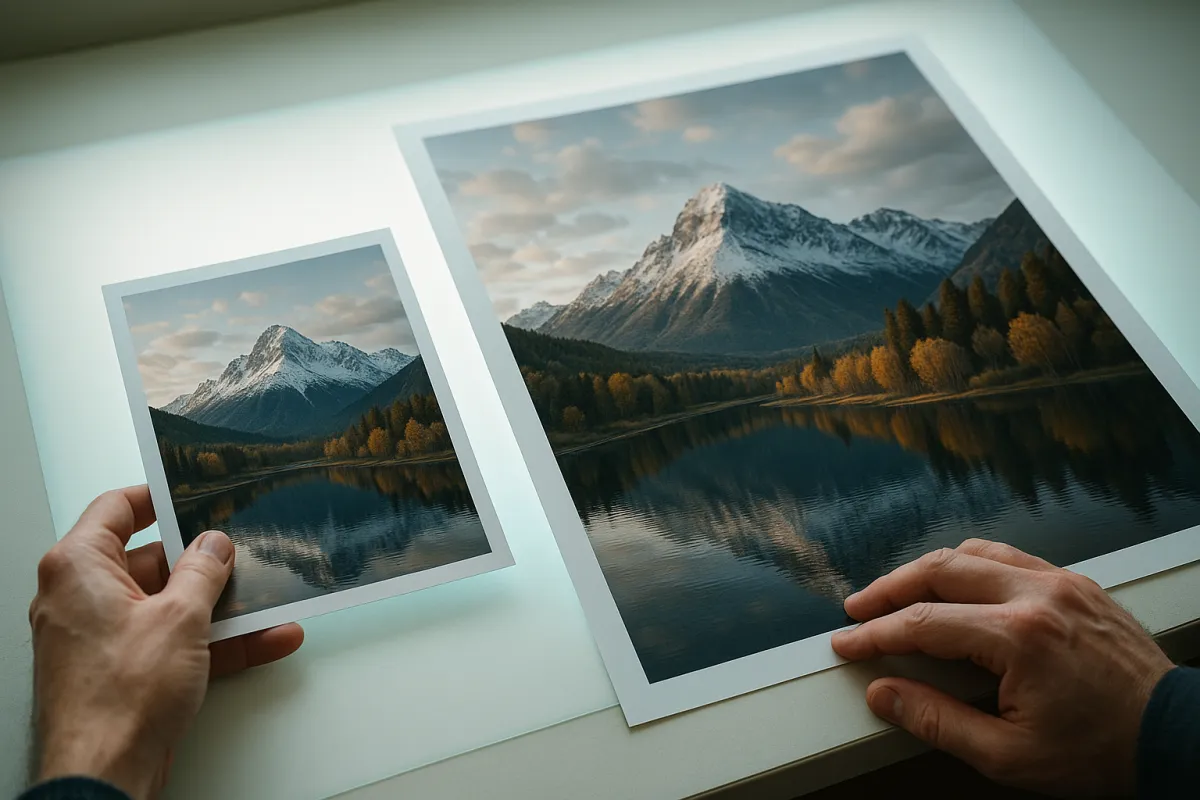
Photographers accumulate thousands of images and print almost none of them, which creates an unusual opportunity: you can give somebody their own work back in a form they never got around to making. A well printed and framed photograph of theirs is consistently among the most memorable gifts in this hobby, and it costs less than most accessories. The practical route is to find an image they have shared publicly at reasonable resolution, or to ask a mutual contact for a file, and to have it printed and framed at a size that suits the wall you have in mind.
The same idea scales down and sideways. A photo book made from a specific trip or a specific year is a lovely object and turns a folder of files into something people actually look at. A quality frame, or a set of matching frames, invites them to print more. On the reading side, a book of photographs by an artist whose work matters to them does more for their eye than most gear does, and a well chosen instructional book aimed at their level is a real gift for anyone still building fundamentals. The nice thing about this whole category is that it improves the photographs rather than the equipment, and it is entirely free of compatibility risk.
Consumables that always run out
The category nobody thinks to wrap is the category that gets used the most. Batteries, memory cards, and storage are consumed continuously by anyone who shoots regularly, and none of them are ever refused. Their only drawback as gifts is that they look unexciting in a box, which is a presentation problem rather than a substance problem, and it is easily solved by pairing them with something small and tactile.
Batteries are mildly system specific and worth verifying, since the camera model determines the battery. Memory cards need the right format, which is usually SD but sometimes another standard on higher end bodies, and it is worth buying speed rather than raw capacity, since a slow card stalls a camera during a burst. A card wallet keeps them from disappearing into a bag lining. A power bank suits anyone who charges in the field. Cleaning supplies belong here too, since cloths and solution get used up. The reason this band matters is that it is equally welcome to a rank beginner and to somebody who owns everything, which makes it the safest possible answer when you know nothing about the recipient’s habits.
Learning courses and experiences
Beyond a certain point, more equipment stops improving somebody’s photographs and more knowledge starts. That crossover happens far earlier than most people expect, which makes education one of the highest value gift categories and one of the least crowded. An online course subscription, a single well regarded class, or a local in person workshop all fit budgets from modest to substantial, and they address the thing that is actually limiting most photographers.
Experience gifts extend the same logic. A guided photography walk in a city, a wildlife hide booking, a dark sky site visit, a permit for somewhere that requires one, or simply a day trip planned around photographing something specific all give the recipient pictures rather than possessions. These work particularly well for the person who already owns everything, and they work well as joint gifts where you go along too. If the recipient is thinking about turning the hobby into income, our photography jobs field note is a realistic look at what that path involves. The common thread across this whole category is that nothing here can be the wrong mount.
Gifts for the phone photographer
Not every photographer owns a camera, and the person who shoots everything on a phone is often the most active photographer you know. The gift categories shift but the logic does not. A small phone tripod or clamp is the single most useful item, because it unlocks long exposures, night mode stability, group shots, and self portraits that are otherwise impossible, and our phone tripod field note covers what separates a usable one from a toy.
Beyond support, a small clip on light transforms indoor phone photographs more than any app does. A gimbal stabiliser suits anyone shooting video. A power bank addresses the fact that photography is the fastest way to flatten a phone battery. Clip on lens attachments exist and vary enormously in quality, so treat them with the scepticism our iPhone camera lens field note recommends rather than assuming any of them is a straight upgrade. And prints work just as well here as anywhere: phone photographers are, if anything, even less likely to print, which makes a framed print of one of their pictures a strong choice. If they are considering stepping up to a dedicated camera, our point and shoot field note is the honest comparison to send them.
Gifts for someone who just got their first camera
The new camera owner is the easiest recipient on this list, because a starter kit leaves predictable gaps and filling any of them is welcome. The gaps, in rough order of urgency, are: a second battery, a memory card of decent speed, something to carry the camera in, something to clean the lens with, and something to hold the camera still. Any one of those is a good gift and all five together make an excellent one at a modest total.
There is a second, less obvious gap, which is knowledge. A new camera owner is usually operating in automatic mode and quietly frustrated that their photographs do not look like the ones that made them buy the camera. A short course, a good beginner book, or simply an afternoon spent with somebody who knows what the dials do addresses that faster than any accessory. Our field note on shooting in manual mode and our exposure triangle explainer are the two pieces that unlock the most, and our first camera budget field note sets expectations about what the rest of a kit costs. Resist the urge to buy them a second lens: at this stage the kit lens is not the limitation, and our what to upgrade first field note explains why.
Gifts for the photographer who owns everything
The well equipped photographer defeats gift shopping in the usual categories, since anything you might buy they either already own or deliberately chose not to. Three routes still work reliably. The first is consumables, because cards, batteries, and storage are used up regardless of how complete a collection is, and a large fast card or an additional drive is always absorbed. The second is prints, because the correlation between owning a lot of equipment and printing your own work is, if anything, negative.
The third is the experience route, which is where most of the good answers live at this level. A workshop, a trip, a permit, access to somewhere restricted, or a booking at a hide or a studio all deliver something a gear cupboard cannot. A more personal variant is to commission something: pay a bookmaker to turn a set of their images into a proper photo book, or a framer to mount a series. And there is one more option that costs nothing and lands surprisingly well, which is to go with them. Time and company on a shoot are in shorter supply than equipment for most people who have been doing this for years. If they are genuinely at the point of wanting a specific expensive item, a contribution toward it, given openly, beats a surprise every time. Our field note on when a camera upgrade is justified is worth reading before anyone funds a body.
What not to buy a photographer
A short list of reliable disappointments, offered so you can rule them out quickly.
- A lens, unless they named the exact one. Mount, focal length, and aperture are all personal and all easy to get wrong, and the return process on an expensive lens is a miserable way to start a gift.
- A filter without the thread diameter. The number is printed on the front of the lens or inside the cap. Without it, you are guessing at a measurement that has no tolerance at all.
- The cheapest full sized tripod available. It will flex, wobble, and produce blurred frames, which is worse than owning no tripod, because it also teaches the recipient that tripods do not help.
- Third party batteries of unknown origin. Batteries sit inside expensive equipment and the very cheapest ones are a poor place to save money. Buy fewer, better ones.
- Novelty items shaped like camera gear. Lens shaped mugs and shutter shaped keyrings are charming for a moment and then occupy space forever.
- An editing software subscription for a different editor than the one they use. Switching editing tools means rebuilding an entire catalogue and workflow, which is a chore rather than a gift.
Every item on that list fails for the same underlying reason: it either requires information you did not have or asks the recipient to change something they had already decided.
How useful each category actually is
Sorting the categories by how often the item ends up being used, rather than by what it costs, reorders the list considerably and makes the cheap end look far better than it does on a shelf. The scores below are illustrative judgements about frequency of use rather than measurements, and they are deliberately independent of price.
How often each gift category actually gets used
Illustrative usefulness score out of ten, based on how often a typical recipient would reach for the item, independent of what it costs.
The two cheapest categories on the list sit at the top on frequency of use, which is the argument for spending a modest budget well rather than stretching for something impressive. Printing scores lowest on frequency and highest on sentiment, which is a different axis entirely.
The chart is not a ranking of what to buy, because a print used once a year can matter more than a cloth used weekly. What it does show is that the correlation between price and usefulness in this hobby is weak, and that a small budget spent in the top three rows produces a better gift than a large budget spent guessing in a specific category. Read it alongside your own budget rather than as a scoreboard.
Where a photography gift budget tends to land
If you are assembling several items rather than buying one, it helps to see how a sensible total splits across the categories. The division below is illustrative of a balanced kit-filling approach rather than a rule, and it assumes the recipient already owns a camera and one lens.
A balanced split of a photography gift budget
Illustrative allocation for someone assembling several gifts rather than buying one item, assuming the recipient already owns a camera and a lens.
Support takes the largest share because it is the category recipients are least likely to have bought for themselves, and because a stable platform changes what somebody can photograph rather than merely how comfortably they photograph it.
Adjust the split to what you can see. If they already own a good tripod, move that quarter into backup and printing. If they carry the camera loose in a rucksack, move more into carrying. The proportions matter less than the principle behind them, which is to fill the gaps that exist rather than to add depth to the categories they have already solved.
A worked example with three recipients
Theory into practice: three illustrative recipients, three illustrative budgets, and the reasoning that gets from one to the other.
The first is a friend who bought her first camera three months ago and shoots her family indoors. Her gaps are predictable: one battery, a slow card, no support, and no cleaning kit. An illustrative budget of a hundred dollars buys a spare battery, a faster card, a small clamp with a ball head, and a cleaning kit, which together remove four separate sources of frustration and cost less than one accessory in a specialist category. The second is a colleague who has shot landscapes for a decade, owns three lenses and a good tripod, and posts regularly. Everything obvious is already covered, so the money goes sideways: an illustrative two hundred dollars buys a portable backup drive and a framed print of one of his own photographs, hitting the one gap he definitely has and the one thing he definitely never does for himself. The third is a teenager who photographs everything on a phone and has never touched a camera. An illustrative fifty dollars buys a phone clamp with a small tripod, a clip on light, and a power bank, which unlocks night shots, indoor portraits, and a whole day of shooting without the battery dying. None of the three purchases required knowing a mount, a focal length, or a thread size, and all three land in categories the recipient uses immediately. Sequence any of these against your own budget in the upgrade budget planner, which works just as well for gift planning as for kit planning.
The bottom line
Gifts for photographers get difficult only when you shop in the categories that require information you do not have. Step away from lenses, bodies, mount adapters, and unmeasured filter threads, and what is left is a rich set of options that are close to impossible to get wrong. Spare batteries and fast cards are used constantly and welcomed by beginners and veterans alike. Support, from a pocket clamp to a proper travel tripod, is the category people under-buy for themselves and the one that most changes what they are able to photograph. Backup storage protects against the only irreversible disaster in the hobby. A comfortable strap, a real cleaning kit, and a small light each solve a daily annoyance for very little money. And a framed print of one of their own photographs, or a workshop, or a trip planned around a picture they have wanted to take, delivers something no accessory can. If none of that fits, a camera retailer gift card paired with something small to unwrap is an honest and genuinely welcome answer in this hobby, and it beats an expensive guess every time. Price the plan in the upgrade budget planner, buy the thing that makes what they already do easier, and the gift will still be in their bag next year.
This field note names no brands, models, or retailers on purpose, because the right version of every item here depends on the camera the recipient owns and on prices that move week to week. All budget bands are illustrative groupings for planning rather than prices you should expect to pay, and no figure in this article should be read as a current market price for anything. Before buying anything that attaches to a camera, confirm the mount, the battery designation, the memory card format, and the filter thread diameter for the specific body and lens involved, because none of those are interchangeable across systems. Where you cannot confirm a specification, choose from the universal categories or give a retailer credit instead.
Frequently asked questions
What is the best gift for a photographer?
The best gifts for photographers are the ones that remove friction from something they already do, rather than the ones that try to change what they shoot. Spare batteries, fast memory cards, a comfortable strap, a small clamp or tripod, a proper cleaning kit, and backup storage all fall into that category, and every one of them gets used constantly. The gifts that disappoint are almost always the ones that commit the recipient to a specific creative choice, such as a lens for a genre they do not shoot or a filter in the wrong thread size. If you take one rule from this field note, take that one: buy the thing that makes what they already do easier.
Should I buy a photographer a lens or a camera as a gift?
Almost never, unless the recipient has told you the exact model they want and you are simply handling the purchase. Lenses are mount specific, focal length is a deeply personal choice tied to what someone shoots, and the price range is wide enough that a well meant purchase can easily be both expensive and wrong. Camera bodies are worse, because they commit the recipient to a whole system of lenses and accessories. If your budget genuinely stretches that far, a contribution toward a lens they have already chosen, or a gift card to a camera retailer, delivers the same generosity without the risk of an awkward return.
What is a good gift for a beginner photographer?
For someone who has just acquired their first camera, the highest value gifts are the ones that fill the gaps a starter kit leaves. A spare battery is the single most useful item, because running out of power ends a day of shooting instantly and almost no camera ships with a second one. A memory card of decent speed and capacity, a small tripod or clamp, a lens cleaning kit, and a bag that actually fits their setup all rank close behind. Beyond gear, a short local course or a well chosen book on the fundamentals often does more for a beginner's pictures than anything you can wrap.
How much should I spend on a gift for a photographer?
There is no correct number, and photography is unusual in that some of the most appreciated gifts are among the cheapest. A spare battery, a good microfibre cloth, or a small clamp costs very little and gets used every week, while an expensive accessory chosen for the wrong system may never leave its box. A sensible approach is to set your budget first, then choose the most useful item in that band rather than stretching for something impressive in a category you do not understand. The bands used in this field note are illustrative groupings rather than prices to expect, since street prices move constantly.
What do you get a photographer who has everything?
The photographer who owns every accessory usually still lacks two things: consumables and prints. Fast memory cards, spare batteries, and additional backup storage are consumed continuously and are never turned down, however well equipped someone is. Prints are the other reliable answer, because photographers overwhelmingly leave their own work sitting on hard drives and rarely get around to printing it, so a print of one of their own images, framed, is often the most memorable gift they receive. Experience gifts such as a workshop, a permit, or a trip built around photographing something specific also land well with people whose gear cupboard is already full.
Are photography gift cards a good idea?
A gift card to a camera retailer is a genuinely good option in this hobby, and it carries far less social awkwardness than it does in most others, because photographers understand that gear is personal and system specific. It is the right answer whenever the item you are considering is mount specific, size specific, or thread specific, because those are the three ways a well meant purchase goes wrong. If a bare gift card feels impersonal, pair it with something small and thoughtful such as a book, a print of one of their own photographs, or a cleaning kit, so there is something to open alongside it.
What are good cheap gifts for photographers?
Photography is full of small, inexpensive items that get used constantly and that photographers rarely buy enough of for themselves. A pack of quality microfibre cloths, a rocket style air blower, a spare battery, a small memory card case, a clamp or a tabletop tripod, a lens pouch, and a notebook for shot planning all sit at the low end and all earn their place in a bag. The reason these work is that they are consumable or replaceable rather than committing, so there is no wrong choice to make about mount, focal length, or creative style.
What should you never buy a photographer?
Avoid anything that has to match a system you cannot verify: lenses, mount adapters, batteries for a body you are guessing at, and filters in a thread size you have not measured. Avoid novelty items shaped like camera equipment, which are charming for about a minute and then occupy shelf space. Avoid very cheap tripods, which wobble enough to be worse than no tripod at all and teach the recipient to distrust support. And avoid editing software subscriptions unless you know exactly which one they use, because switching editors means rebuilding a whole workflow and is rarely welcome as a surprise.