What's on this page
- What shutter speed actually is
- How shutter speed is written and read
- Stops: how time trades against light
- Two kinds of blur, one setting
- The reciprocal rule: your handheld floor
- Image stabilization: what it fixes and what it cannot
- Freezing motion: how fast is fast enough
- Intentional blur: panning
- Long exposures: water, lights, and night
- Shutter priority and where to set the dial
- Shutter speed and flash: the sync limit
- Mechanical and electronic shutters
- Shutter speed on phones
- A worked example: one subject, three shutters
- Common shutter speed mistakes
- How to practice shutter speed in one afternoon
- The bottom line
Short answer: Shutter speed is how long the camera's shutter stays open to let the sensor collect light for one frame. Short times such as 1/1000 of a second freeze motion and admit little light; long times such as a full second gather light and record movement as blur. The scale doubles and halves in stops, 1/1000, 1/500, 1/250, 1/125, 1/60, and trades one for one with aperture and ISO.
Every photograph is a slice of time, and shutter speed is how thick you cut it. Cut thin, at 1/1000 of a second, and a sprinting dog hangs frozen mid-stride with every hair distinct. Cut thick, at a full second, and a waterfall smooths into silk while headlights stretch into ribbons. Same camera, same scene: the only thing that changed is how long the sensor watched.
This field note explains shutter speed from zero: what the shutter physically does, how to read the numbers, which speeds freeze which subjects, why handheld shots blur below a certain floor, and how to turn slow shutters from an enemy into a creative tool. It pairs with our aperture field note and the wider exposure triangle field note, because shutter speed never acts alone: every choice of time is also a choice about light that aperture and ISO must answer.
Key takeaways
- Shutter speed is how long the sensor collects light for one frame. Short times freeze motion and admit little light; long times gather light and record movement as blur.
- The scale doubles and halves in stops, 1/1000, 1/500, 1/250, 1/125, 1/60, and trades one for one with aperture and ISO.
- Two different blurs, one setting: camera shake smears the whole frame, subject motion smears only what moved. The reciprocal rule (1 over focal length) guards the first; subject speed sets the second.
- Stabilization buys slower handheld speeds for still subjects only. Freezing a moving subject always needs genuine shutter speed.
- Slow shutters are a tool, not a failure: panning, silky water, and light trails are all deliberate long exposures, usually from a tripod.
What shutter speed actually is
Behind your lens, directly in front of the sensor, sits the shutter: a light-proof barrier that opens for a measured moment and closes again. In most cameras it is a pair of thin curtains. When you press the button, the first curtain drops away to expose the sensor, and after your chosen time has passed, the second curtain follows to end the exposure. The gap between the two is the shutter speed, and it is the only moment in the whole process when the sensor is actually recording the world.
That mechanical detail explains the sound and the feel of photography. The soft double-clack of a frame is the two curtains in sequence. At slow speeds you can hear the gap between them stretch. At very fast speeds, faster than the curtains can fully separate, the second curtain starts chasing the first before it finishes, so the sensor is exposed through a traveling slit of light sweeping across the frame in a few milliseconds.
The conceptual detail matters more: a photograph is not an instant. It is an interval, however brief, and everything that happens during the interval gets recorded on top of itself. A subject that moves during the exposure paints itself across the frame. A camera that moves during the exposure drags the whole scene. Shutter speed is your control over how much can happen inside one picture, which is why photographers talk about it less as a brightness setting and more as the motion setting.
How shutter speed is written and read
Shutter speeds are written as seconds and, far more often, fractions of a second: 1/1000, 1/250, 1/60, 1/8, then 1“, 5“, 30“ once you cross into whole seconds. Camera screens usually drop the fraction bar to save space, showing just 250 or 60, which trips up beginners: on the dial, 250 means 1/250 of a second, and whole seconds get an explicit mark like 2“. If the displayed number is large, you are almost certainly looking at a fast fraction, not a long exposure.
Reading the scale means keeping one relationship straight: a bigger denominator is a shorter time and a darker frame. 1/1000 is faster and admits less light than 1/60. People say faster and slower rather than shorter and longer, so a fast shutter freezes and starves the sensor, while a slow shutter blurs and feeds it. Most cameras run from 30 seconds at the slow end to 1/4000 or 1/8000 at the fast end, with a Bulb mode that holds the shutter open as long as you hold the button, for exposures longer than the dial offers.
There is also a rhythm to which speeds you will actually use. Daylight action lives up at 1/500 to 1/2000. General handheld shooting lives between 1/60 and 1/500. The territory from 1/60 down to about 1/4 is the danger zone, too slow to handhold reliably, too fast to read as deliberate blur. Below that, on a tripod, the creative long-exposure world begins. Knowing which neighborhood a shot belongs in is half the skill, and the rest of this field note walks through them.
Stops: how time trades against light
Shutter speed is the most literal of the three exposure controls: leave the shutter open twice as long and exactly twice the light arrives. That makes its stop scale a clean ladder of doublings, 1/1000, 1/500, 1/250, 1/125, 1/60, 1/30, 1/15, 1/8, each step one stop brighter than the last. No square roots, no area math as with f-numbers: just time, doubled or halved. The full ladder sits alongside the aperture and ISO scales in our camera settings reference.
Because all three exposure settings share the stop as their unit, shutter speed trades one for one with the others. Shorten the shutter from 1/125 to 1/250 and you lose a stop; open the aperture from f/8 to f/5.6 and you get it straight back. This is the everyday arithmetic of shooting action in fading light: the subject demands 1/500, the light no longer supports it, so you pay from the aperture until the lens is wide open, and after that from ISO. The exposure triangle field note drills this trade until it is reflex.
The practical habit that falls out is to know what your scene demands before wondering what the light allows. Motion sets a floor under your shutter speed: below some threshold the subject smears and no other setting can repair it, because blur recorded during the exposure is permanent. Brightness can be bought back three ways; sharpness cannot. When a frame has motion in it, the shutter gets first claim on the light, and aperture and ISO settle whatever is left. What the ISO half of that settlement costs, and how high you can safely take it, is worked through in our ISO field note.
Two kinds of blur, one setting
Blurry photos come from two different failures that happen to share a cure, and diagnosing which one you have is the fastest way to improve. The first is camera shake: your hands tremble, the whole camera moves during the exposure, and the entire frame smears equally, the background exactly as soft as the subject. The second is subject motion: the camera held still, the scene stayed sharp, but the moving subject painted itself across the frame, streaked or ghosted while everything around it stayed crisp.
Zoom into a blurry frame and it will confess which failure it is. Everything soft in the same direction: shake. Sharp background, smeared subject: motion. Neither sharp but in different ways, or double edges on lights: often both at once, the signature of a very slow shutter handheld on a moving scene. The distinction matters because the fixes differ: shake responds to technique, bracing, and stabilization, while subject motion responds only to a shorter exposure.
There is a third impostor worth ruling out: missed focus. A frame where something is critically sharp, just not the thing you wanted, is a focusing error, not a shutter problem, and no shutter speed will fix it. Our sharp photos field note treats all three culprits as a system; this field note takes the two that belong to time, starting with the one your own hands cause.
Why handheld photos come out blurry (illustrative split)
An illustrative share of the blurry frames a typical beginner produces, by root cause. The two shutter-related causes account for most of them.
The split is illustrative, but the lesson is real: most beginner blur traces back to shutter speed, and the frame itself tells you which kind. Whole frame soft means shake; streaked subject on a sharp background means motion.
The reciprocal rule: your handheld floor
The classic guard against camera shake is the reciprocal rule: handheld, keep your shutter speed at least as fast as one over your focal length, in full-frame-equivalent terms. A 50mm lens wants 1/50 or faster; a 200mm wants 1/200; a 24mm can get away with 1/25. The logic is magnification: a long lens enlarges the scene and your hand tremor by the same factor, so the same wobble that 24mm hides, 200mm turns into visible smear. On a crop sensor, multiply the focal length by the crop factor first, so 50mm on a 1.5x body behaves like 75mm and wants roughly 1/80.
Treat the rule as a floor with a margin, not a guarantee. High-resolution sensors show smaller blur than older ones did, adrenaline and cold hands shake more than a calm morning, and pixel-level inspection is harsher than a print. Many photographers hold themselves to one stop faster than the rule, 1/100 on a 50mm, and shoot short bursts at marginal speeds because the middle frames of a burst, taken without the jab of a button press, are usually the steadiest.
Technique moves the floor more than gear does. Tuck your elbows against your ribs, lean into a wall or plant them on a table, exhale and squeeze the shutter gently rather than stabbing it. Braced against something solid, most people gain a stop or two over their free-standing floor; set the camera down on a ledge and the floor disappears entirely. The rule tells you when to start worrying, and your body decides how much worrying the frame actually needs.
Image stabilization: what it fixes and what it cannot
Image stabilization, whether built into the lens or moving the sensor itself in the body, senses your hand tremor and shifts optics or sensor to cancel it in real time. Makers rate systems in stops of benefit, and the practical effect is real: a scene that demanded 1/100 handheld may come out sharp at 1/13 with good stabilization and good technique. For still subjects in dim rooms, museums, interiors, evening streets, it is the difference between carrying a tripod and not.
Its limit is built into what it measures. Stabilization cancels camera movement, and only camera movement. A subject walking through your frame at 1/13 of a second is a smear on the most stabilized camera ever built, because the blur was painted by the subject during the exposure, not by your hands. The two kinds of blur from earlier are the whole story here: stabilization retires the first kind and is helpless against the second.
So fold it into your floor, not your freeze speeds. With stabilization, your handheld minimum for static scenes can drop well below the reciprocal rule, and you should test how far on your own camera: brace, shoot a ladder of slowing speeds at a detailed still subject, and find where sharpness dies. For anything that moves, ignore the stabilization rating entirely and choose the shutter the subject demands. That is also why stabilization does not replace a tripod for true long exposures: at multiple seconds, no canceling system holds a frame still.
Freezing motion: how fast is fast enough
Freezing a subject means choosing a shutter speed so short that the subject barely moves across the sensor during the exposure. How short depends on the subject’s speed across your frame, not its speed through the world. As illustrative starting points: a posed person holds still at 1/60. A relaxed walk freezes around 1/125. Playing kids and trotting dogs want 1/250 to 1/500. Running sport lives at 1/1000. Small, quick subjects, birds in flight, a splash, a racket impact, push to 1/2000 and beyond. Our pet photography field note leans on exactly these numbers for animals that never stop moving.
Three modifiers bend the numbers. Direction: a subject crossing left to right paints across the frame fastest and needs the shortest shutter, while the same subject coming toward you barely traverses the frame and tolerates a slower one. Distance and framing: the tighter the subject in the frame, the faster its image moves, so a bird filling the viewfinder needs a shorter shutter than the same bird as a speck. And the moment itself: many motions have peaks, the top of a jump, the pause of a swing, where even a moderate shutter freezes cleanly because the subject briefly stops.
The method that beats memorizing tables: pick a starting speed from the list, shoot, and magnify your first frames on the spot. Crisp edges mean you can afford to slow down a stop if you need light. Smearing means shorten until it stops. Ten seconds of checking calibrates you to this subject in this light better than any chart, though the chart below gives you honest places to start.
Illustrative shutter speeds to freeze common subjects
Starting points, not laws: each bar is the shutter speed at which the subject's motion typically stops smearing. Bar length reflects the denominator, so longer bars are faster shutters.
Direction, distance, and framing bend every number: subjects crossing close and large need the fast end, subjects approaching small and far tolerate the slow end. Check your first frames at magnification and adjust.
Intentional blur: panning
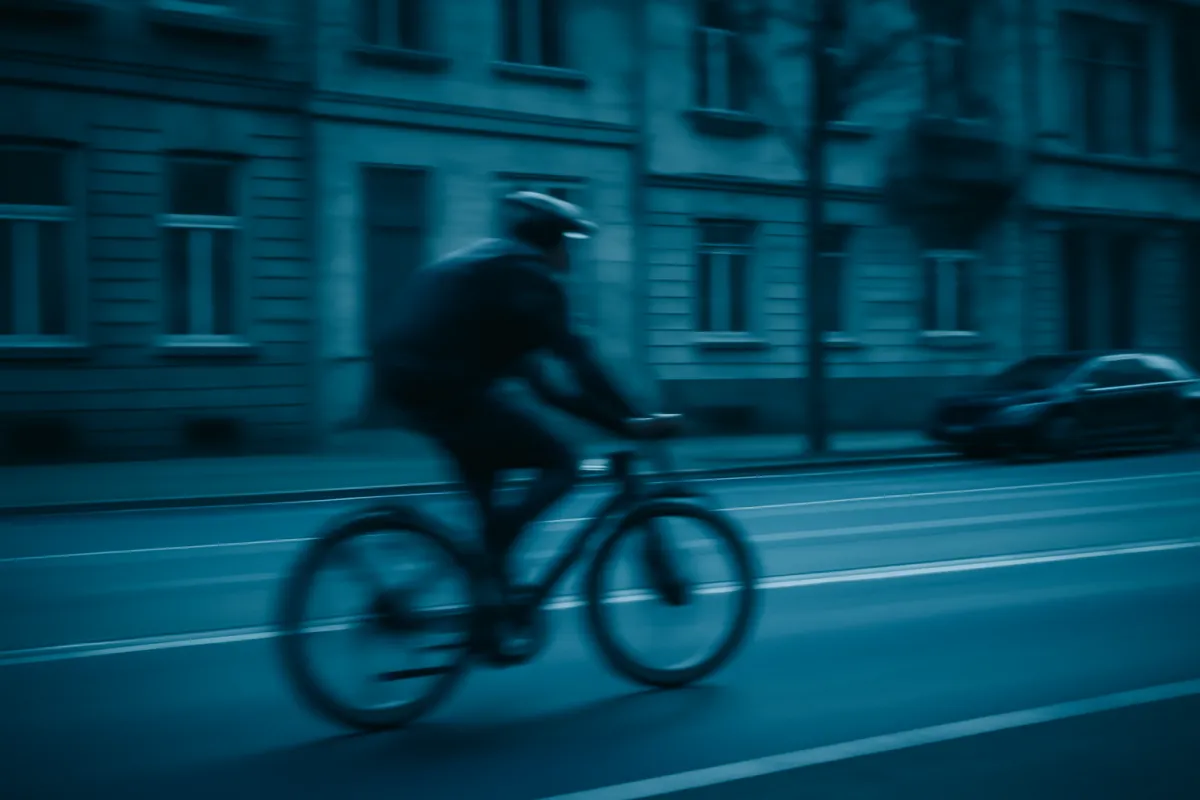
Once you can freeze motion at will, the slower half of the dial turns from a hazard into a style, and panning is its first technique. Panning keeps a moving subject sharp while streaking the background into horizontal ribbons of speed: a cyclist crisp against a smeared street. The trick is moving the camera with the subject, so that relative to the sensor the subject holds still while the world sweeps past.
The recipe: set shutter priority at roughly 1/30 to 1/60 for a cyclist or runner, slower for faster subjects once you are practiced. Plant your feet facing the point where the subject will pass, twist from the hips to pick it up early, and swing smoothly, matching its speed. Fire a short burst as it crosses in front of you and, critically, follow through, continuing the swing after the shutter closes exactly as a golfer swings through the ball. Continuous autofocus tracking on the subject does the focusing while you supply the motion.
Expect a low hit rate at first, and do not read that as failure: even practiced shooters keep a fraction of their panning frames. The variables, your swing speed, the subject’s speed, the shutter, only align every few frames, and one keeper carries a shoot. It is also the cheapest dramatic technique in photography: no gear beyond what you own, just a slow shutter and a smooth pivot, and a subject that reads as moving rather than merely frozen.
Long exposures: water, lights, and night
Below about half a second, handholding is finished and the tripod world begins, where the shutter stays open long enough for time itself to become the subject. Moving water is the classic: at one to several seconds a waterfall smooths into silk and waves haze into mist, because every position the water occupied during the exposure averages together. Traffic becomes rivers of red and white light trails at ten to thirty seconds. Crowds thin or vanish, since a person who kept walking never stood anywhere long enough to register.
The supporting cast is small but not optional. A tripod, or a wall, a bench, any solid surface, holds the frame; our night sky field note runs on the same foundation. A two-second self-timer or a remote release keeps your button press from shaking the start of the exposure. And in daylight, long shutters collide with the exposure triangle: thirty seconds of daylight is a blinding amount of light, so you close the aperture toward f/16 and, when that is not enough, thread on a neutral density filter, sunglasses for the lens, to remove several stops and make the long time affordable.
Night flips the same trade to your advantage. In darkness, long exposures are how a camera sees at all: seconds of gathering turn a black scene into a readable one at moderate ISO, which is why a tripod beats a faster lens once the sun is fully down. The low-light shooting field note draws the map for that whole territory; the shutter’s role in it is simple and total, since time is the one exposure currency you can spend without limit when nothing in the frame moves.
Shutter priority and where to set the dial
Shutter priority, S or Tv on the mode dial, is the mode built for this field note: you fix the shutter speed, the camera answers with an aperture, and motion is handled by decision rather than luck. It earns its keep whenever time is the point, 1/1000 locked in for a match, 1/30 locked for panning practice, and the light left to sort itself out. Pair it with auto ISO and the camera can keep exposures honest even when the lens runs out of aperture, which is the mode’s one classic failure.
Its sibling, aperture priority, controls time indirectly: you choose the f-number and watch what shutter speed the camera offers, intervening only when the number falls below your floor. Many photographers live there by default, precisely because the shutter only needs attention at the edges, and switch to shutter priority when a moving subject promotes time to the primary decision. Full manual mode sets both and suits steady conditions; auto ISO underneath manual has become a popular action recipe, aperture and shutter both chosen, sensitivity floating.
Wherever the dial sits, the discipline is the same one this field note keeps returning to: know your two numbers before you raise the camera. The floor that guards against your hands, one over the focal length or better. The freeze speed the subject demands, from the table above. The mode is just the tool that holds those numbers in place while you attend to the picture.
Shutter speed and flash: the sync limit
Add a flash to the scene and the shutter picks up one extra rule worth knowing before it surprises you. A flash burst is far shorter than almost any shutter speed, a few thousandths of a second or less, so for the flash to light the whole frame, the sensor must be fully uncovered at the instant it fires. Remember the traveling slit from the top of this field note: above a certain speed, the second curtain starts before the first finishes, and the sensor is never fully open. Fire a flash then and it lights only the slit, leaving a black band across the frame.
The fastest speed at which the sensor is still fully open is the sync speed, commonly around 1/200 or 1/250, and it is printed in every camera’s specifications. At or below it, flash behaves normally; above it, standard flash breaks. This is why cameras often refuse to go faster than 1/250 the moment a flash is attached, a limit that confuses beginners who were shooting at 1/1000 seconds earlier. Systems offering high-speed sync work around the limit by pulsing the flash rapidly as the slit travels, at the cost of much of the flash’s power.
The creative wrinkle is that in flash photography the shutter takes on a second job. The flash burst freezes the subject regardless of shutter speed, because the burst itself is so short, while the shutter controls how much of the ambient room light joins the exposure. A slow shutter with flash, called dragging the shutter, keeps the warm background glow of a reception; a fast shutter at sync speed turns the same room dark behind a crisply lit subject. Time still shapes the picture, just through a different door.
Mechanical and electronic shutters
Modern cameras usually carry two shutters. The mechanical one is the pair of physical curtains described at the top, and it remains the default for good reasons: it exposes every pixel over the same brief window, plays properly with flash, and handles fast subjects without distortion. Its costs are small: a soft sound, a faint vibration, and a top speed, commonly 1/4000 or 1/8000, plus eventual mechanical wear after hundreds of thousands of frames.
The electronic shutter takes the curtains out of the equation: the sensor simply starts and stops reading, row by row. That makes it silent and vibration-free, ideal for ceremonies, performances, wildlife at close range, and it often unlocks extreme speeds beyond the mechanical ceiling, useful for shooting a fast lens wide open in bright sun. The historic trade is rolling distortion: because rows are read in sequence rather than all at once, a fast-moving subject can lean or skew, and some artificial lights band into stripes. Newer fast-readout sensors have shrunk both problems substantially, and the fastest current designs read quickly enough to make them a non-issue for most subjects.
The practical division of labor is uncomplicated. Mechanical for action, flash, and any scene with fast movement or flickering light; electronic when silence, discretion, or ultra-short speeds matter and the subject is not racing across the frame. Many bodies also offer an electronic-first-curtain hybrid that starts electronically and ends mechanically, a gentle default that removes vibration at slow speeds. Knowing which shutter is active is one of those small settings that quietly explains oddities, a banded concert photo, a leaning golf club, that beginners otherwise blame on themselves.
Shutter speed on phones
Your phone chooses shutter speeds constantly; it just rarely mentions them. With no room for curtains, phones use electronic shutters exclusively, and in auto mode they juggle time against their tiny sensors’ hunger for light. Modern computational tricks blur the picture further, in the good sense: night modes quietly capture a burst of short exposures and merge them, imitating a long exposure’s light-gathering while software cancels the handshake that would have ruined a real one.
The concepts in this field note still govern the results. Phone photos of moving kids indoors smear for exactly the reason any camera’s would: the phone dropped to a slow shutter in dim light, and subject motion painted itself into the frame. The fixes are shutter thinking translated: add light, move the game toward the window, or accept the freeze-versus-noise trade. Many phones now expose real control in a pro mode, where you can set 1/500 for the soccer game or several seconds, propped on a phone tripod, for light trails.
Understanding shutter speed is arguably more useful on a phone than on a camera, because the phone hides the dial: you cannot see the bad decision being made for you unless you know what decision is being made. When a phone frame smears, you now know it was not the phone being bad; it was a shutter speed, chosen by software, losing the same negotiation with light and motion that every camera fights.
A worked example: one subject, three shutters
Fix one scene and move only the dial. A friend cycles laps of the park loop in late afternoon light, and you stand at the bend with a 50mm lens. Same rider, same light, three shutter speeds, three entirely different photographs.
At 1/1000, the frame is a specimen. The rider hangs frozen, spokes individually visible, expression readable, jacket creases sharp. The meter pays for the short exposure with a wide aperture, f/2.8, and a lifted ISO of 800 as the light softens. Every detail is preserved and, with it, a certain stillness: nothing in the frame admits that anything was moving. This is the shutter for documenting, for faces, for the moment the wheels leave a jump.
At 1/250, the frame relaxes toward realism. The rider’s body and face hold sharp, but the wheel spokes have begun to dissolve into translucent discs and the pedaling foot ghosts slightly at its fastest point. The exposure breathes easier, f/5.6 at ISO 400. Photographers of wheeled things often prize exactly this speed range, fast enough for the subject, slow enough that the wheels confess motion. It is the compromise reading of the scene: sharp where it matters, honest about movement where it can afford to be.
At 1/30, panned, the frame becomes about speed itself. You swing with the rider, and when the swing is smooth the body stays recognizably sharp while the park behind smears into green and gold streaks; the frames where your swing faltered go into the bin, which is the technique’s tax. The lens has stopped down to f/16 in the same light. Three photographs, one loop of the park, and every difference between them was a decision about time. That is shutter speed doing its real job: deciding not just how bright the frame is, but what the moment was.
Common shutter speed mistakes
The dominant beginner mistake is not noticing the shutter at all: shooting aperture priority or auto in fading light while the camera quietly slides to 1/15, then blaming the lens, the camera, or a shaky constitution for the soft results. The guard is a habit, not a purchase: glance at the shutter readout before pressing, and set auto ISO’s minimum shutter speed so the camera refuses to drift below your floor. One menu setting retires half of all beginner blur.
The next cluster comes from misapplied fixes. Trusting stabilization to freeze a moving subject, then wondering why the well-braced frame still smeared, is the classic; stabilization guards your hands, never the subject. Its mirror is overkill, buying frames at 1/4000 in dim gyms at punishing ISO when 1/500 would have frozen the play and saved three stops of noise. Freeze speeds are subject-sized; paying for more freezing than the motion requires is paying in grain for nothing.
The last set lives at the slow end. Attempting long exposures by handholding and hoping; below the floor, hope is not a technique, and a bench or wall costs nothing. Forgetting that pressing the button shakes the camera at the very start of a tripod exposure; the two-second timer exists for this. And filling the danger zone between 1/60 and 1/4 with accidental half-blur that reads as error rather than intent; motion blur convinces when it is obviously chosen, streaks long and deliberate, so when you go slow, go clearly slow.
How to practice shutter speed in one afternoon
Shutter speed rewards structured practice faster than any other setting because the feedback is instant and unambiguous: the frame is sharp or it is not. Start with your handheld floor. Aim at a detailed still subject, a bookshelf, a textured wall, and shoot a ladder of slowing speeds, 1/250, 1/125, 1/60, 1/30, 1/15, 1/8, first free-standing, then braced against a doorframe, with stabilization on and off if you have it. Magnify the results and find the honest speed where your sharpness dies in each stance. That number, not the generic rule, is your floor.
Next, freeze a real subject. Recruit anything that moves, a pet in the yard, kids on bikes, traffic beyond the fence, and work the freeze ladder from the chart: 1/125, 1/250, 1/500, 1/1000, checking edges at magnification between rounds. Watch how direction changes the answer as the subject crosses versus approaches. Then invert the drill: drop to 1/30 and practice panning on the same subject, twenty swings, following through every time. Expect most to fail and one or two to be the best frames of the day.
Finish in the dark with time as a tool: prop the camera on a wall or tripod at dusk, two-second timer, and run exposures from half a second to fifteen seconds at whatever the scene offers, headlights, a fountain, wind in the trees. By the end of one afternoon you will have touched every neighborhood of the dial and, more usefully, built the two-number reflex, my floor, this subject’s freeze speed, that the rest of your photography will lean on. Then let the exposure triangle field note connect what you learned to the other two corners, and price the fast lens or tripod the practice made you want against the upgrade budget planner.
The bottom line
Shutter speed is the time the sensor spends watching the scene, and everything about it follows from that one fact. Short times freeze motion and starve the sensor; long times feed the sensor and let motion paint. The scale doubles and halves in clean stops that trade one for one with aperture and ISO, and motion gives the shutter first claim on the light: blur recorded during the exposure is the one mistake no other setting can buy back. Guard against your own hands with the reciprocal rule, bracing, and stabilization; freeze subjects with the speed their motion actually demands, checked at magnification rather than assumed; and treat the slow half of the dial as a deliberate instrument, panning, silk water, light trails, from something solid. Master the two-number reflex, your floor and the subject’s freeze speed, and the shutter dial stops being a brightness knob and becomes what it really is: your control over how much time each photograph contains.
This field note exists to build an instinct for time behind the camera, not to hand down settings, and no brand or model earns a mention because none is needed: shutters behave the same way on every body. The speeds quoted throughout, floors, freeze points, panning ranges, and the chart splits, are illustrative starting values that real subjects, focal lengths, light, and your own hands will bend, so verify each one on your own camera at magnification before trusting it. Practice near moving water, roads, and darkness with the care those places deserve, and let your sharpest frames, not any printed number, set your personal rules.
Frequently asked questions
What is shutter speed in simple terms?
Shutter speed is the length of time the camera's sensor is exposed to light for a single photo, usually a small fraction of a second such as 1/250. A short time freezes motion and lets in little light; a long time lets in more light and records moving things as blur. It is one of the three settings in the exposure triangle, alongside aperture and ISO, and it is the one that controls how motion looks in the frame. Every shutter speed is a decision about time: whether the photo shows a sliced instant or a smeared duration.
What shutter speed prevents blurry handheld photos?
The classic starting point is the reciprocal rule: keep the shutter at least as fast as one over your full-frame-equivalent focal length. A 50mm lens wants roughly 1/50 second or faster, and a 200mm lens wants roughly 1/200 or faster, because longer lenses magnify your hand shake along with the scene. Stabilization, good bracing technique, and high-resolution sensors all shift the number, so treat it as a floor to test rather than a law. When in doubt, shoot a burst and go one speed faster than you think you need.
What shutter speed freezes motion?
It depends on how fast the subject moves across the frame. As illustrative starting points: around 1/60 holds a posed person still, 1/125 handles a relaxed walking pace, 1/250 to 1/500 freezes playing kids and pets, 1/1000 freezes most sports, and small fast subjects like birds in flight often want 1/2000 or shorter. Distance and direction matter too: a subject crossing close in front of you needs a faster shutter than the same subject far away or moving toward the camera. Check your first frames at magnification and shorten the shutter if edges are smearing.
What is the reciprocal rule in photography?
The reciprocal rule says your handheld shutter speed should be at least one over your focal length, expressed in full-frame-equivalent terms. Shooting at 100mm equivalent, keep the shutter at 1/100 or faster; at 24mm, 1/25 can be workable. The rule exists because longer focal lengths magnify the scene and your hand tremor equally, so the same tiny shake smears more at 200mm than at 24mm. It predates stabilization and high-resolution sensors, so many photographers now add a stop of safety margin, but it remains the most useful single guideline for handheld sharpness.
What is shutter priority mode?
Shutter priority, marked S or Tv on the mode dial, lets you choose the shutter speed while the camera selects an aperture to match the light. It is the mode for situations where motion is the point: you lock in 1/1000 for a match, or 1/15 for deliberate blur, and let the camera handle brightness. Its limitation appears when the light cannot support your chosen speed, because the lens runs out of aperture; pairing the mode with auto ISO covers most of those cases. Many photographers use aperture priority day to day and switch to shutter priority when motion takes over the frame.
Does image stabilization replace a fast shutter speed?
Only for one of the two kinds of blur. Stabilization counteracts camera shake, the tremor of your own hands, and can let you handhold a still subject at speeds several stops slower than the reciprocal rule suggests. It does nothing for subject motion: a runner at 1/15 second is a smear on the best-stabilized camera ever made, because the blur comes from the subject moving during the exposure, not from you. Use stabilization to shoot static scenes in dim light without a tripod, and use genuine shutter speed to freeze things that move.
How do I get intentional motion blur in photos?
Choose a slow shutter speed on purpose and control everything else around it. Panning keeps a moving subject sharp against a streaked background: set roughly 1/30 to 1/60, track the subject smoothly as it crosses, and keep swinging through the shot. Long exposures render water silky and turn traffic into light trails: put the camera on a tripod, use speeds from half a second to thirty seconds, and trigger with a timer to avoid touching it. In daylight, slow shutters overexpose quickly, so stop the aperture down or add a neutral density filter to make the long time affordable.
What is the difference between mechanical and electronic shutters?
A mechanical shutter uses physical curtains that sweep across the sensor; an electronic shutter reads the sensor's rows electronically with no moving parts. Electronic shutters are silent, vibration-free, and often reach very short speeds, which suits quiet venues and bright-light shooting wide open. Their historic weakness is rolling distortion: because rows are read in sequence, fast-moving subjects can skew, though modern fast-readout sensors have shrunk the effect a great deal. Most cameras offer both, and a sensible default is mechanical for fast action and flash, electronic when silence or extreme speed matters.