
What's on this page
- Camera body only vs kit lens: the core question
- What “body only” actually means
- What comes in a kit lens bundle
- Why the bundle is usually cheaper than buying separately
- When body-only is the smarter buy
- Do you already own compatible lenses? The question that decides most of this
- Mount compatibility: the body-only trap
- Kit lens quality: is it actually bad?
- Kit lens vs starting with a prime lens
- The resale math: kit lens resale value
- Second and third bodies: why body-only makes more sense later
- Budget math: bundle savings by the numbers
- Sensor and mount: matching body-only purchases correctly
- How this decision changes for video-first buyers
- Gray-market and import body-only listings: a caution
- Renting a lens instead of buying either
- Warranty and return policies: bundle vs separate purchases
- Used market: body-only vs used kit bundles
- Common mistakes buying body-only or kit lens
- Accessories bundled in versus bought separately
- The worked example: three buyers, three choices
- Registering your purchase and keeping proof
- A quick checklist before you buy body-only
- The bottom line
Short answer: Buy the kit lens bundle if this is your first camera on a mount and you own no lenses yet, since the bundle is almost always cheaper than buying the body and lens separately. Buy body only if you already own compatible lenses, are adding a second body, or already know exactly which other lens you want instead.
The camera body only vs kit lens decision looks like a minor checkbox at checkout, and for most buyers it is genuinely simple once you ask the one question that actually decides it: do you already own a lens for this mount? Get that answer right and the rest of the purchase follows almost automatically. Get it wrong, buying body-only out of a vague sense that the kit lens is a lesser product, and you often end up paying more overall for a lens you needed anyway, just bought separately and at a worse price.
This field note walks the decision in the order that actually matters: what a kit lens really is and why it earns a place in far more kits than its reputation suggests, when the bundle beats buying separately on pure math, the three real cases where body-only is the smarter call, and the mount-compatibility check that prevents the single most expensive mistake in this whole decision. It sits beside our field note on kit lens versus prime lens, which picks your second lens once the kit lens has taught you what you shoot, and our mirrorless camera for beginners field note, which covers the full first-purchase decision this one lens question sits inside. Price your own choice in the upgrade budget planner as you read.
Key takeaways
- The deciding question is simple: do you already own a compatible lens for this exact mount? If no, the kit lens bundle almost always wins on price.
- A body-and-kit-lens bundle is typically priced below the body and the lens bought separately, because makers subsidize it to move complete kits out the door.
- Body-only makes sense in three cases: you already own lenses for the mount, you are buying a second or backup body, or you already know exactly which other lens you want.
- A kit lens is a genuinely useful general-purpose zoom, not a lesser afterthought, and its resale value rarely beats simply keeping it as a lightweight backup.
- Always confirm the exact lens mount, not just the brand, before buying body-only; mismatched mounts are the single costliest mistake in this decision.
Camera body only vs kit lens: the core question
Strip the decision down and it has exactly one load-bearing question: do you already own a lens that fits this specific camera’s mount? Everyone who answers yes has a real, money-saving reason to consider body-only. Everyone who answers no is very likely better served by the bundle, because they are going to need a lens regardless, and the bundle is usually the cheapest way to get one. Nearly every other consideration in this field note is a footnote to that single fork.
The confusion comes from a persistent idea that kit lenses are a compromise best skipped, which pushes some first-time buyers toward body-only when they have no lens waiting for that body at all. That is the expensive version of this mistake: paying full separate-purchase price for a lens you were always going to need, because the word “kit” sounded like a downgrade. Resolve the ownership question first, and the rest of this decision gets much easier.
What “body only” actually means
Body only simply means the camera ships without any lens attached or included, just the body, its battery, a charger, and the usual cables and manual. You are responsible for sourcing a lens separately, whether that is glass you already own, a lens bought at the same time as a separate line item, or a lens acquired later. Body-only listings are typically priced lower than any bundle for the same body, which is exactly what makes them attractive to buyers who do not need the bundled lens.
The trap, covered in full further down, is assuming body-only is automatically the cheaper overall purchase. It is cheaper only when you are not also buying a lens you would have gotten essentially free, or nearly so, inside a bundle. Treat the body-only price as half of a purchase, not the whole one, unless a lens is already sitting in your bag waiting for this body.
What comes in a kit lens bundle
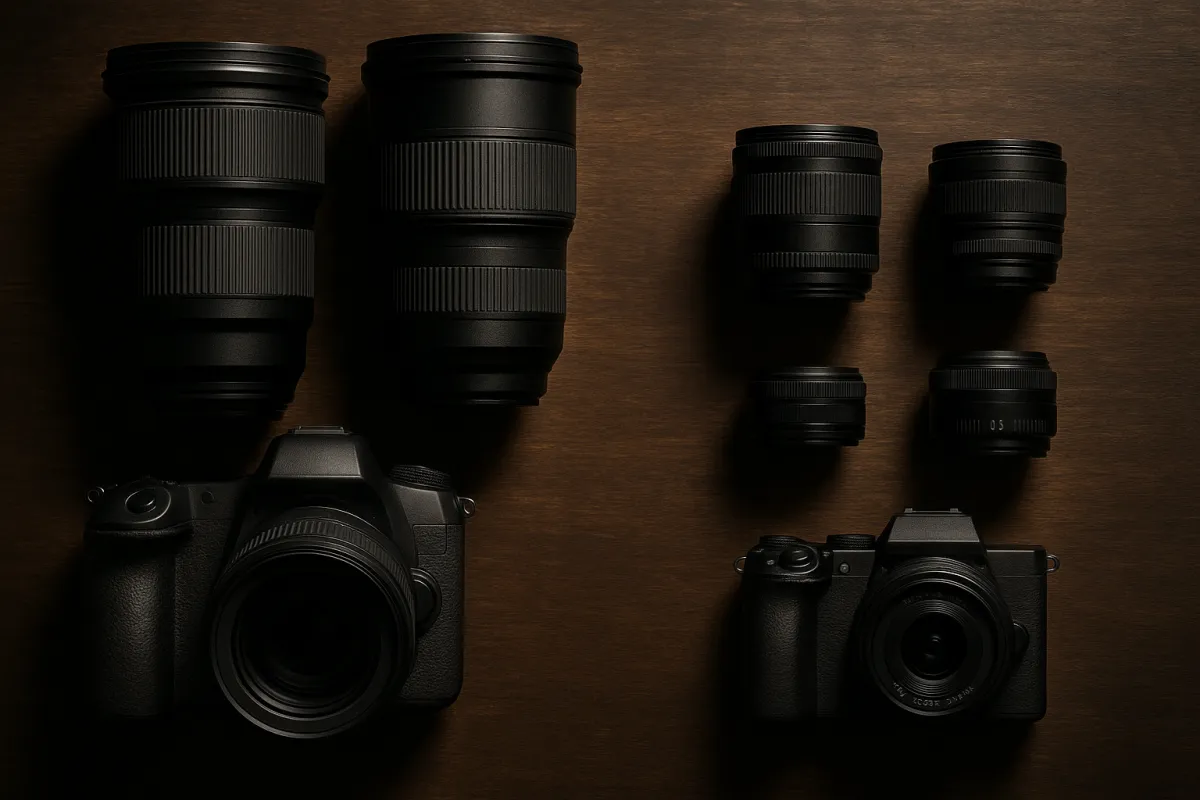
A kit lens bundle pairs the body with a lens the maker has selected as a sensible general-purpose starting point, almost always a zoom covering a wide-to-short-telephoto range that handles groups, travel, landscapes, and casual portraits without needing a second lens on day one. The bundle price is set by the maker, and it is very deliberately set lower than the body-only price plus that lens’s standalone price, because a buyer walking out with a working, ready-to-shoot camera is a better outcome for the maker than a buyer walking out with an expensive body and no way to use it yet.
Bundles sometimes include a second lens too, commonly a longer telephoto zoom, at a price that undercuts buying either lens alone by an even wider margin. These twin-lens kits are worth a specific look for a buyer who already suspects they will want both a standard and a longer zoom, since the bundled discount on the second lens is often the best price it will ever be offered at.
Why the bundle is usually cheaper than buying separately
Run the actual arithmetic before assuming body-only saves money, because in the large majority of cases it does not, once you account for the lens you still need to buy. Add the body-only price to the kit lens’s standalone price, then compare that total against the bundle price for the same body and lens. The bundle wins outright often enough that it should be your default assumption, and the size of that gap is exactly the reason camera makers build bundles in the first place: it is a proven way to move complete, usable kits rather than bodies that sit unfinished in a buyer’s cart.
The only way this math flips is if you were never going to buy that specific kit lens anyway, in which case its bundled price is not really a discount to you; it is money spent on glass you will not use. That is precisely the profile of a body-only buyer covered in the next section, and the honest test is whether you can name the lens you would buy instead, today, not eventually.
Bundle vs separate purchase, by buyer type
Illustrative share of buyers for whom each path is the cheaper overall purchase, based on whether they already own a compatible lens. Your own numbers may differ; check the actual prices for your body.
Most first-time buyers land in the bundle-wins group simply because they need a lens regardless. Check your own body's actual bundle discount before assuming either way.
When body-only is the smarter buy
Three situations reliably favor body-only, and if your case matches one of them, skip the bundle with confidence. First, you already own one or more lenses for this exact mount, commonly because you are upgrading a body within the same system or replacing a damaged or stolen body while your lenses survived. Second, you are buying a second or backup body specifically to pair with lenses you already carry, a common move for anyone who wants a spare body during a paid shoot or a long trip. Third, you have already researched and settled on a specific different lens, often a fast prime, and know with real confidence that you will not use the kit zoom at all.
Outside those three, body-only tends to be the more expensive overall path once you price in the lens you still need, so treat it as the exception rather than the default. Our kit lens versus prime lens field note is the right next stop if you are in the third camp and want to confirm which prime is worth buying instead of the kit zoom.
Do you already own compatible lenses? The question that decides most of this
This is worth its own section because it is the single question that resolves the majority of cases correctly on its own. If you own lenses for this mount, check them against the new body’s specifications, sensor size compatibility and any electronic contact requirements, before assuming they will simply work, then buy body-only with confidence once compatibility is confirmed. If you own no lenses for this mount, whether because this is your first interchangeable-lens camera or because you are switching systems entirely, answer no honestly and default toward the bundle.
The mistake to watch for is counting a lens from a different mount as “already owning a lens,” when it in fact will not attach to the new body at all without an adapter, and not every combination has one. The next section covers that trap in detail, because it is the costliest version of this decision going wrong.
Mount compatibility: the body-only trap
The single most expensive mistake in this whole decision is buying a body only, assuming existing lenses will attach, and discovering they use an incompatible mount. Camera makers frequently run more than one lens mount across their current and historical lineups, and even lenses that look similar or share a brand name are not guaranteed to physically fit a different mount without an adapter, which may not exist for every combination or may not preserve autofocus and stabilization if it does.
Before buying body-only on the strength of lenses you already own, confirm the exact mount name printed on both the body’s specifications and the lens itself, not just the brand. If an adapter is required, price it into the comparison against the bundle, since a mediocre or expensive adapter can quietly erase the savings body-only was supposed to deliver. When in doubt, the bundle removes this entire risk by guaranteeing a matched body and lens on day one.
Kit lens quality: is it actually bad?
Kit lenses carry an undeserved reputation as the weak link of a camera kit, and it is worth separating the real limitations from the folklore. A kit lens’s optical performance genuinely trails a dedicated prime or a professional-grade zoom, showing up as slightly softer corners, a narrower maximum aperture that lets in less light, and less impressive background blur. None of that makes it a bad lens; it makes it a lens built to a price, which is exactly what a first lens on a new system should be.
For the actual photography most beginners take in their first year, groups, travel, everyday scenes, well-lit portraits, a kit lens performs entirely competently, and the gap to a more expensive lens is far smaller in a finished photograph than the spec sheet or a pixel-level test suggests. Judge a kit lens against what you will actually shoot with it in the next twelve months, not against a professional lens it was never priced or designed to match.
Kit lens vs starting with a prime lens
Some careful first-time buyers skip the kit lens entirely and start with a single prime, often the classic affordable fast fifty covered in our 35mm versus 50mm field note, reasoning that a prime’s larger aperture and sharper rendering are worth giving up the zoom’s flexibility. This can be the right call for a buyer who already knows their photography leans heavily toward portraits or low light and is comfortable with a single fixed framing, but it is a research-driven choice, not a default one.
For anyone still discovering what they like to shoot, the kit zoom’s flexibility teaches you your favorite focal length far faster than a single prime can, simply by letting you try a wider range of framings in the same afternoon. Our kit lens versus prime lens field note walks this second-lens decision in full once the kit lens has done that teaching job, which is usually the smarter order for a true beginner rather than skipping straight to a prime.
The resale math: kit lens resale value
A common plan is to buy the bundle, then immediately resell the kit lens to recoup some of its cost, and it is worth running that math honestly before counting on it. Because every other buyer who upgraded from the same kit lens is trying to sell theirs too, the used market for kit lenses is consistently flooded, and resale prices typically return only a modest fraction of the lens’s bundled cost. In most cases, the bundle is still the cheaper overall purchase than body-only even after factoring in a realistic resale return, simply because the bundle discount was larger than what resale recovers.
The more useful plan for a kit lens you do not expect to use much is keeping it rather than selling it. A lightweight, already-paid-for zoom makes an excellent backup for a second shooter, a lend-out lens for a friend or family member trying photography, or a travel-day safety net if your primary lens needs repair. Selling it for a small return is rarely worth the hassle compared with the quiet insurance of simply having it.
There is one exception worth naming: a kit lens still sealed in its original packaging, never mounted, sometimes commands a meaningfully better resale price than a used one, since some buyers specifically want an unopened lens for warranty or gifting reasons. If you know before your purchase that you will never use the kit lens at all, factor that narrow, better resale case into your bundle-versus-body-only math, though it remains the exception rather than the plan to count on.
Second and third bodies: why body-only makes more sense later
The case for body-only strengthens considerably once you own a working system, which is exactly why experienced photographers buy body-only far more often than true beginners do. A second body added for a paid shoot’s backup, a different sensor size within the same lens mount, or simply a preference for two bodies with two lenses mounted rather than constant lens-swapping, all pair naturally with lenses you already carry, making the kit lens bundle pure waste on that specific purchase.
If this describes your situation, body-only is close to an automatic choice, and the only remaining check is the mount-compatibility question above, confirmed once more for the new body’s exact specifications. The financial logic of this whole field note essentially inverts once real lenses are already in your bag: the bundle stops being the value play, and body-only becomes it.

Budget math: bundle savings by the numbers
Pull the reasoning into a simple comparison you can run for any specific body. Price the body alone, price the kit lens alone if sold separately, add them together, then compare that total against the advertised bundle price. The difference is the bundle’s real discount, and in most current lineups that discount covers a meaningful share of what the standalone lens would otherwise cost, which is the whole reason bundles exist as a sales strategy in the first place.
Run this same check against any body-only deal that looks unusually cheap, since an aggressive body-only discount sometimes reflects an older or soon-to-be-replaced body rather than a genuine bargain. A slightly higher bundle price for a current body is often the better long-term purchase than a heavily discounted body-only price on a model about to be superseded. Price your own comparison in the upgrade budget planner before you commit either way.
Sensor and mount: matching body-only purchases correctly
Body-only purchases carry one more compatibility check worth its own mention: sensor size. Some camera systems sell both APS-C and full-frame bodies on the same physical mount, and while a smaller-sensor lens will sometimes mount on a larger-sensor body, it typically cannot cover the larger sensor fully, producing a darkened or cropped image. Our full-frame versus crop sensor field note covers this sensor math in full if you are combining a body-only purchase with lenses bought for a different sensor size within the same mount family.
Confirm not just that a lens physically attaches to a body-only purchase, but that it was actually designed to cover that body’s specific sensor size, before assuming an existing lens collection transfers cleanly to a new body. This is a narrower trap than the mount question above, but it catches even experienced buyers upgrading within a system they already know well.
How this decision changes for video-first buyers
A buyer whose main goal is video rather than stills weighs this decision a little differently, though the underlying question stays the same. A kit lens shoots perfectly usable video, since its autofocus and any built-in stabilization behave the same in video mode as they do for stills, and its zoom range covers interviews, walking b-roll, and everyday clips without needing a lens change mid-shoot. For a first video-focused purchase, the bundle remains the sensible default for exactly the same reason it does for stills: you need a lens regardless, and the bundle is the cheapest way to get one.
Where video buyers sometimes diverge is in how quickly they look toward a second lens, since dedicated video work often benefits sooner from a lens with smoother, quieter manual focus and a wider aperture for dim interiors than a typical kit zoom offers. That is a real second-lens upgrade to plan for once video work is confirmed as a serious priority, not a reason to skip the kit lens on the first purchase. Treat it the same way a stills shooter treats the eventual move to a prime: let the kit lens’s limitations, not a rumor about video lenses, tell you when it is time to add one.
Gray-market and import body-only listings: a caution
Body-only listings sometimes appear at prices well below the domestic market, particularly through gray-market importers who bring in units intended for a different region and sell them without the manufacturer’s local warranty backing. These listings can be a legitimate way to save money, but they carry real tradeoffs worth understanding before an unusually cheap body-only deal tempts you away from a proper bundle.
Gray-market bodies typically void or complicate manufacturer warranty service in your region, may ship with a power adapter or charging plug built for a different country, and occasionally include instructions or firmware region-locked in ways that create small but real friction. If you are specifically weighing a gray-market body-only deal against a domestic bundle, price in the warranty gap and any accessory replacement cost honestly rather than comparing the sticker prices alone, since the true cost difference is often smaller than it first appears.
Renting a lens instead of buying either
Not every situation calls for owning a lens at all, and renting is worth considering before committing to either a bundle or a body-only purchase for a specific, limited need. If you already own a body and need a particular lens for a single event, a wedding, a once-off trip, or testing whether a genre suits you before investing, a short-term rental sidesteps the entire body-only-versus-kit-lens question for that occasion. This is especially useful for confirming whether a specific alternative lens is really worth choosing over the kit zoom before you commit to buying body-only on that assumption.
Renting makes far less sense as a repeated substitute for a lens you would use constantly, since the accumulated rental cost over a year typically exceeds owning outright, even accounting for a kit lens’s modest resale value. Use a rental to answer an open question about your own shooting, then let the answer, not a guess, decide whether the eventual purchase is body-only with a specific lens or the standard bundle.
Warranty and return policies: bundle vs separate purchases
A detail worth checking before you decide is how warranty and return policies treat a bundle versus two separate line items. Some retailers apply a single combined return window to a bundle, which can be more convenient if you decide to return the whole kit, while a separately purchased body and lens each carry their own independent return clocks, useful if you want to test one piece before committing to the other. Neither structure is universally better; it depends on whether you would rather test as one unit or two.
Warranty length and coverage are usually identical whether a lens is bought bundled or separately, since it typically follows the manufacturer’s standard terms regardless of how the purchase was itemized, but confirm this with the specific retailer before assuming it, especially for a marketplace or third-party seller rather than a manufacturer’s own store.
Used market: body-only vs used kit bundles
The used market adds a wrinkle worth checking deliberately: a used body-only listing and a used complete kit, body plus kit lens together, are often priced closer to each other than their new equivalents, because sellers upgrading their whole system frequently sell the kit as a single lot rather than splitting it. If you are shopping used and were planning on body-only, compare the price of a used complete kit anyway, since the marginal cost of the included kit lens is sometimes very small on the secondhand market, making it worth taking even if you plan to resell or set aside the lens.
Conversely, a used kit lens bought completely separately from any body, useful if you own a body already and simply want a spare or backup zoom, is usually one of the cheapest lenses available on the secondhand market precisely because of the resale glut described above, making it a low-risk way to add a lightweight backup lens to an existing kit.
Common mistakes buying body-only or kit lens
The recurring ways this decision goes wrong, so you can avoid them before checkout.
- Buying body-only with no lens waiting for it. You will need a lens regardless, and the bundle is usually the cheapest way to get one.
- Assuming any lens from the brand will fit. Confirm the exact mount and sensor coverage, not just the brand name, before buying body-only.
- Underrating the kit lens’s actual usefulness. It is a genuinely competent general-purpose zoom, not a lesser afterthought to be avoided on principle.
- Planning to resell the kit lens for meaningful money. Resale value is typically modest; keeping it as a backup is usually the better outcome.
- Chasing a body-only discount on a soon-to-be-replaced model. A slightly pricier bundle on a current body often ages better than a cheap body-only deal on an outgoing one.
- Skipping the return-window comparison. Bundle and separate purchases sometimes carry different return structures worth checking before you buy.
Every mistake traces back to the same root: treating body-only as automatically cheaper or the kit lens as automatically inferior, when the real answer depends entirely on whether you already own the glass this body needs.
Accessories bundled in versus bought separately
Retailers frequently layer a third option onto this decision: an accessory bundle that adds a bag, a memory card, a spare battery, or a filter on top of either the body-only listing or the kit lens bundle, usually at retailer expense rather than the manufacturer’s. These retailer bundles are worth a quick, honest price check of their own, since the included accessories are sometimes lower-tier third-party items rather than the brand-name equivalents you might buy yourself, and their apparent discount can be smaller than it looks once compared against buying each piece separately at your preferred quality level.
The same logic from the body-and-lens decision applies here in miniature: only count an included accessory as a real saving if it is something you would have bought anyway. A free low-end camera strap you planned to replace immediately is not a meaningful saving, while a genuinely useful spare battery or a card you needed regardless is real value. Price-check the specific included items against buying your preferred versions separately before an accessory bundle’s headline discount sways a body-only-versus-kit-lens decision that should really be made on the body and lens alone.
The worked example: three buyers, three choices
Three composite buyers make the logic concrete. Buyer one is purchasing her very first interchangeable-lens camera with zero existing lenses and a $900 total budget. The math is straightforward: the bundle price beats body-only plus a separately bought kit lens by a real margin, so she buys the bundle without hesitation and lets the kit zoom teach her what she shoots over the next few months.
Buyer two already owns two lenses from a previous body in the same system, a standard zoom and a fast fifty picked up years earlier, and is upgrading only the body itself on a budget of $700 for the body. His case points clearly to body-only, since buying the bundle would mean paying for a third lens he does not need on top of the two he already owns and plans to keep using. Buyer three is adding a lightweight second body specifically as a travel backup to lenses she already carries, on a modest budget of $500 set aside for that backup body alone. Her case also points to body-only, confirmed first against the mount and sensor size of her existing glass, exactly the check the earlier sections insist on before any body-only purchase. Three buyers, two different answers, both correct because each matches what is actually already in the bag, and neither buyer had to guess: each simply answered the ownership question honestly and let the arithmetic do the rest.
Registering your purchase and keeping proof
Whichever way you buy, register the purchase with the manufacturer when that option exists, and keep the receipt and serial numbers for both the body and any lens somewhere durable, a cloud note or a photo of the receipt works fine. This matters more than it sounds like it should for two practical reasons: warranty claims move faster with a registered serial number on file, and insurance or police reports after a theft or loss are far more useful with a documented serial number than without one.
This step matters slightly more for a bundle than for a body-only purchase, simply because a bundle receipt sometimes lists a single combined price rather than itemizing the body and lens separately, which can matter if you ever need to claim or insure just one half of the kit. Ask the retailer for an itemized receipt at checkout if this is a concern, since it costs nothing to request and can simplify a warranty or insurance claim considerably later.
A quick checklist before you buy body-only
Run this short list before confirming any body-only purchase: confirm the exact lens mount name matches your existing lenses, not just the brand; confirm the body’s sensor size is one your existing lenses were designed to cover; price the bundle anyway as a sanity check, even if you are confident body-only is right; and check the specific return and warranty terms of the listing you are buying from. Each of these takes a minute and prevents the costliest versions of this decision going wrong.
If any answer comes back uncertain, especially the mount question, default toward the bundle rather than gambling on compatibility, since the bundle guarantees a working, matched kit on day one regardless of what you already own. Keep the checklist itself somewhere you will actually see it again, since the same four checks apply just as cleanly the next time you add a body to an existing system, whether that is next year or several systems from now.
The bottom line
Camera body only vs kit lens resolves to one question for the overwhelming majority of buyers: do you already own a compatible lens for this exact mount and sensor size? If no, the bundle is very likely your cheapest path to a complete, working kit, and the kit lens itself is a genuinely useful lens rather than a compromise to avoid. If yes, especially for a second body or a confirmed alternative lens choice, body-only is the smarter purchase, provided you have actually confirmed that compatibility rather than assumed it. Run the real numbers for your specific body in the upgrade budget planner, check the mount twice, and let what is already in your bag, not a reflex about kit lenses being lesser, make the call.
This field note is written to clarify a purchase decision, not to sell one: no brand or specific model is named on purpose, and nothing here is sponsored. Every price, discount, and resale figure here is an illustrative planning aid rather than a quote, since actual bundle discounts, resale values, and mount compatibility vary by brand, model, and year, so confirm the specific body-only price, bundle price, and mount specifications for the exact camera you are considering before any money moves.
Frequently asked questions
Should I buy a camera body only or with the kit lens?
Buy the body-with-kit-lens bundle if this is your first camera on this mount and you own no compatible lenses yet, because the bundle is almost always priced cheaper than the body and the lens bought separately, and the kit lens covers a genuinely useful range while you learn what you like to shoot. Buy body only if you already own lenses for this mount, are adding a second or backup body, or have done enough research to know precisely which other lens you want instead. The deciding question is simply whether you already have glass for this mount.
Is a kit lens actually worth buying?
Yes, for nearly every first-time buyer. A kit lens is not a lesser afterthought; it is a genuinely useful general-purpose zoom that covers groups, travel, everyday scenes, and casual portraits competently, and because camera makers subsidize the bundle price to move bodies, it is usually the cheapest way to acquire any lens at all for that mount. Its optical quality trails a dedicated prime or a professional zoom, but that gap matters far less in a first year of shooting than having a lens on the camera at all.
How much cheaper is a body-and-kit-lens bundle than buying them separately?
The discount varies by brand and model, but it is commonly a meaningful chunk of what the kit lens would cost bought alone, because camera makers price the bundle to encourage buyers to leave the store with glass already attached. Compare the body-only price plus the kit lens's standalone price against the bundle price before you decide; in the large majority of cases the bundle wins outright, and body-only is cheaper only when you were never going to buy that specific lens anyway.
When does buying a camera body only make sense?
Body-only is the smarter purchase in three common cases: you already own one or more lenses for this exact mount from a previous body, you are buying a second or backup body to pair with lenses you already carry, or you have already decided on a specific different lens, often a fast prime, and know you will never use the kit zoom. Outside those three cases, most buyers save money and gain a useful lens by taking the bundle instead.
Can I sell the kit lens if I don't want it?
Yes, and plenty of buyers do exactly that, but the resale math rarely favors it. A kit lens sold used typically returns only a modest fraction of its bundled cost, since the used market is flooded with the same lens from everyone who upgraded, so the bundle is often still cheaper than body-only even after you resell the kit lens you did not want. It is usually smarter to keep it as a lightweight backup or a lend-out lens than to sell it for a small return.
What mount do I need to check before buying a body-only camera?
Confirm the exact lens mount, not just the brand, since a single camera maker frequently sells more than one incompatible mount across its current and older camera lines, and a lens built for one will not physically attach to a body using another without an adapter that may or may not exist. This single check prevents the most common and most expensive body-only mistake: buying a body that cannot use the lenses you already own.
Does the kit lens matter for video?
A kit lens shoots perfectly usable video for most beginner needs, since its autofocus and image stabilization, where present, work the same in video mode as in stills, and its zoom range covers interviews, b-roll, and everyday clips without a lens change. Dedicated video work benefits from a lens with smoother manual focus and a wider aperture in low light, but that is a second-lens upgrade to make once you know video is a real priority, not a reason to skip the kit lens on a first purchase.